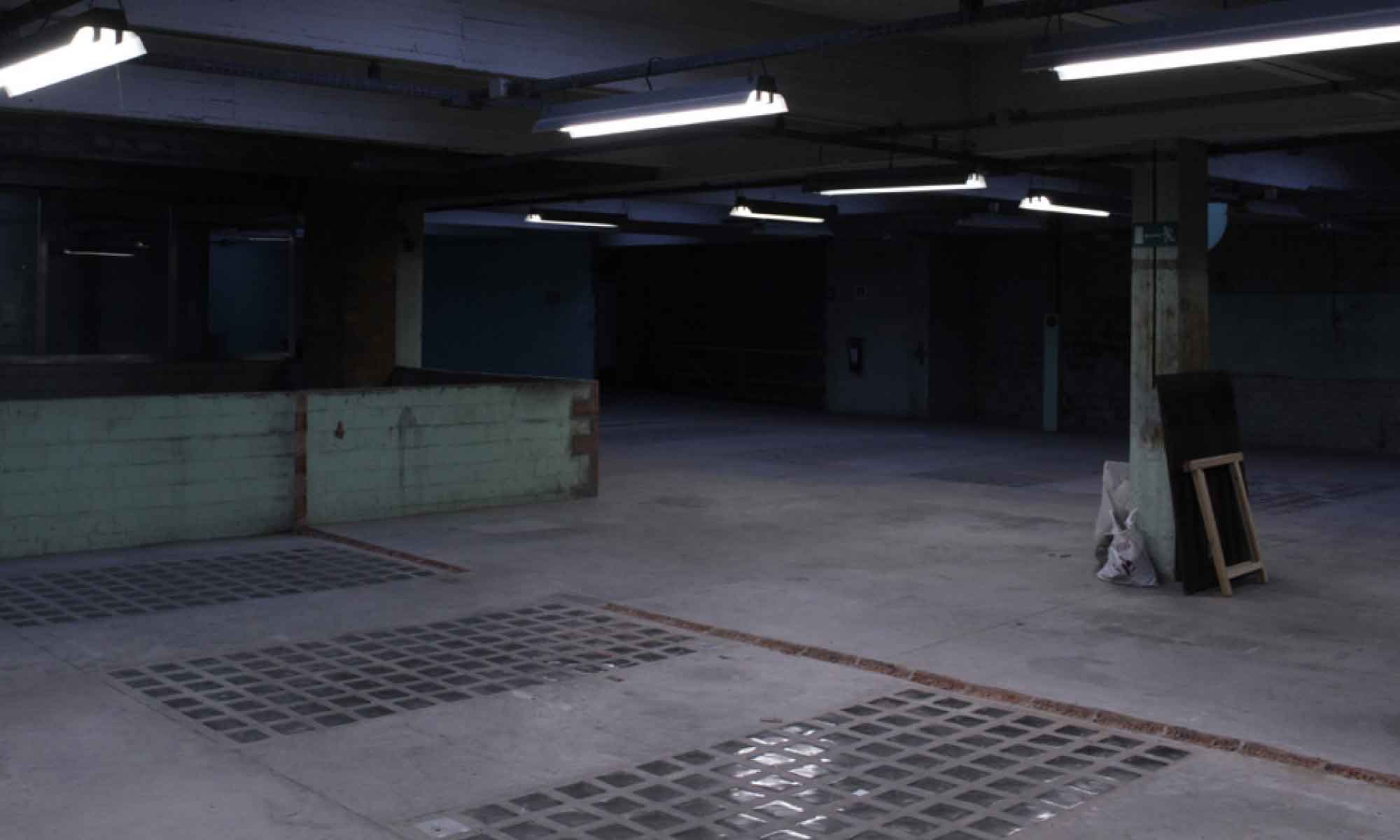
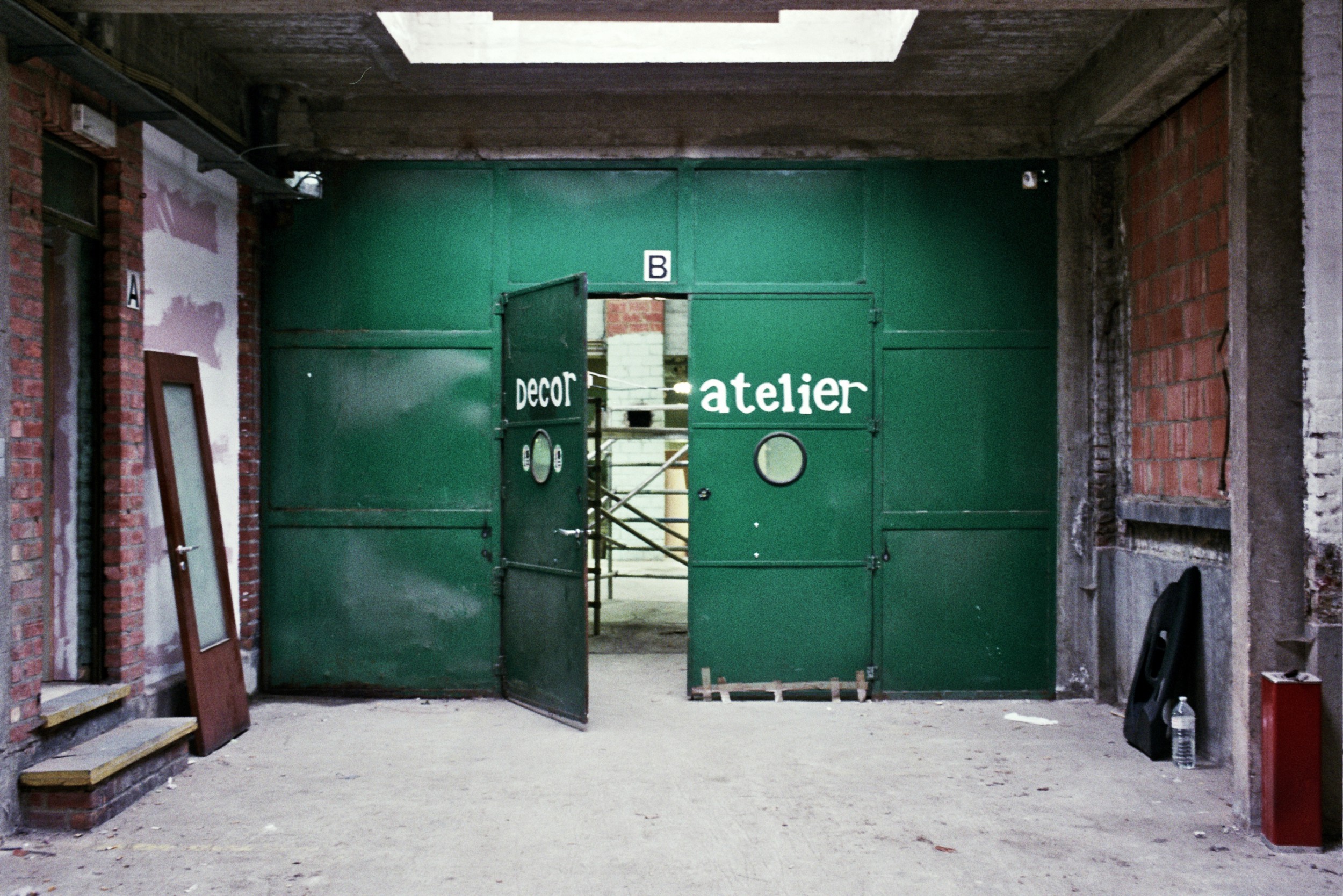
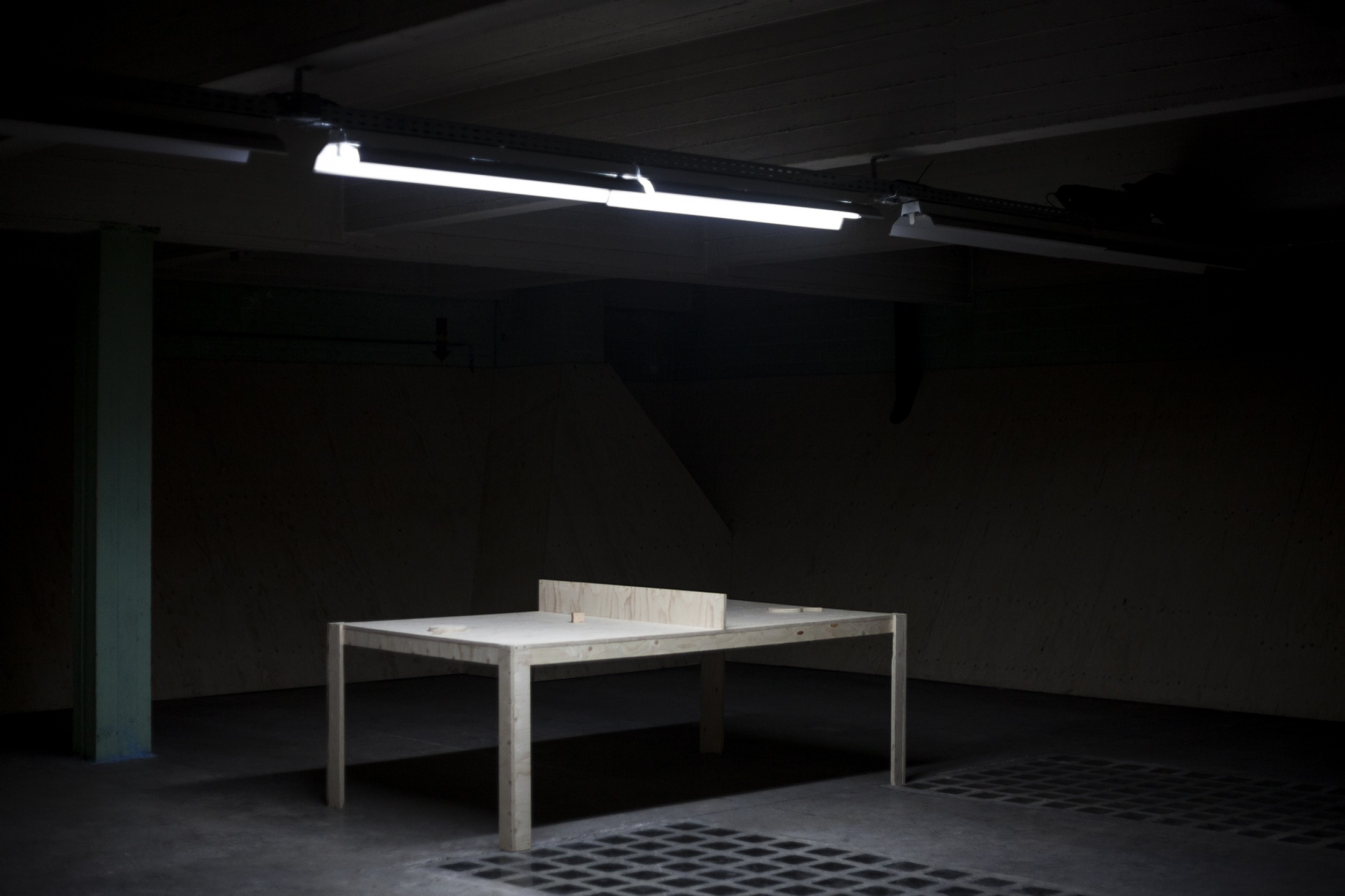
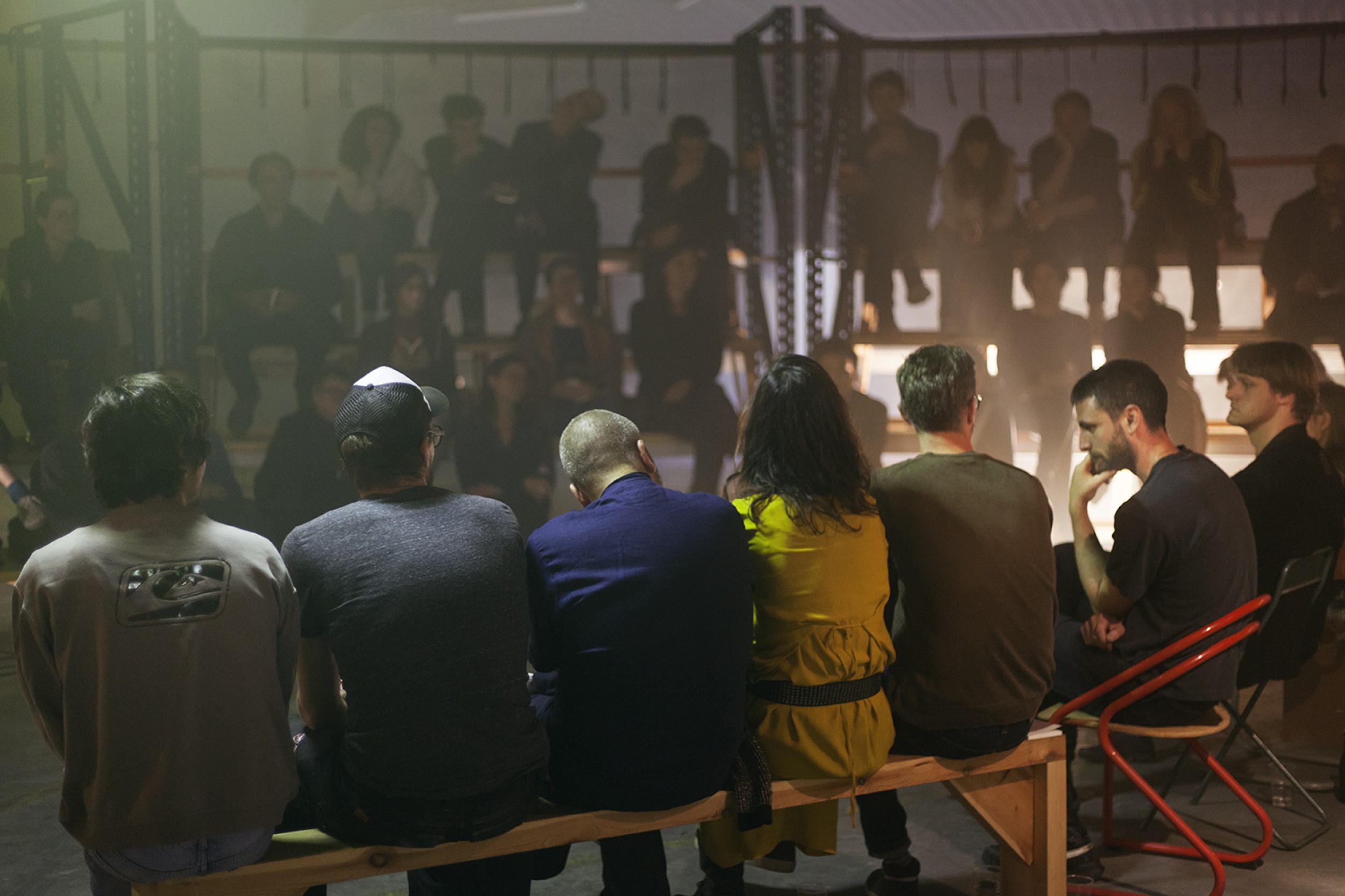
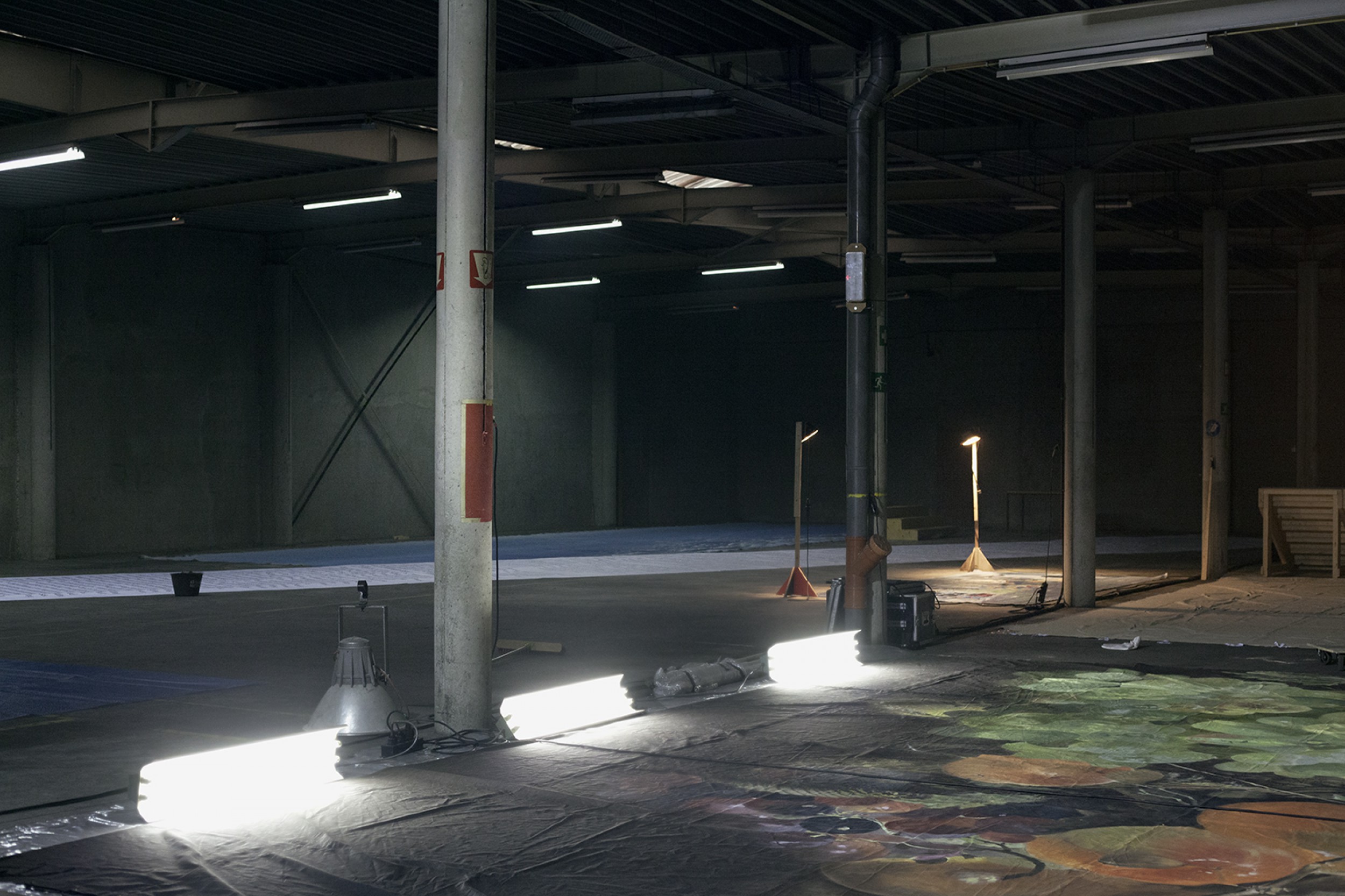
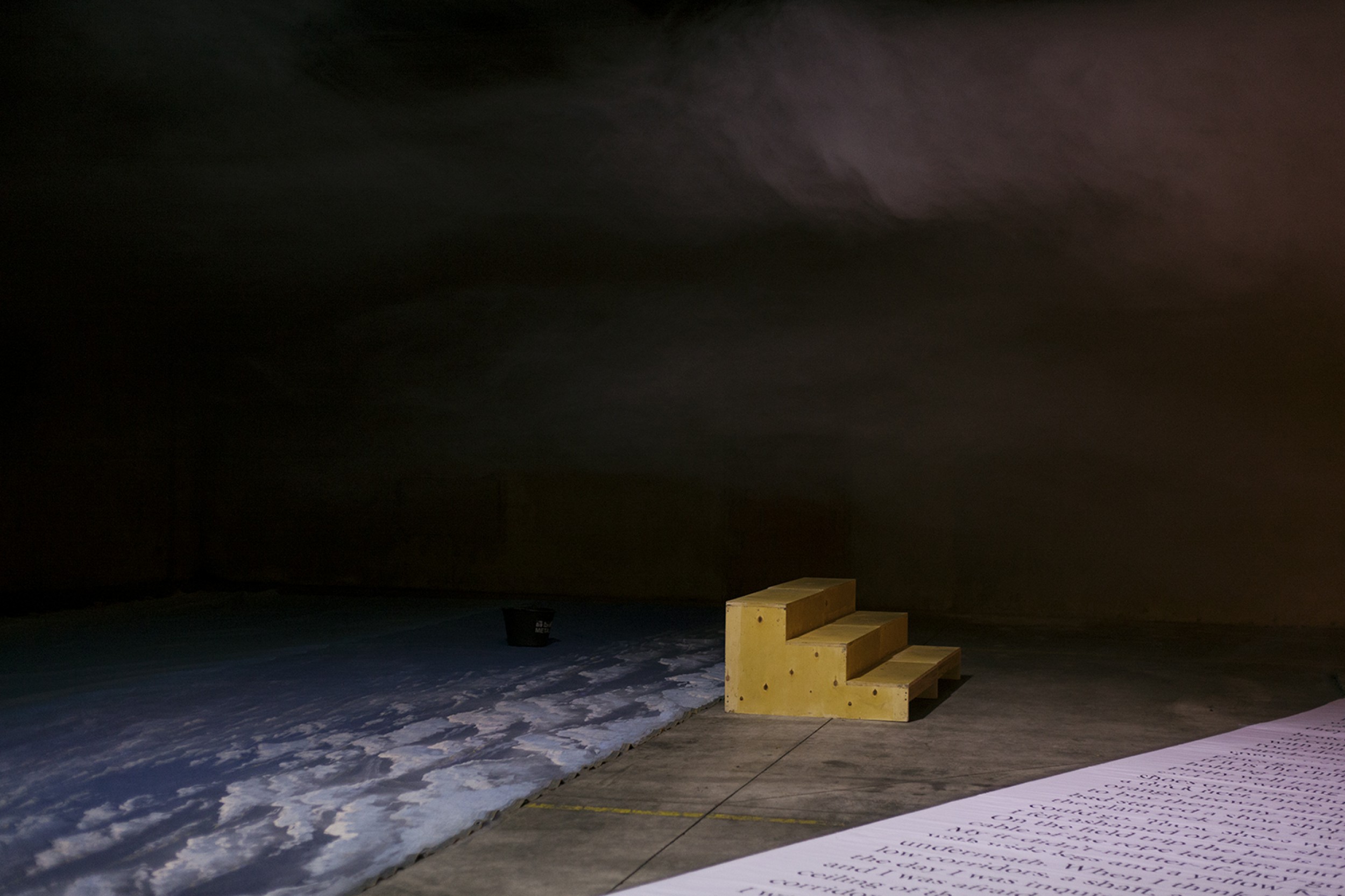
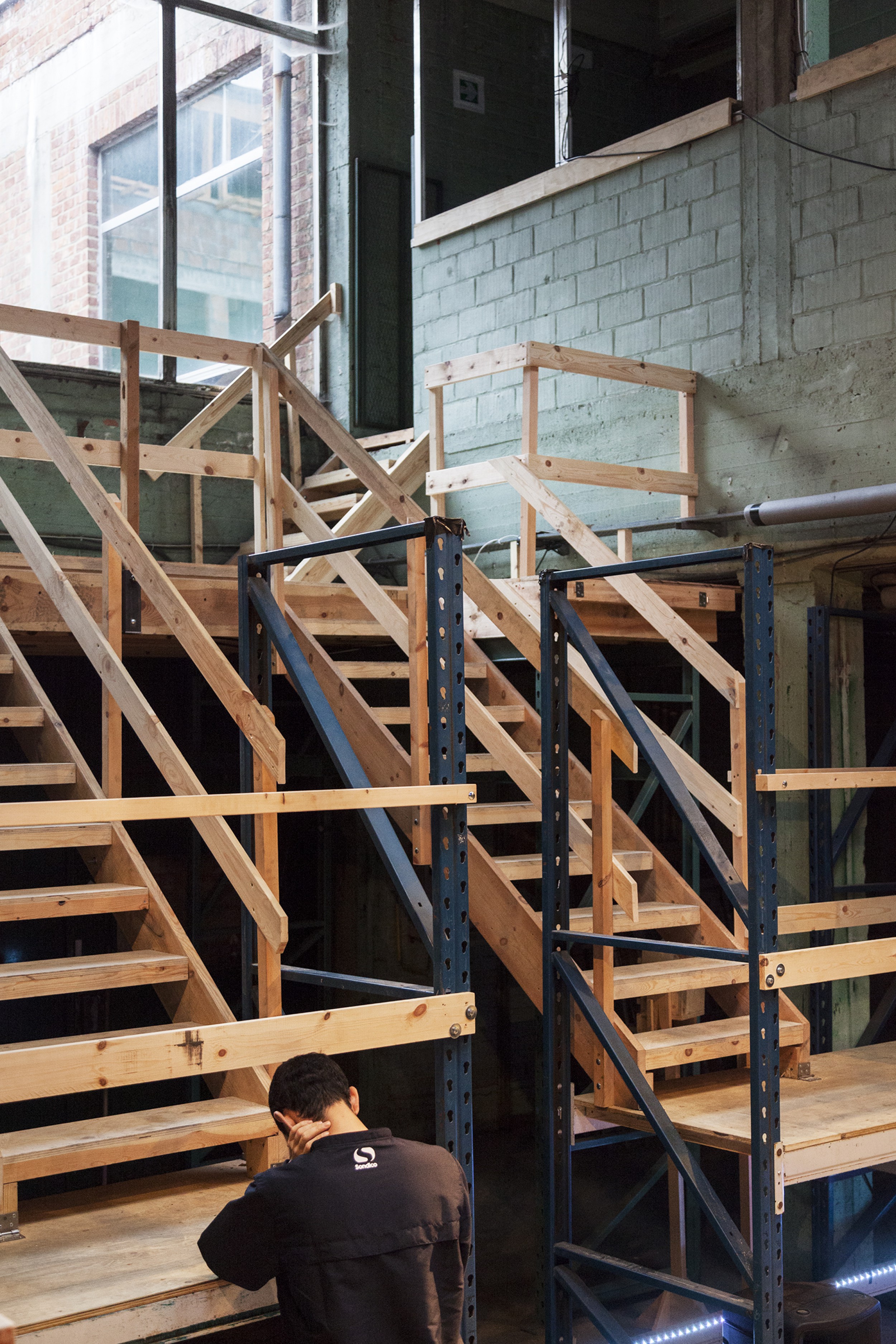
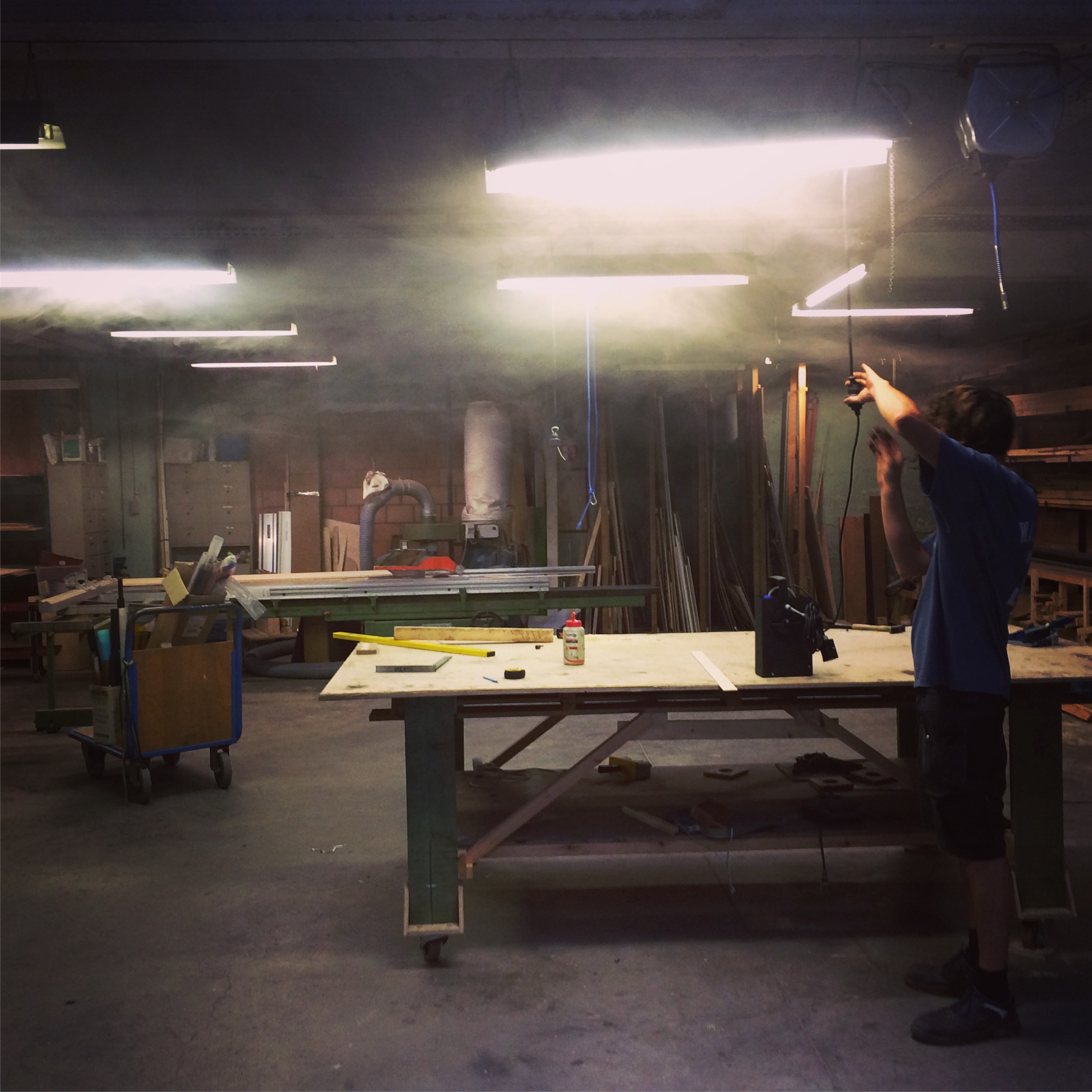
Jozef Wouters is an autonomous artist in residence at Damaged Goods. In 2016, he founded Decoratelier together with his technical director, Menno Vandevelde. Housed in a former factory building on Kortrijkstraat 47 in Molenbeek (Brussels), Decoratelier serves as the base for Wouters’ diverse projects and artistic collaborations, as well as an accessible workspace for artists from a wide range of disciplines.
"Decoratelier is a space that accommodates the various forms of collaboration and labour that are inherent in my work. Space is tested, conversations take place in wood, iron and cardboard. It is a permanent place within the constructional quest for constantly changing spaces in which art, thought and artisans meet." (Jozef Wouters)
> More info about Jozef Wouters
 Projects
The Unbuilt School of Architecture: Doing Words Making Space
BORING – Three evenings of soil readings
Underneath Which Rivers Flow
The Unbuilt School of Architecture
Tourdates
MARCH 2017
SEPTEMBER 2017
FEBRUARY 2018
MAY 2018
JUNE 2018
AUGUST 2018
OCTOBER 2018
Oct 13: First presentation moment Passage as part of Se La Fet (Globe Aroma) | Brussels (BE)
Oct 19, 20: Building Out Loud as part of Momentum #3 (de theatermaker) | deSingel, Antwerp (BE)
Oct 26: LILA & JOHN x Decoratelier: A Fashion Performance | Decoratelier, Brussels (BE)
NOVEMBER 2018
Nov 3: Bâtard Festival x Decoratelier I Decoratelier, Brussels (BE)
Nov 9: Mota Hiele Albertijn Trio at Decoratelier I Decoratelier, Brussels (BE)
DECEMBER 2018
JANUARY 2019
FEBRUARY 2019
MARCH 2019
APRIL 2019
MAY 2019
JUNE 2019
SEPTEMBER 2019
OCTOBER 2019
DECEMBER 2019
JANUARY 2020
FEBRUARY 2020
MARCH 2020
APRIL 2020
24 - 25 Apr: Moments Before the Wind | Arts Centre Vooruit, Ghent (BE) - CANCELLED
JUNE 2020
AUGUST 2020
SEPTEMBER 2020
NOVEMBER 2020
JANUARY 2021
Jan 30: INFINI 1-17 at deSingel, live stream / exhibition
FEBRUARY 2021
MARCH 2021
MAY 2021
15, 16, 17 May: Tafukt by Radouan Mrizigan in Decoratelier organized by Kunstenfestivaldesarts
JULY 2021
AUGUST 2021
SEPTEMBER 2021
OCTOBER 2021
DECEMBER 2021
MARCH 2022
APRIL 2022
MAY 2022
13-15 May: Workshop Jozef Wouters tijdens de Free School (KFDA)
25 May: STN#4 with Ne Mosquito Pas
JUNE 2022
JULY 2022
5-10 juli: IT'S ALL THERE, scenography for Festival de la Cité in Lausanne
26-28 July: Night Shift Oostende, a project by Gouvernement, Decoratelier, VIERNULVIER, De Studio, CAMPO, Toneelhuis, De Singel, OHK, KAAP, Theaterfestival, Perpodium & Theater Aan Zee.
AUGUST 2022
SEPTEMBER 2022
OCTOBER 2022
1 Oct: Presentation of 5 Blocs 17 Mouvements in the framwork of Art+people by Nuit Blanche - an invisible gym tailored to the neighborhood, built around the social housing bcks on the Papenvest. More details
13 Oct: Mota 014 - nomadic conversations amongst generations - moderated by Hoda Siahtiri. More details
22 Oct: Marie Umuhoza and Jozef Wouters are guest speakers at the Horst x Nachtplan Conference. Find the full programme here.
28 Oct: Spending the Night with SNOBS
NOVEMBER 2022
FEBRUARY 2023
15 feb - 18:30: Prototyping Cultural Practices: The possibilities of worldmaking in the Cultural Sector - conversation with Jozef Wouters and Khyam Allami, livestreamed on youtube.
MARCH 2023
8 March - 17:30: 'Sofa Talk' at the Architecture Faculty KU Leuven with Jozef Wouters/Decoratelier. More info
MAY 2023
18-20 May - Premiere A Day is a Hundred Years by Jozef Wouters at Toneelhuis
JUNE 2023
8-10 June: A Day is a Hundred Years by Jozef Wouters in Wiener Festwochen/Odeon (Vienna, AT)
16-17 June: A Day is a Hundred Years by Jozef Wouters in PACT Zollverein (Essen, DE)
AUGUST 2023
17 Aug - 19 Sep: 'Making Time' festival at Decoratelier - more info at somethingatdecoratelier.brussels
NOVEMBER 2023
30 Nov - 19:00: Spaces for the Night - lecture by Jozef Wouters in the programme 'Conférences Dansées' by Charleroi Danses - More info
DECEMBER 2023
APRIL 2024
7 April - 17:00: The Soft Layer in Decoratelier during Dream City from Tunis for Brussels coproduced by Kanal - Centre Pompidou RESERVATIONS
11 april - 18:00: GKO-Café: A new role for art houses | shaping ephemeral spaces with keynote by Jozef Wouters - organised by GIF & Gents Kunstenoverleg RESERVATIONS
17 April - 4 May: It For Now - festival in Decoratelier LEARN MORE
SEPTEMBER 2024
12 Sep - 21:00: The Soft Layer (EN/FR) by Decoratelier Jozef Wouters during Molenfest (in collaboration with KANAL - Centre Pompidou and Molenbeek for Brussels 2030) - tickets & info
19 Sep - 21:00: The Soft Layer (FR) by Decoratelier Jozef Wouters during Molenfest (in collaboration with KANAL - Centre Pompidou and Molenbeek for Brussels 2030) - tickets & info
NOVEMBER 2024
21 nov - 19: Let's Talk Leuven by Jozef Wouters in SLAC Leuven organised by MLeuven, STUK, Cas-co
FEBRUARY 2025
5 feb - 20:30: Spaces for the Night by Jozef Wouters in Campo Nieuwpoort organised by VIERNULVIER
27 Feb - 20:30: A Day is a Hundred Years by Jozef Wouters in KVS organised by Kaaitheater - TICKETS
28 Feb - 20:30: A Day is a Hundred Years by Jozef Wouters in KVS organised by Kaaitheater - TICKETS
MARCH 2025
1 Mar - 20:30: A Day is a Hundred Years by Jozef Wouters in KVS organised by Kaaitheater - TICKETS
MAY 2025
8 May - 20:00: Reading by Jozef Wouters in the series 'Auditorium 24/25' by Stad en Architectuur at STUK (Leuven, BE) - TICKETS
15 May - 19:00: The Soft Layer by Jozef Wouters/Decoratelier at VIERNULVIER (Ghent, BE) - TICKETS
16 May - 20:00: The Soft Layer by Jozef Wouters/Decoratelier at VIERNULVIER (Ghent, BE) - TICKETS
23 May - 20:00: Moments Before the Wind by Jozef Wouters/Decoratelier in 30CC (Leuven, BE) - TICKETS
AUGUST 2025
4-8 Aug: The Soft Layer at Theater Aan Zee - TICKETS
SEPTEMBER 2025
NOVEMBER 2025
12 Nov: The Unbuilt Flow - lecture by Jozef Wouters at CIVA (Brussels, BE) - Learn more
DECEMBER 2025
13-14 & 20-21 Dec: Days to Pass By - residents sharing in Decoratelier - LEARN MORE
FEBRUARY 2026
MAY 2026
14 May - 19:00: The Latecomers on location at Decoratelier during Kunstenfestivaldesarts - TICKETS
16 May - 21:00: The Latecomers on location at Decoratelier during Kunstenfestivaldesarts - TICKETS
+ aftertalk moderated by Silvia Bottiroli (EN)
19 May - 16:00: The Latecomers on location at Decoratelier during Kunstenfestivaldesarts - TICKETS
20 May - 21:00: The Latecomers on location at Decoratelier during Kunstenfestivaldesarts - TICKETS
21 May - 21:00: The Latecomers on location at Decoratelier during Kunstenfestivaldesarts - TICKETS
22 May: Workshop in Decoratelier during Kunstenfestivaldesarts - LEARN MORE
24 May - 21:00: The Latecomers on location at Decoratelier during Kunstenfestivaldesarts - TICKETS
25 May - 16:00: The Latecomers on location at Decoratelier during Kunstenfestivaldesarts - TICKETS
28 May - 19:00: The Latecomers on location at Decoratelier during Kunstenfestivaldesarts - TICKETS
29 May - 21:00: The Latecomers on location at Decoratelier during Kunstenfestivaldesarts - TICKETS
30 May - 21:00: The Latecomers on location at Decoratelier during Kunstenfestivaldesarts - TICKETS
JULY 2026
2-4 Jul: The Soft Layer by Decoratelier Jozef Wouters in HAU Hebbel am Ufer (Berlin, DE) LEARN MORE
SEPTEMBER 2026
24-25 Sept: A Day is a Hundred Years by Jozef Wouters at Minard / Kunstencentrum VIERNULVIER (Ghent, BE) - TICKETS
12 Sep: Anal Pompidou at Decoratelier with Roberto Steijn, Patric da Cunha & Maryam Sserwamukoko - RESERVATIONS
13 Sep: Anal Pompidou at Decoratelier with Vivi Focquet, Jayson Batut & Thymios Fountas - RESERVATIONS
OCTOBER 2026
14-17 Oct: new run of The Latecomers by Decoratelier Jozef Wouters on location in Decoratelier - TICKETS
2 Oct: STREAMING with AMARI & Stanley Ollivier at Vestiaire - TICKETS
14–17 Oct: new run of The Latecomers by Decoratelier Jozef Wouters on location in Decoratelier - TICKETS
23 Oct: QUESTIONS+ANSWERS with Another Way to Play at Vestiaire - TICKETS
21-29 Oct: The Unbuilt School of Architecture: Doing Words Making Space in Decoratelier - LEARN MORE
NOVEMBER 2026
8 Nov: HOUSEWARMING with Cassonade at Vestiaire - TICKETS
14 Nov: TEXTING with Bryana Fritz at Vestiaire - TICKETS

The Latecomers
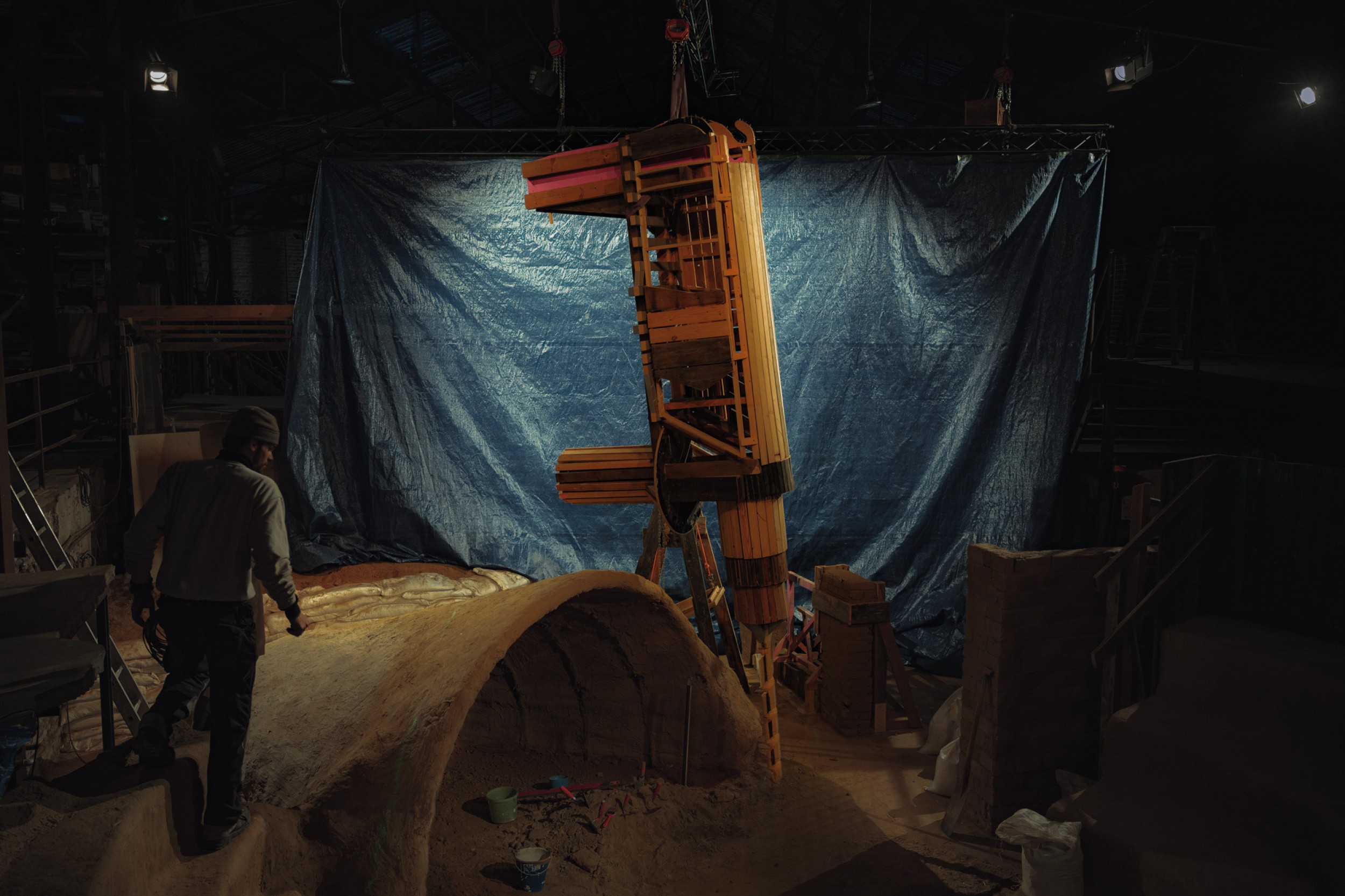
Decoratelier – a workspace for scenographers and artists – is temporarily housed in an abandoned factory in Molenbeek, together with the solidarity restaurant Cassonade. They find themselves on heavily polluted ground. A layer of concrete prevents oil, chemicals, and heavy metals from seeping into the daily lives of local residents. The municipality of Molenbeek is planning to turn the site into a park: everything that is built in Decoratelier today will disappear beneath a thick layer of healthy soil. Will the history and the invisible stories of this place vanish as well?
Together with the caretakers, the cooks of Cassonade, neighbours and visitors, the builders of Decoratelier set to work like true archaeologists. As ‘latecomers’, they create a space to reflect on historical pollution and collective responsibility. They unravel the past and speculate about future ecosystems, life forms, and ways of living. Through constructions and stories, they search for a form to share their concerns and desires with future generations. Can a society be built upon its own mistakes? The Latecomers is a site-specific performance in which a community explores the meaning of a place, inviting the audience to navigate this unsettling landscape of stories.
After ten sold-out performances at Kunstenfestivaldesarts, The Latecomers by Decoratelier Jozef Wouters returns from 14-17 October 2026. Tickets are available now.
Artistic direction Jozef Wouters
Dramaturgy Jeroen Peeters
Technical coordination Menno Vandevelde
Created with and built by Decoratelier: Jeff Verschueren, Barry Ahmad Talib, Zoher Boumelha, khalda el jack, Fairuz Ghammam, Alice Deleu, Pauline Arnould, Michiel Soete, Chloé Tempelhof, Joran De Roover, Mona Bonnevalle, Vic Van den Bossche
In collaboration with Cassonade: Naila, Mariam, Lina, Fatima Zahra, Rasmina, Aïcha, Fatiha, Naziha, Ibrahima, Mohamed, Mehdi, Luay
Sound design Anne van de Star
Video Fairuz Ghammam
Costumes Sofie Durnez, Lila John
Light design Michiel Soete
Technical crew Remco Wuyts, Jamy Hollebeke, Ruben Wolfs/Thibault Rottiers
Stand-in Vincent Focquet, Marie Umuhoza
Outside eye Sodja Lotker
Production Damaged Goods
Co-production Kunstenfestivaldesarts, Kaaitheater and Perpodium
With the support of the Flemish Community, the Flemish Community Commission and the Belgian Federal Government’s Tax Shelter via BNPPFFF
Many thanks to Kunstencentrum VIERNULVIER, the Summer Birds, coreatelier
© Ilias Teirlinck
A Day is a Hundred Years
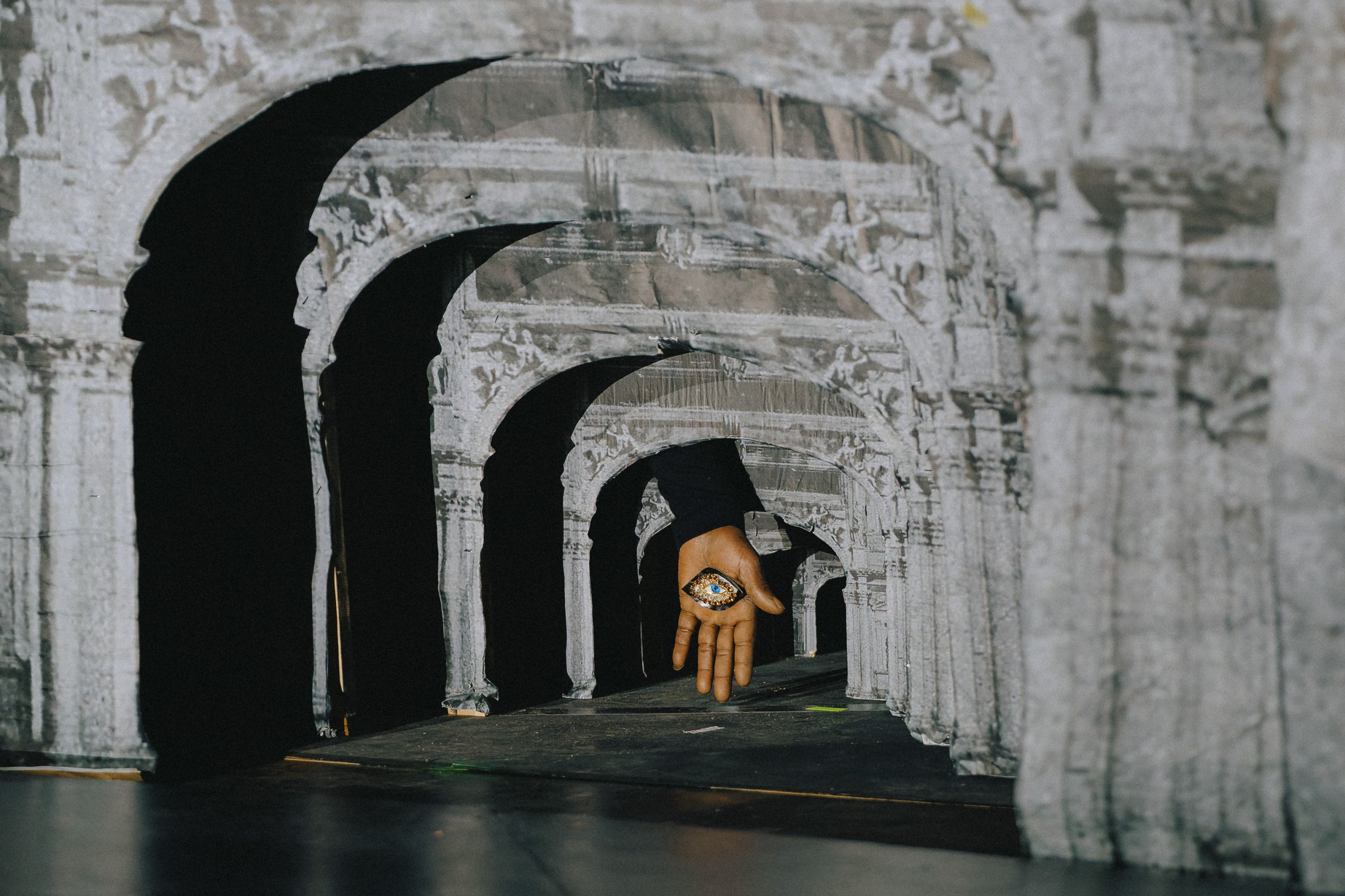
Scenographer and theatre maker Jozef Wouters always responds to a built reality. In A Day is a Hundred Years he interweaves the story of Decoratelier, his workspace in Brussels, with that of its janitor Barry Ahmad Talib, an artist from Sagale (Guinea). Jozef has shared his atelier with Barry since 2019. For A Day is a Hundred Years, he also shared his work by cutting thousands of leaves out of fabric for Barry’s tree sculptures. During this patient and time-consuming activity, their conversations created a kind of fusion between Sagale and Brussels. A place that is neither here nor there, but somewhere in between.
Placing the façade of Decoratelier front and center, Jozef Wouters dramatizes the mediation between open and closed, private and public, that plays a vital role in our urban interactions. By combining traditional theatrical techniques, such as perspectivist illusions, with a turning stage and a cast composed mostly of technicians, a space is formed that allows the perspective to shift constantly. In this shifting gaze, the piece spins out into an urban design plan told as a duet between two artists.
Text, direction, scenography Jozef Wouters
Artistic collaborators Barry Ahmad Talib, Michiel Soete
Performance Barry Ahmad Talib, Jozef Wouters
Created in collaboration with Micha Goldberg, Naomi Lilith Quashie, Maya Dhondt, Kamal Tall
Light design and music composition Michiel Soete
Dramaturgy (creation 2023) Bryana Fritz
Dramaturgy (remake 2025) Sodja Lotker
Costume design Lila John
Inside eye Enzo Smits
Technical director Menno Vandevelde
Built by Decoratelier, Brussels (Builders: Jamy Hollebeke, Willem Rys, Jan Rymenants, Remco Wuyts, Vic Van den Bossche)
Sound Wout Clarysse
Light Sarah Feyen
Stage Tom De Langhe
Production management Vincent Focquet, Michiel Soete, Marie Umuhoza
Interns Sophie Bax, Chloé Tempelhof, Freek Willems, Margo Van Lancker
Production Damaged Goods
Coproduction Toneelhuis (Antwerp), Wiener Festwochen (Vienna), PACT Zollverein (Essen), Perpodium
With the support of the Flemish Government, the Flemish Community Commission and the tax shelter measure of the Belgian Federal Government via BNPPFFF
Many thanks to Kaaitheater, DE SINGEL
© Illias Teirlinck
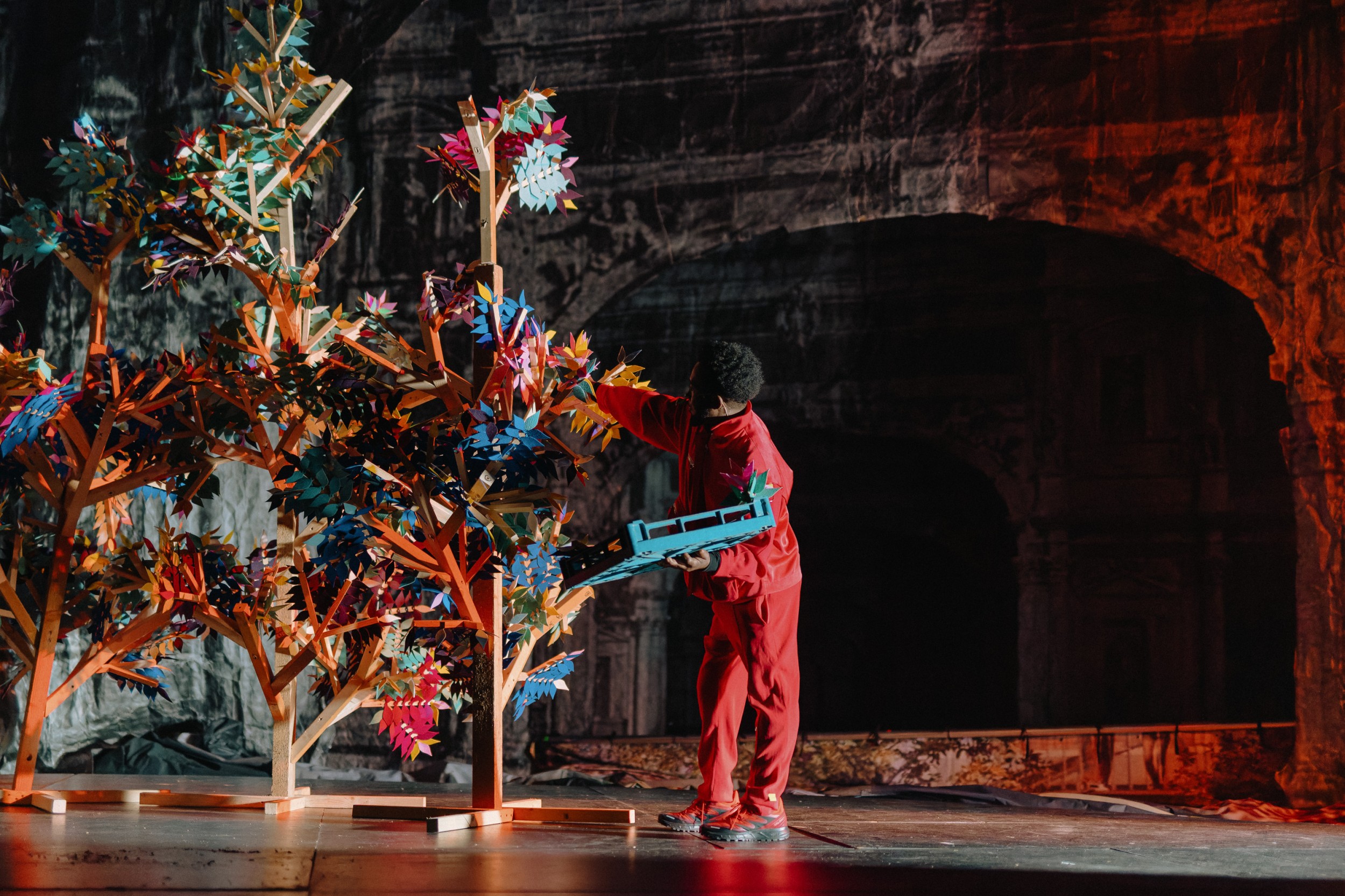
© Illias Teirlinck

© Enzo Smits
The Unbuilt School of Architecture: Doing Words Making Space
A series of talks and workshops
21-29 October 2026 at Decoratelier
Kortrijkstraat 47, 1080 Sint-Jans-Molenbeek
Curated by Colm mac Aoidh and Jeroen Peeters with contributions by Michiel De Cleene, Fiona Hallinan, Kate Briggs, Eva Moulaert (Dear reader,) and Decoratelier. A project of Decoratelier, realised with the support of KANAL - Centre Pompidou and the Flemish Community.
The evening programme is free, but registration is required.
Participation in a workshop costs €20. This includes a heart-warming lunch at Cassonade (vegetarian options available).
To register, email info@decoratelier.be. If you’d like to join a workshop, please include a brief motivation.
How we imagine and inhabit shared spaces is shaped by the site as we find it: its history, the height of the roof, the neighbours, the seasons, the conversations and encounters taking place there. As practitioners, we cannot separate our work from the context that has made it possible – as Madeline Gins writes in Word Rain, “it comes with a room, light, a country, sky and weather.”
Experimenting with questions around site-specificity is at the heart of Decoratelier’s practice of ‘expanded scenography’. Doing Words Making Space creates an environment for research, reflection and speculation through a series of talks and workshops that take place within an evolving scenography.
A range of invited guests explore the translation of practices, methods and vocabularies between fields such as adaptive reuse, photography, visual arts, dramaturgy and writing. They each take their cues from a specific verb that describes an element of their practice. We invite you to join us at the intersection of architecture and storytelling as we pick up these verbs to explore their potential. What perspectives open up when a practice migrates from one field to another? Can embodying verbs in a manner other than intended enable new possibilities for spatial practice? How do we then look differently at what is already there? And what alternative ways of thinking and making might this reveal?
TIMETABLE
Wednesday 21.10.2026, 18:00 – 20:00
TALK by Colm mac Aoidh | Making-with, Making-do
TALK by Michiel De Cleene | Surface Reading > Approaching the Surface: Three Superficial Stories from Construction Sites
Thursday 22.10.2026, 10:00 – 16:30
WORKSHOP by Michiel De Cleene | To approach: A veil of documents
Friday 23.10.2026, 18:00 – 20:00
FILM SCREENING by Fiona Hallinan | Making Dust
TALK by Fiona Hallinan | Paying Attention to Endings: An Introduction to Ultimology
Saturday 24.10.2026, 10:00-16:30
WORKSHOP by Fiona Hallinan | A Means without an End: Profanation as Play
Wednesday 28.10.2026, 18:00-20:00
TALK by Jeroen Peeters | Staging and inhabiting: articulating practices and modes of attention
TALK by Kate Briggs | The sun had not yet risen: on lighting writing
Thursday 29.10.2026, 10:00-16:30
WORKSHOP by Kate Briggs | To light
PROGRAMME
WEDNESDAY 21.10.2026
18:00 – 20:00
Colm mac Aoidh
TALK | Making-with, Making-do
Can verbs or ‘doing words’ be translated into spatial practice, in a very literal sense? How might we go about conjugating them so they can be enacted on a building instead of a page? Architecture and literature are both practices in which existing material and the work of others often form the starting point for new adaptations. Architect, writer and researcher Colm mac Aoidh investigates how transdisciplinary approaches that engage with what is already there can create new possibilities for the wider discipline of architecture by expanding its language and vocabulary.
In this talk, he will introduce a series of lemmas derived from design decisions observed in architectural projects of adaptive reuse. Taking the form of verbs or ‘doing words’, these lemmas represent concrete, transformative actions that can be conjugated in response to a specific context: this means they can be translated and re-enacted not only across different projects, but also between different fields of practice. Exploring the queering potential of repurposing an object, word or building for uses other than intended, mac Aoidh will discuss an ongoing series of hands-on, experimental workshops where ‘as found’ artefacts are transformed through material strategies and techniques borrowed from art, literature, poetry and theatre. BIO
Michiel De Cleene
TALK | Surface Reading > Approaching the Surface: Three Superficial Stories from Construction Sites
Construction details drawn on building site walls, white paint stripped off a brutalist seaside high-rise with chemicals and steam, and archival photographs of a faulty foundation wall on the verge of collapse. They all share a distinct connection to labour: situated, transient and easily overlooked.
Michiel De Cleene looks at these traces through the gaze of photography, a medium confined to the surface by design. He deliberately approaches places, and the documents that gather around them, superficially: not in search of depth or some hidden meaning, but with attention to what is immediately present. What each document reveals on its own matters less than the cross-references that weave them together. A veil of documents takes shape.
THURSDAY 22.10.2026
10:00 – 16:30
Michiel De Cleene
WORKSHOP | To approach: A veil of documents
When reading a site or a building, what lingers around it? Michiel De Cleene demonstrates how a superficial approach of reading the surface and describing it thinly can allow us to attend more closely to our immediate environment – in this case, the abandoned factory that temporarily houses Decoratelier.
Beginning with an exploratory tour of the former magasin de tuyaux, participants will be invited to discover and document the traces they find there in the form of photos, sketches, scans, rubbings, etc. Working as a collective, we will combine these various surface readings and thin descriptions in a process of translation and editing to produce a veil of documents, one that, rather than simply describing the space, has the potential to reveal a landscape of relations. BIO
FRIDAY 23.10.2026
18:00 – 20:00
Fiona Hallinan
FILM SCREENING | Making Dust (Documentary, IE / 45 mins / 2023)
Making Dust is a powerful portrait of the demolition in 2021 of the Church of the Annunciation in Finglas, once the second-largest Catholic church in Ireland. Structured around an essay by architectural historian Ellen Rowley, the film considers the ways in which the building has both influenced and been influenced by the community it was built to serve. Featuring oral interviews with Finglas locals recorded at the site and in a nearby hairdresser’s salon, Making Dust invites audiences to reflect on the life cycles of buildings and materials by contemplating their social, cultural and environmental impacts.
Fiona Hallinan
TALK | Paying Attention to Endings: An Introduction to Ultimology
A practice for looking closely at endings, Ultimology is the study of that which is dead or dying. It responds to a contemporary environment of anxiety around endings: a time of apocalyptic climate events and turbulent political change, threats of resurgent populism, depleted resources, rapid obsolescence and technological changes that are shifting society.
In this introduction to both the concept of Ultimology and her wider artistic practice, Fiona Hallinan proposes that by looking closely at things that are extinct, endangered, vulnerable or at risk in the present, we might find new ways to practise care and consideration, or at least understand how to better negotiate loss. Hallinan’s talk is preceded by a screening of Making Dust, a film directed and co-produced by her that confronts socio-cultural and architectural obsolescence by chronicling the 2021 demolition of Ireland’s second-largest church.
SATURDAY 24.10.2026
10:00 – 16:30
Fiona Hallinan
WORKSHOP | A Means without an End: Profanation as Play
Following Giorgo Agamben, 'profanation' can be understood as the act of returning things to common use. In this way, activities, places, objects or bodies that have been instrumentalised, commodified, destroyed or exhausted can reveal their endless potential through the contexts and relationships they enter.
Within the setting of an abandoned factory at Decoratelier, Fiona Hallinan proposes a collective practice of profanation through inappropriate use, reuse and play. While Agamben defines play as ‘a means without an end’, it can also be understood as an activity in which the means is the end: the purpose of the activity is the activity itself.
Exploring the former magasin de tuyaux, together we will assemble a collection of forgotten and discarded objets trouvés. Working collectively on site, participants will be invited to engage with these materials in a hands-on, meditative process of creative play, accompanied by sonic reverberations in the space performed by musician Nina Hynes. Without attempting to return these objects to their previous state or function, we will instead explore how profaning them through transforming them allows them to transcend their intended use, freeing them from associations with utilitarian consumption and opening them up to new possibilities. BIO
WEDNESDAY 28.10.2026
18:00-20:00
Jeroen Peeters
TALK | Staging and inhabiting: articulating practices and modes of attention
How do artists (writers, designers, architects,...) read their own work as it emerges in the studio? If we approach a process of artistic creation as an ‘ecology of attention’, then what attitudes, gestures and ways of doing come into view? How do we read practices or attend to traces of other people’s labour? What other modes of attention, practices and literacies might thrive there?
These questions guide dramaturg and writer Jeroen Peeters in an ongoing exploration of artistic practices and vocabulary we use to address them. In this talk, he will share his method of gleaning verbs across fields, with a focus on spatial practices of staging, inhabiting and articulation. BIO
Kate Briggs
TALK | The sun had not yet risen: on lighting writing
Kate Briggs will explore how changing the lighting conditions of a space impacts, proposes or invents its modes of inhabitation: its divisions, its atmospheres and the forms of life and activity it can support. This extends beyond architecture: writers have long been interested in this, using lighting as a way to locate characters in time and human-built space(s) – both in relation to the weather and the cosmos, to talk about social class and larger historical forces, to generate narrative tension or intimacy, and to reflect on change.
Following Roland Barthes’s provocation in How to Live Together, Briggs invites us to treat works of literature as a vital source of speculative architectural knowledge: a cache of descriptions detailing what it feels like (or might actually feel like) to live in a particular type of lit or unlit space. Our verb is ‘to light’, but illumination is not a straightforward value; we’ll also be reflecting on how lighting can enact violence(s), and the vitality of shadows. In her talk, Briggs will share how these concerns are alive in her own practice via a short reading from her novel-in-progress.
THURSDAY 29.10.2026
10:00 – 16:30
Kate Briggs
WORKSHOP | To light
Led by Kate Briggs, this workshop will engage with the work of describing lighting via poetry and the activation of different light sources. Gathering in the space of the former magasin de tuyaux, we will first pay attention to the lighting conditions as we encounter them, describing the room, the light and its effects as the starting point for what we will work with. Positioning and illuminating different light sources within the space, participants will be invited to draw out and describe their qualities, the specific forms of energy, character and atmosphere they create. Together we will then read and respond to a selection of literary texts in a writing exercise that explores (or brings to light) the inherent spatial experience of both architecture and literature. BIO
ONGOING
Throughout the programme, participants and guests will experiment with ways to document and reflect on the ongoing process, exploring how publishing can extend beyond the page and into the realm of architecture. This will be developed in collaboration with editor Jeroen Peeters and designer Eva Moulaert (Dear Reader,). BIO
© Phile Deprez
Moments before the wind
BOOK
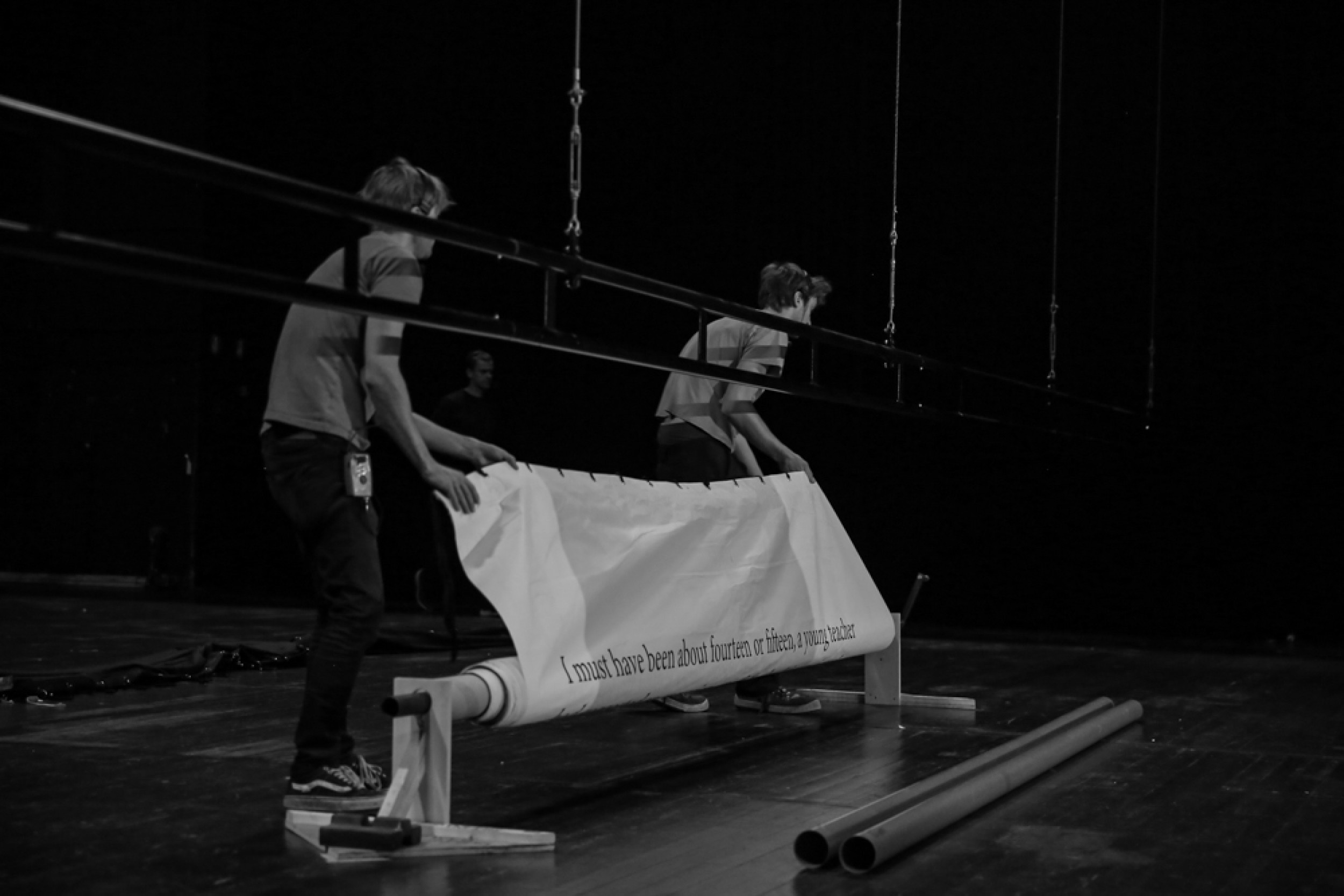
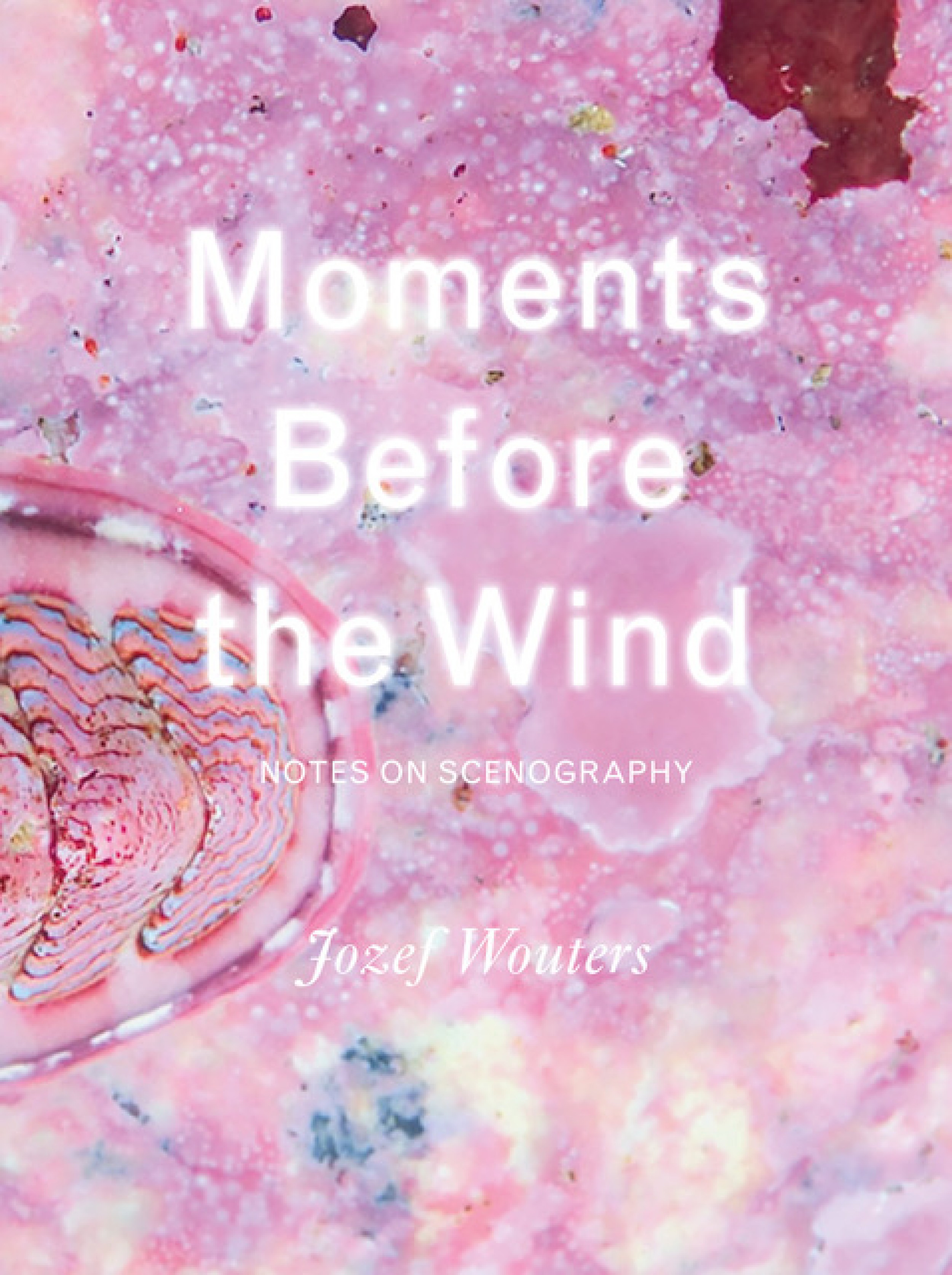
Structures in words, ephemeral spaces made of cardboard and imagined scenographies – yet there was no time to build them. Fragile spaces made of paper that transform the theatre into a gigantic book. Scenographer Jozef Wouters and dramaturge Jeroen Peeters were going to make a performance around this idea when the coronavirus struck, the event was cancelled and suddenly they had too much time on their hands during those strange weeks of lockdown in the spring of 2020.
Moments Before the Wind has therefore become a book, a collection of notes on scenography that offer an insight into the poetics and artistic practice of Jozef Wouters and Decoratelier. Reflections on space, scenography, making art and institutional critique invite the reader to think along or to raise questions, to think out loud and to invent their own space.
Moments Before the Wind was published by Varamo Press in September 2020 and is for sale in our webshop.
PERFORMANCE
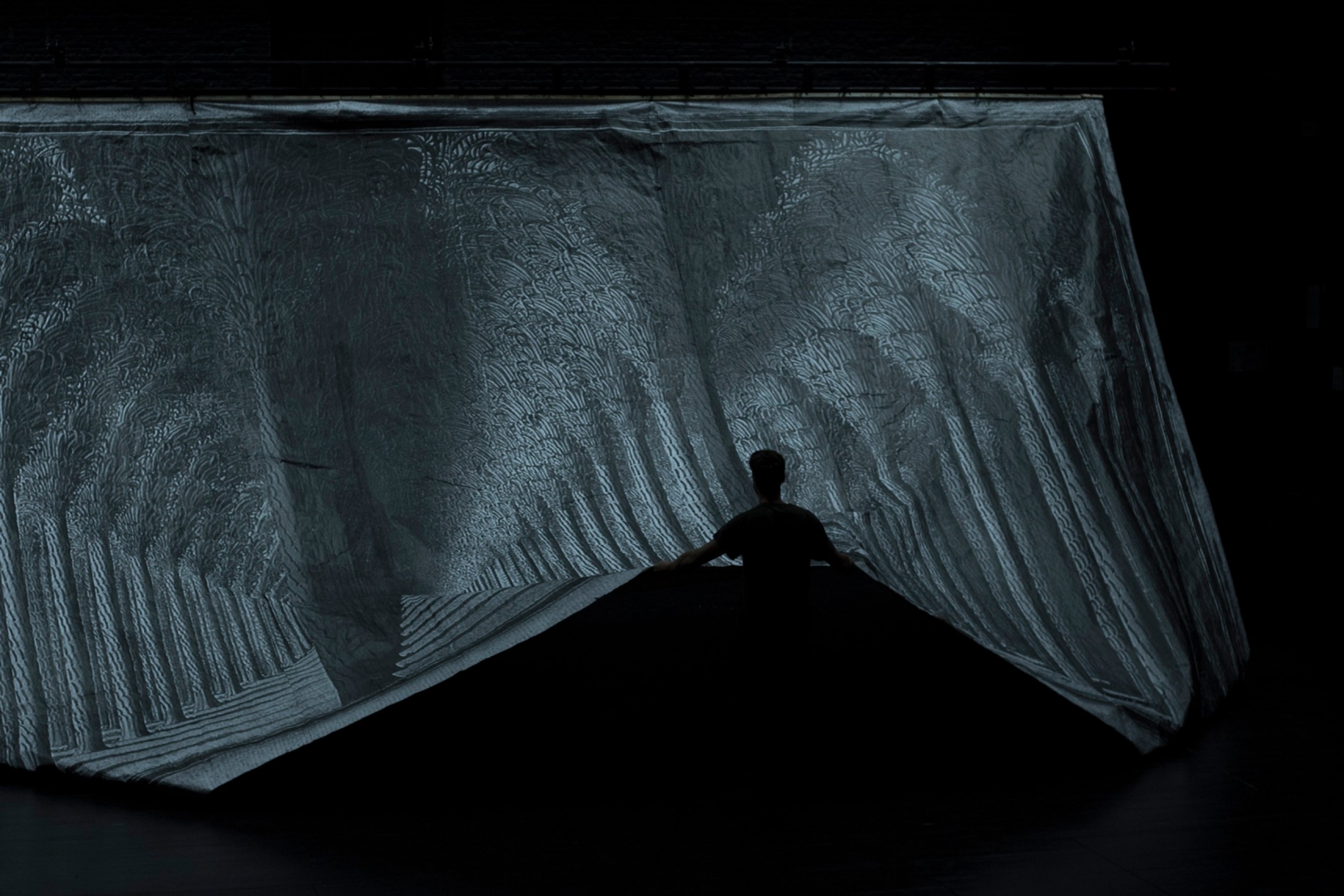
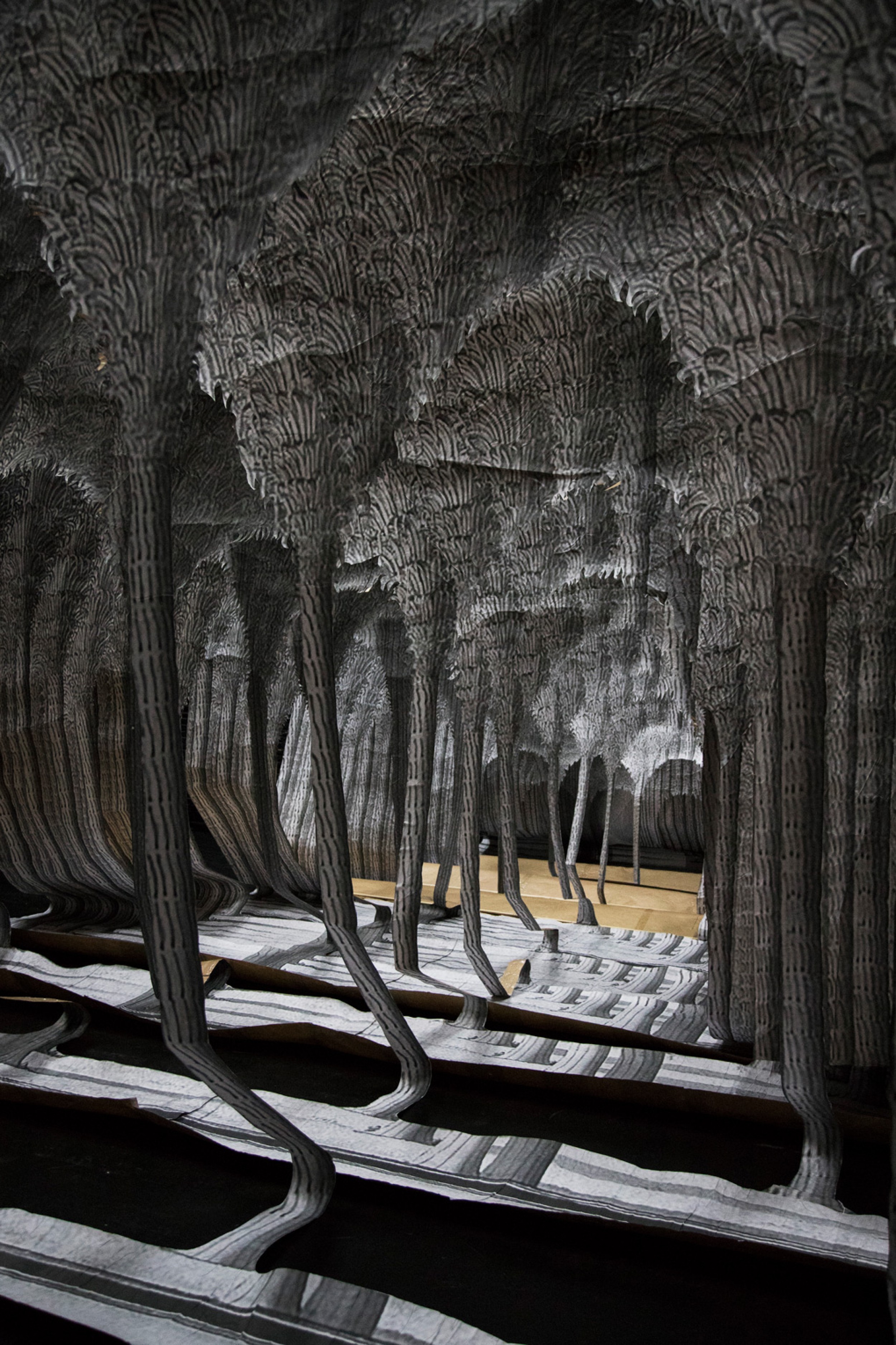
Moments before the wind is also an autonomous performance, created in De Vooruit on the occasion of the book presentation in September 2020. A replica of the 18th-century set Bosco di Palme — recreated in 2016 by Decoratelier in collaboration with the Palestine artist Rimah Jabr — enters into a dialogue with the Theatre Hall. The voice of Jorge Luis Borges becomes the score of the piece: his lecture Metaphors (1967) sparks a duet between scenography and imagination, which constantly disrupts and renews your gaze.
CREDITS PERFORMANCE
Concept Jozef Wouters & Jeroen Peeters
Text Jorge Luis Borges, Rimah Jabr
Many thanks to Barry Ahmad Talib, Dries Douibi, Bruno Forment, Ine Craenhals, Chris Keulemans en KVS (Brussel)
Licht & sound Michiel Soete
Technischal director Menno Vandevelde
Production Damaged Goods
Co-production Kunstencentrum VIERNULVIER
© Laura Van Severen
© Laura Van Severen
© Laura Van Severen
Spaces for the Night
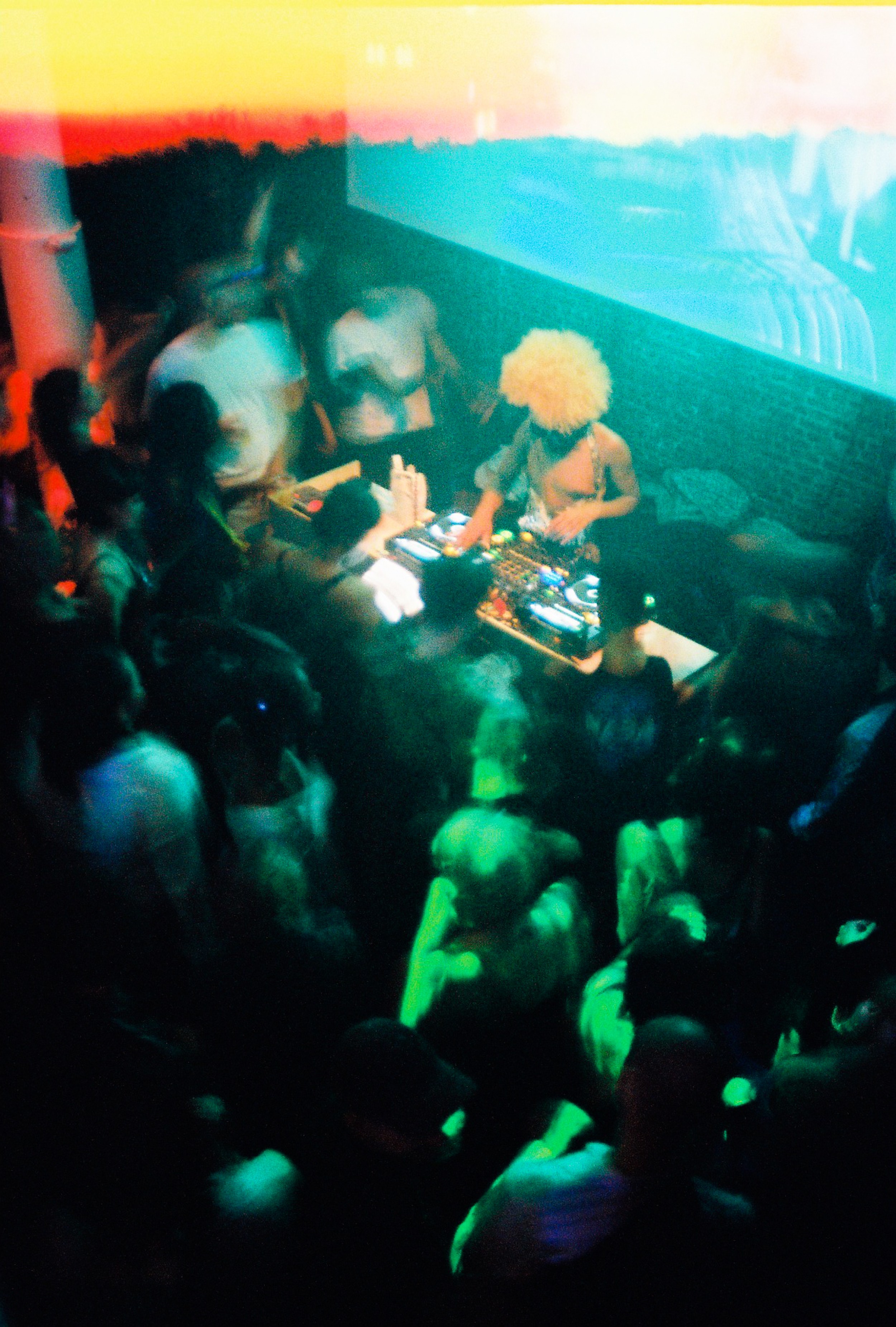
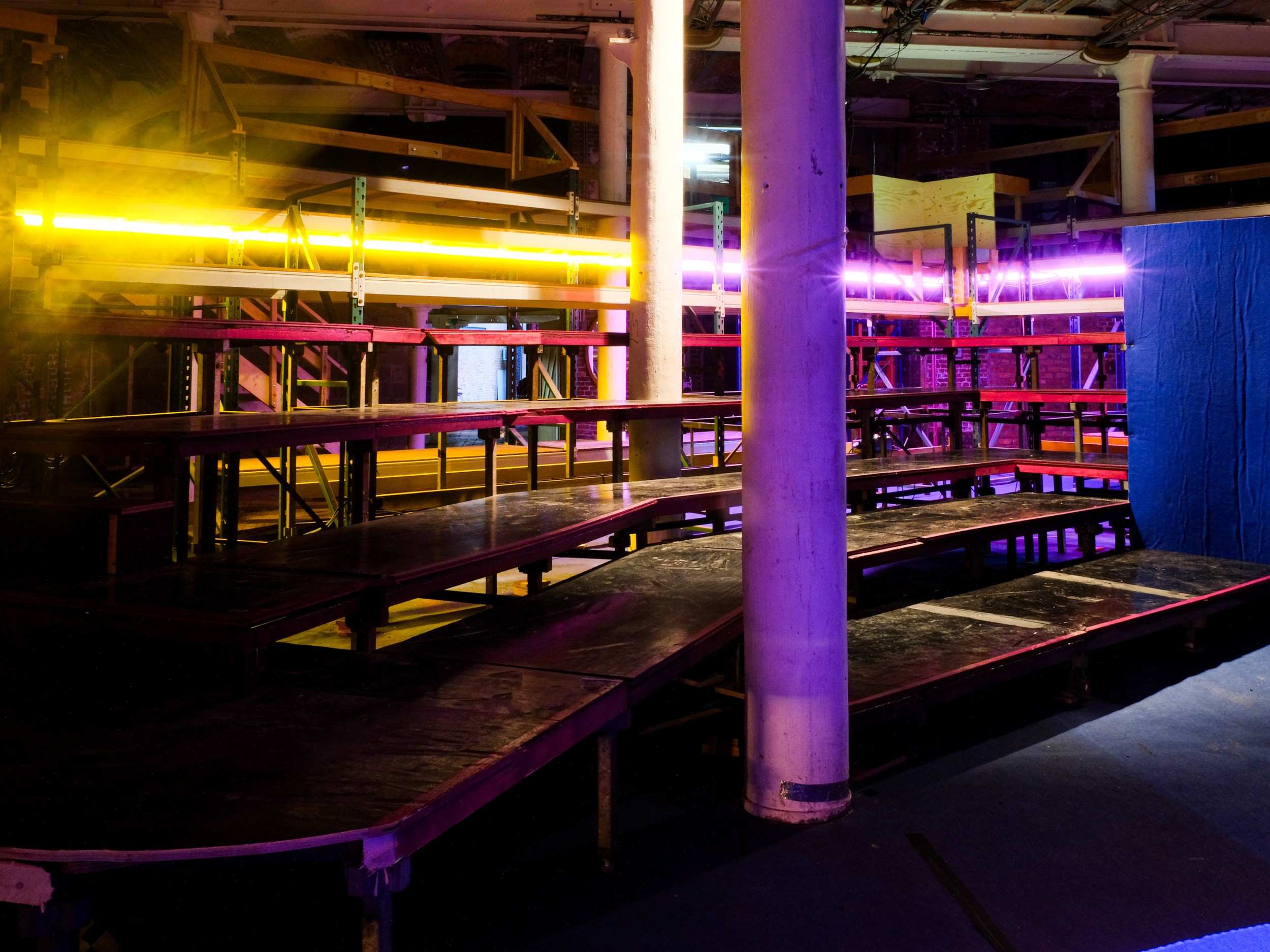
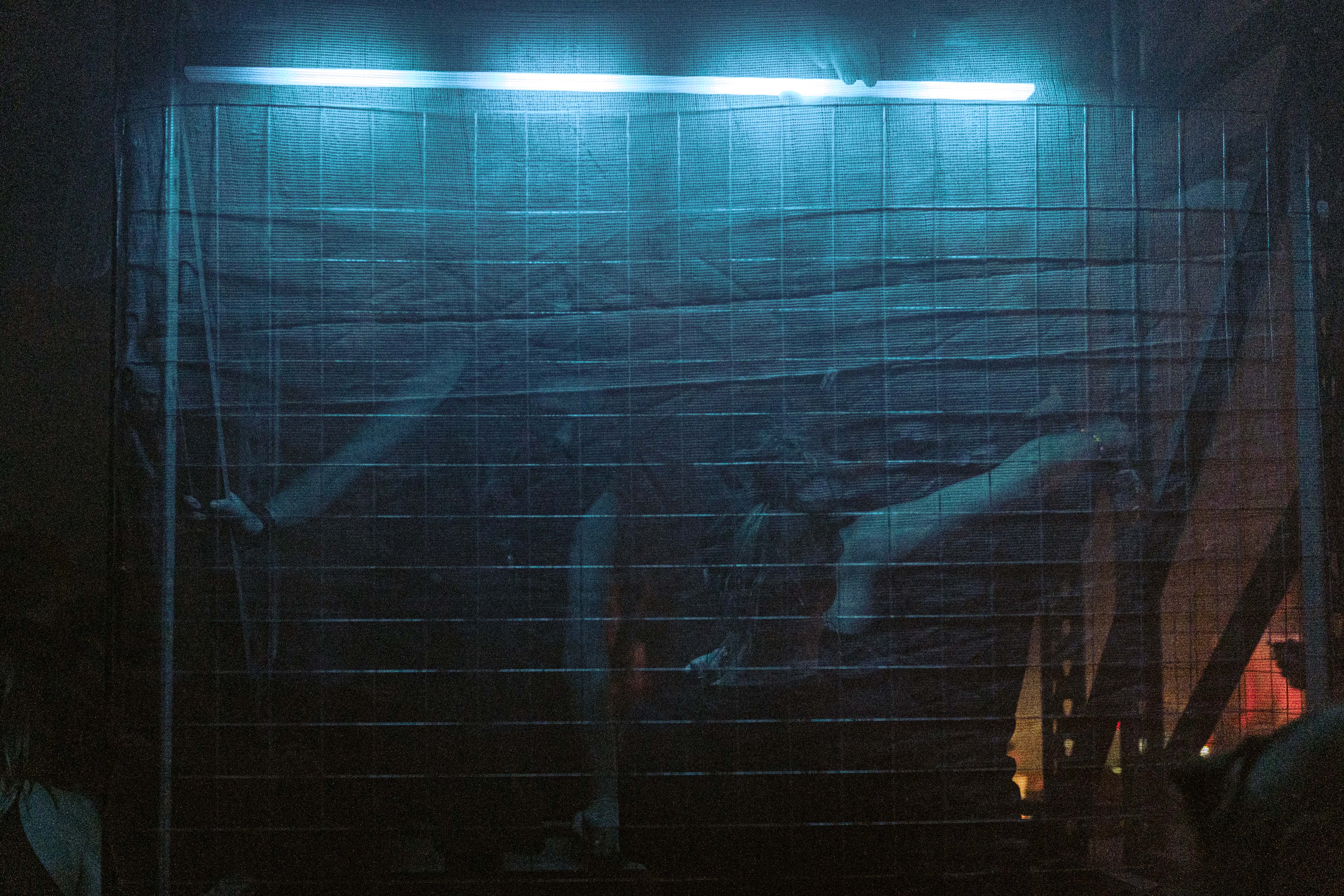
I design nightclubs the way a gardener cares for plants. I spend time in the club spaces I’ve designed, learning from the energy, the people and their behaviour throughout the night. It is like a conversation: I listen and the club tells me what to adjust.
In this ‘danced lecture’ the artist and scenographer Jozef Wouters takes you on a tour through his archive of spaces made for nightlife. Over the years, Wouters has created numerous clubs both inside Decoratelier, his workspace in Molenbeek, and in other places, such as music festivals. ‘Making spaces for the night challenges my understanding of space, time and again. I am interested in the play between open and closed, watching and being watched, and how architecture can be a part of this. This performance is a way to keep the archive alive and to revisit some bygone spaces in the corners of my memory.’
Lecture-performance by Jozef Wouters
Created in conversation with Wannes Gyselinck
Originally commissioned by Charleroi Danse
Production Charleroi Danse and Damaged Goods

© Julie De Meester

© Julie De Meester
© Decoratelier club (2023) by Enzo Smits
© Horst club (2023) by Maryan Sayd
Scenographies
In addition to their own work and projects, Decoratelier Jozef Wouters creates scenographies in collaboration with various artists, makers and organisations.
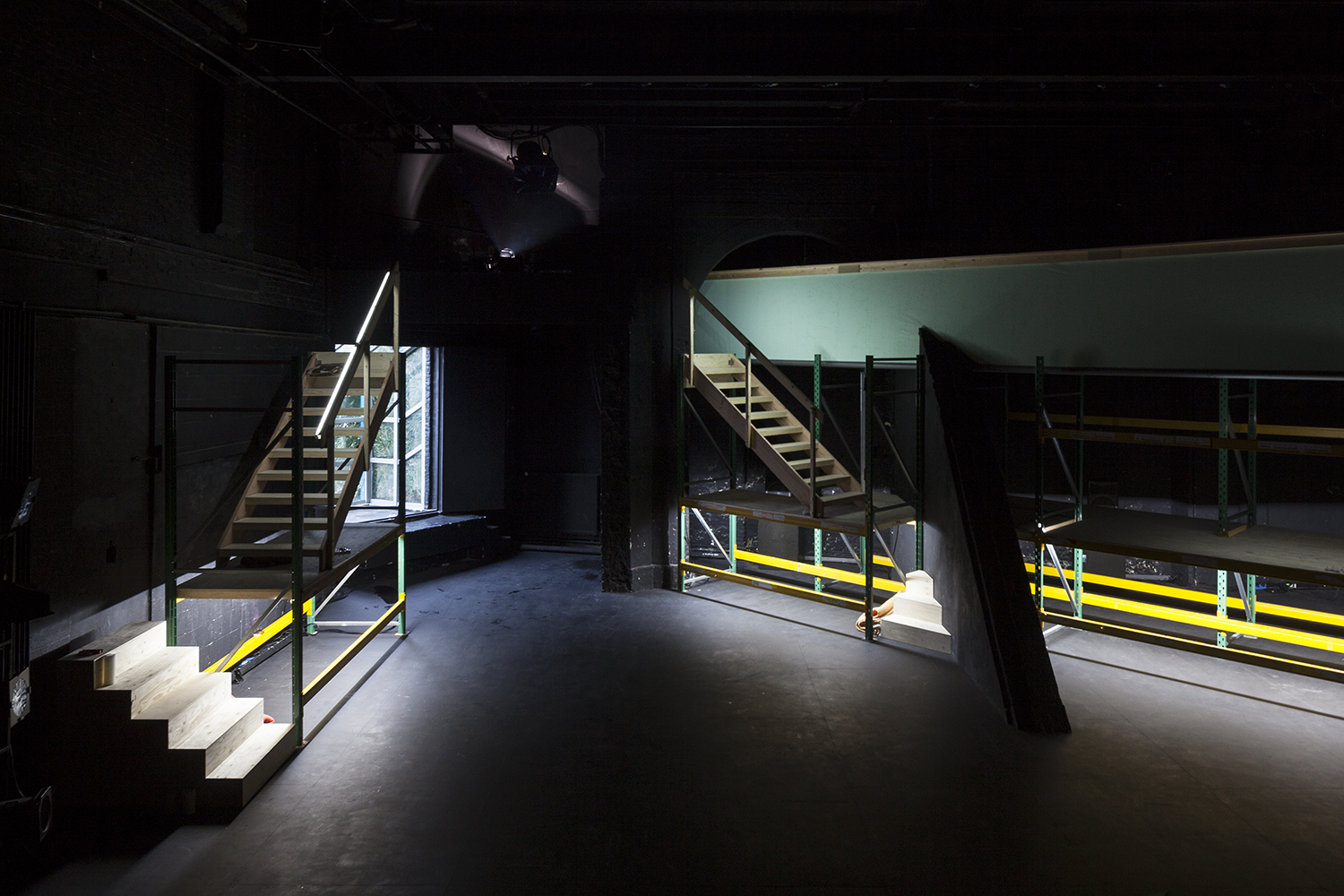
© Laura Van Severen
Scenography in collaboration with Florian Fischer for the piece 'To Name Herstory' (2018). Out of their conversations emerged an intuitive space, playing with reality and fiction.
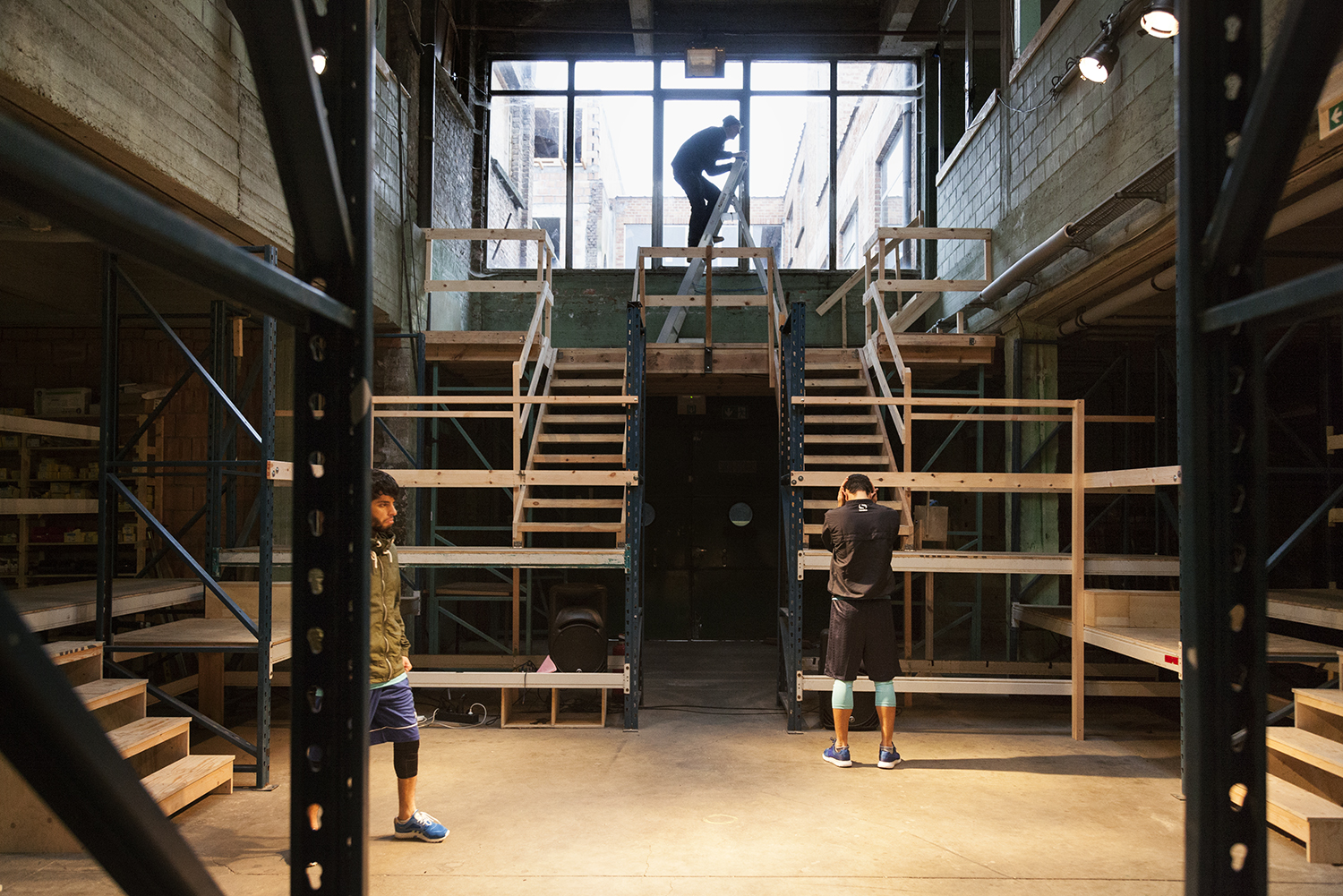
© Laura Van Severen
Scenography in collaboration with Radouan Mriziga for the piece '8' (2018). Together they transformed Decoratelier into a space that operates as a machine with two dancers at the heart.
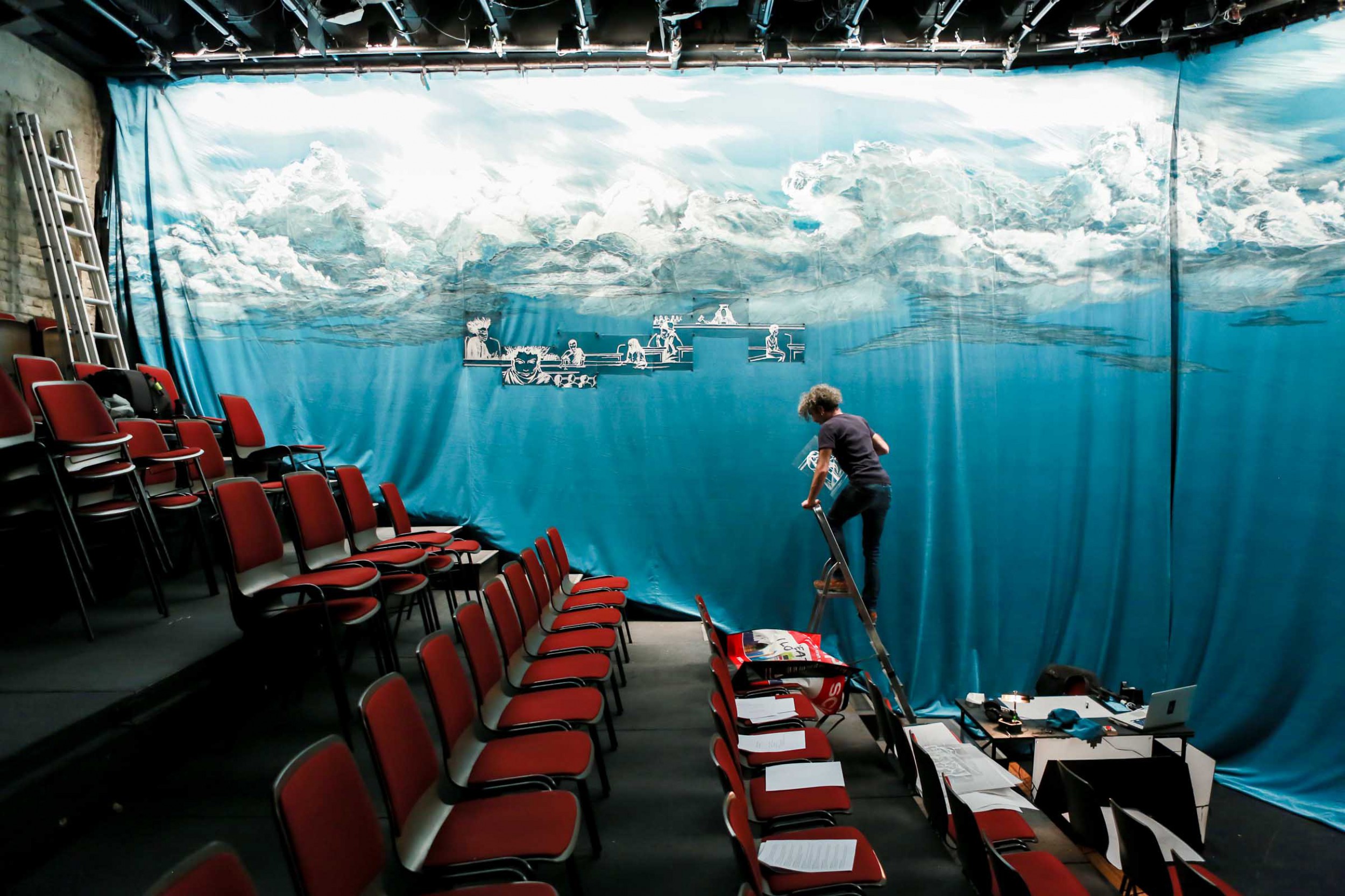
© Tine Declerck
Scenography in collaboration with Christophe Meierhans for the piece ‘Trials of Money‘ (2018).
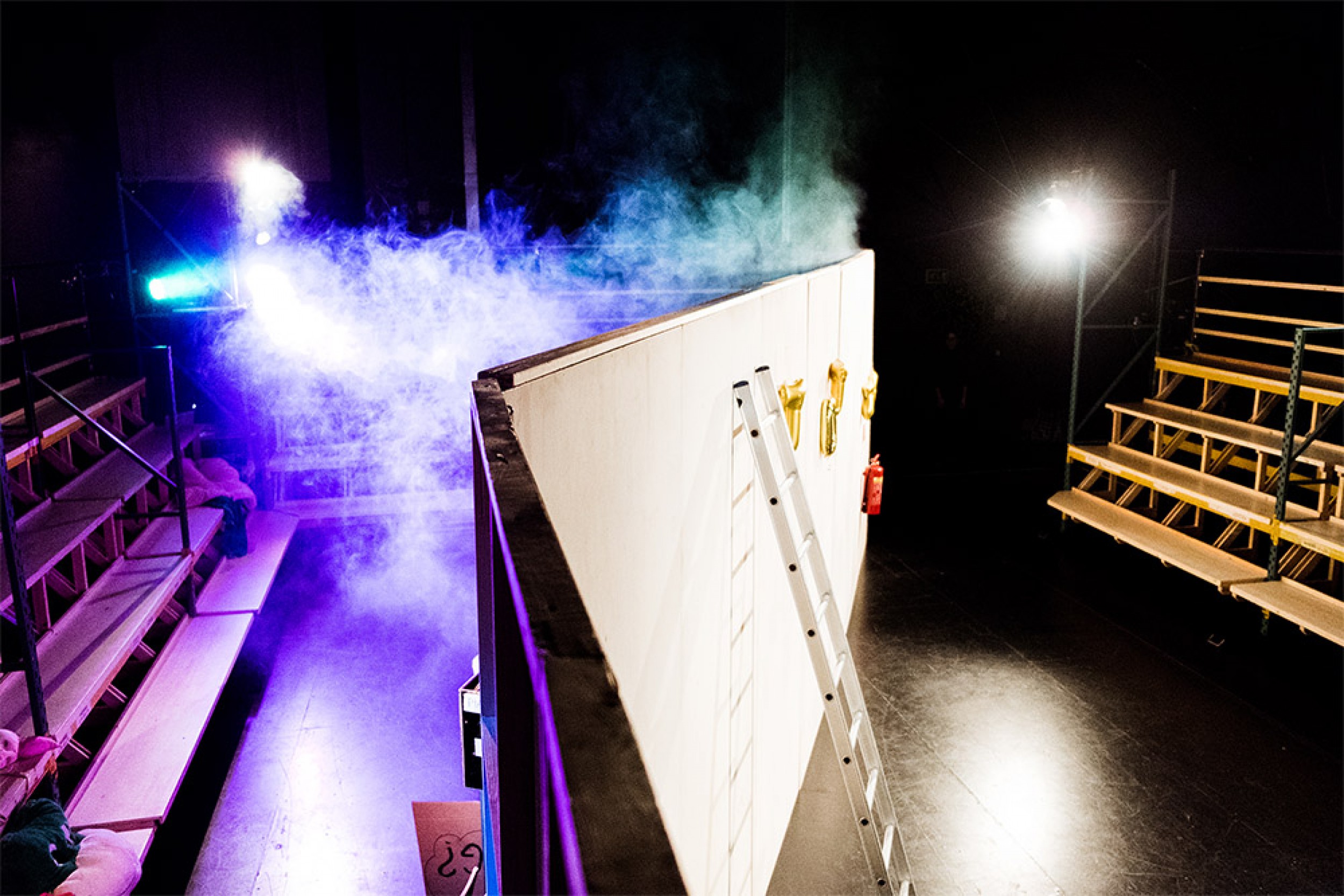
© Leontien Allemeersch
Scenography in collaboration with BOG. for the piece ‘KID.‘ (2017)

© Annemie Augustijns
Scenography in the peristyle of the Opera in Ghent, built for ‘The Night Shift‘, a performative program by Gouvernement. ‘The Night Shift‘ was canceled and The space was revamped as ‘REST‘, an alternative location for performances and leisure, in June 2021.

© Annemie Augustijns
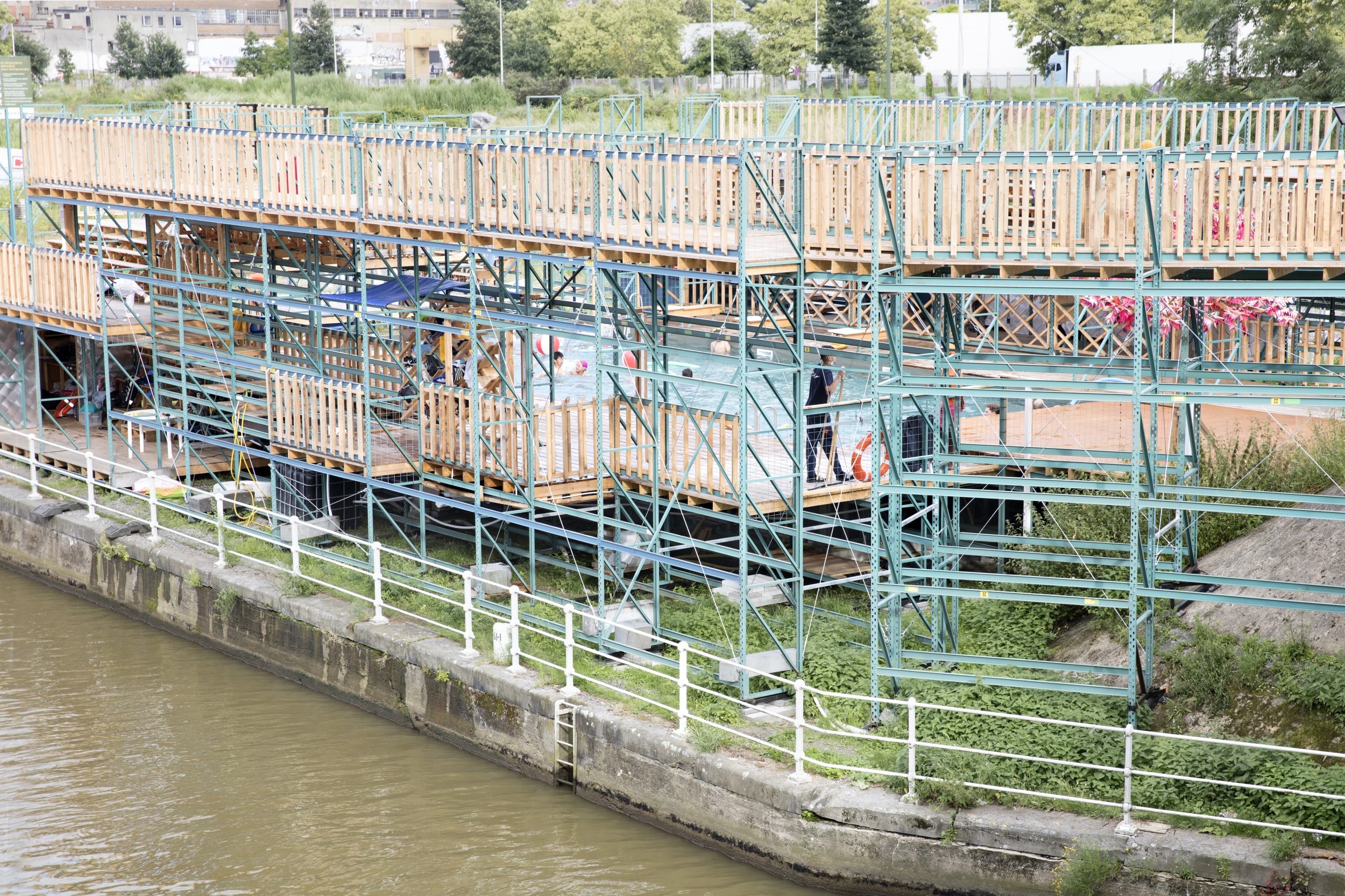
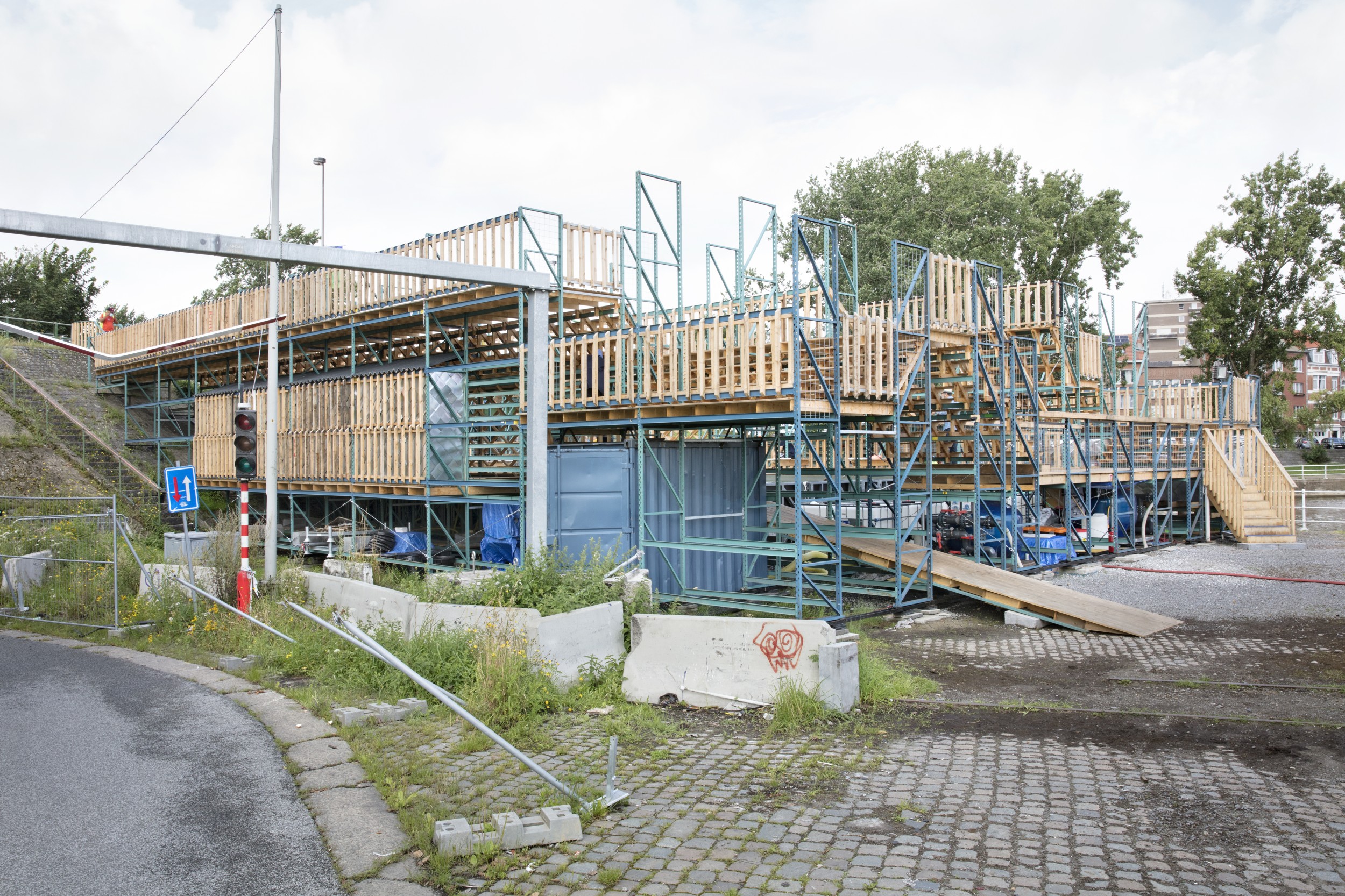
Scenography for FLOW, a project initiated by Pool is Cool, designed and built by Decoratelier Jozef Wouters and supported by a.o. Kunstenfestivaldesarts. Envisioned as a temporary public outdoor swimming pool in Anderlecht (Brussels), FLOW opened in July 2021 with the ambition of becoming a radically inclusive leisure space. FLOW was built together with a large group of youth from the neighbourhood, who contributed not only their hands to the construction work but also their voices to discussions about access to public space and privatisation.
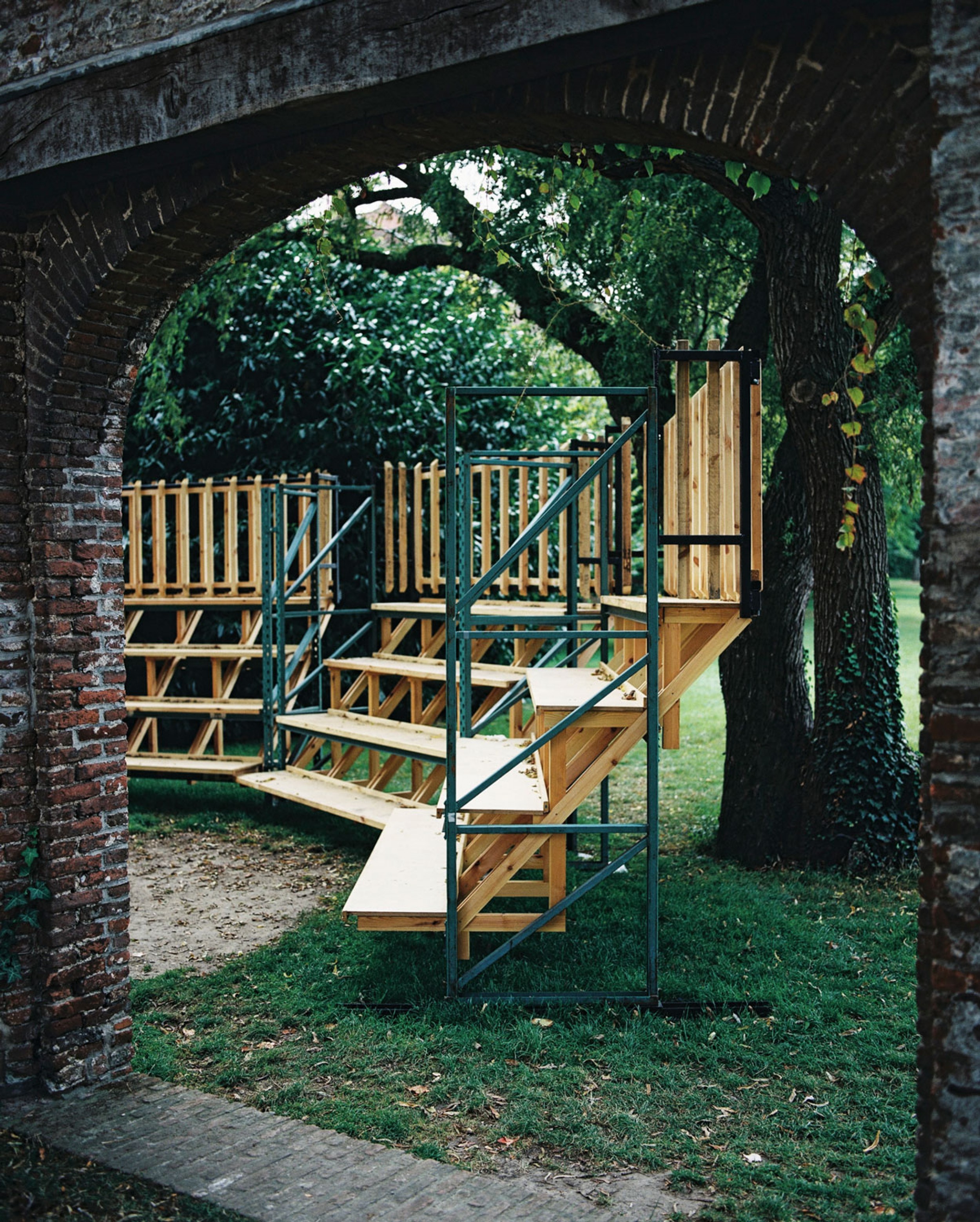
© Enzo Smits
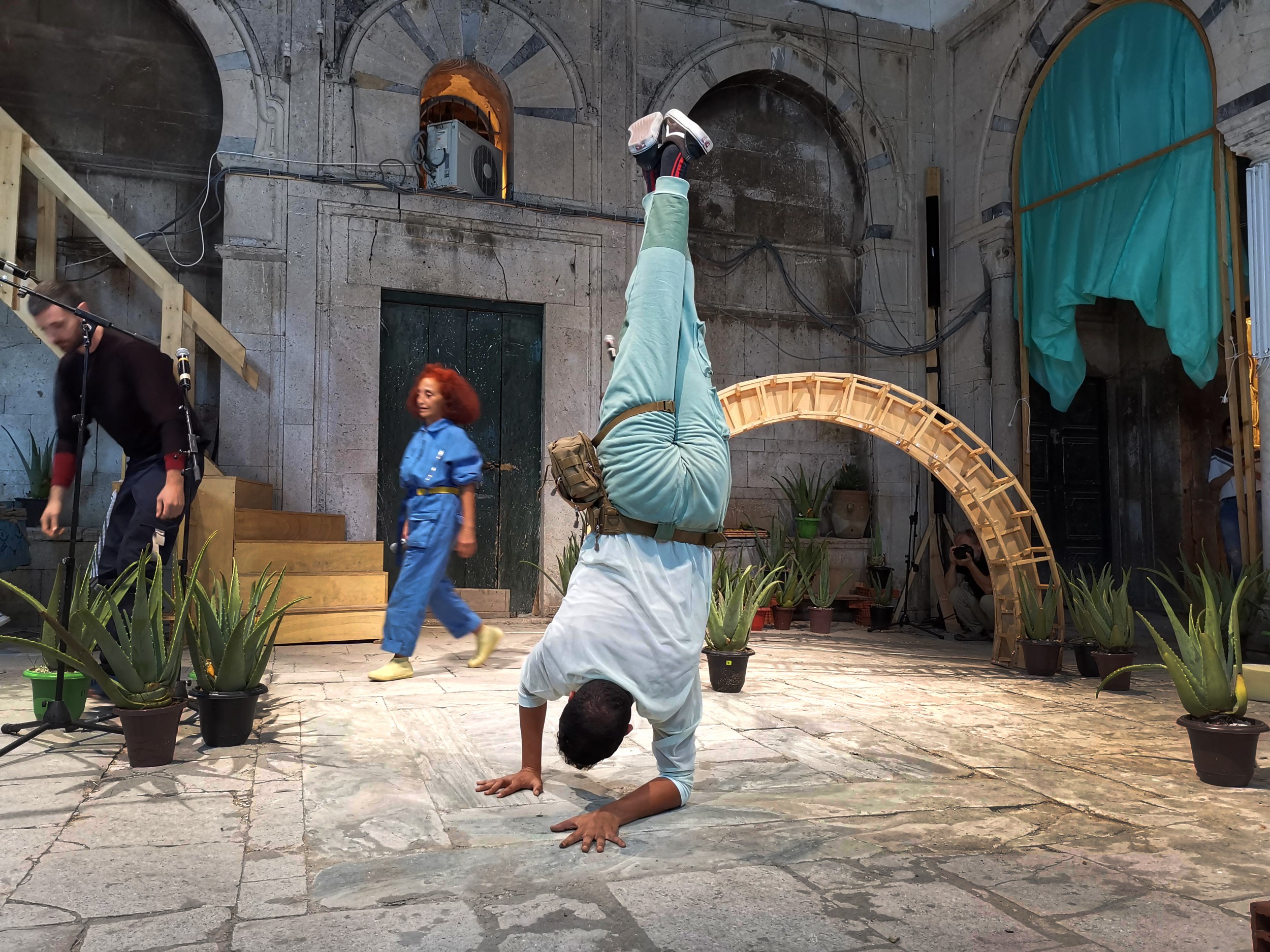
Scenography for Dansstorm, a festival organised by Danspunt in 2021, in the Begijnhofpark in Kortrijk. Decoratelier Jozef Wouters designed a semi-circular tribune that embraces the existing architecture.
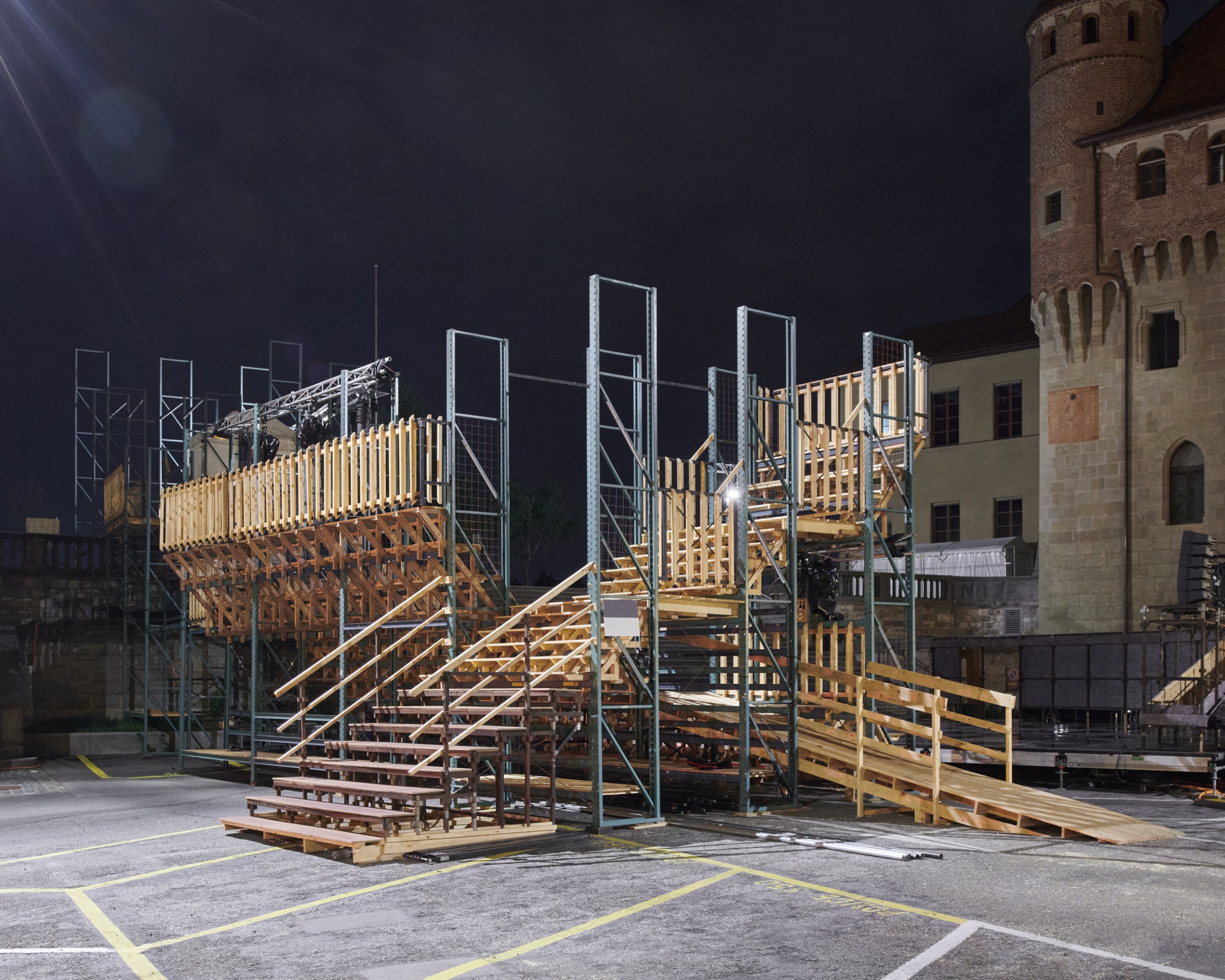
© Guillaume Baeriswyl
Decoratelier designed a stage on the Place du Château for Festival de la Cité in Lausanne, starting with what‘s already there. To the stone stairs in the square they added a structure that shifts the audience’s gaze and turns the stairs into a performance space. 5-10 July 2022
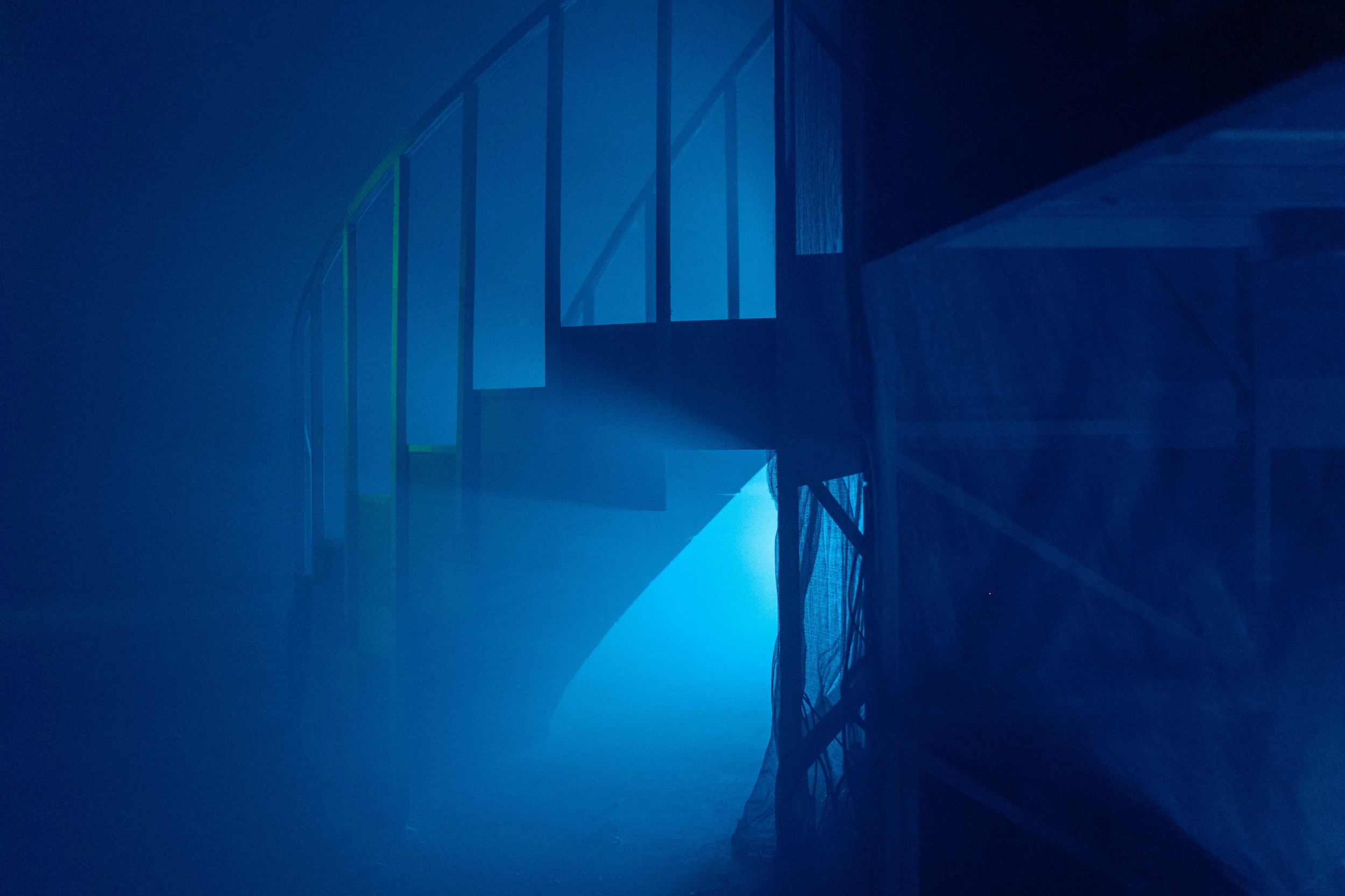
© Maryan Sayd
The architecture and scenography of Horst Club (October 2023 - March 2024) is a duet by Jozef Wouters & Carolin Gieszner. ‘Two scenographers walking inside an empty hall, drawing lines with chalk on the floor. We talked about water and fire evaporating in a slow vortex. We envisioned a space made of humidity, of clouds of vapour that curl up around themselves and condense on the faces of the dancers, the walls and the ceiling, dripping down from one skin to another. We imagined the layers in between and started adding them, softening the walls, embracing the bodies. Our proposal became a movement; a temporary gathering of materials and dancers, each one making their own spiral inside a body that is bigger than their own.‘

© Tobias Kruse
In 2024, Jozef Wouters designed the scenography for Give up, Old Ghosts!, a performance by Benjamin Abel Meirhaeghe at Schauspielhaus Bochum. The set was built using repurposed materials and was inspired by Binnenzicht eener smidse, a design by Albert Dubosq from 1907 for the Antwerp Opera. With only a black-and-white photograph and a floor plan, Wouters reconstructed the set in Decoratelier — just two streets away from where Dubosq painted the original over a century ago. For a time, Decoratelier became a kind of archaeological site, where a lost set was unearthed and brought back to life.
BORING – Three evenings of soil readings
4-6 September 2025 in Decoratelier, Kortrijkstraat 47, 1080 Sint-Jans-Molenbeek
As temporary dwellers of an abandoned factory in Molenbeek, Decoratelier find themselves on heavily polluted ground. A thick layer of concrete prevents oil, chemicals and heavy metals from percolating into daily life and work above the ground. What are we actually treading on? If we’d take a closer look at the soil, what invisible histories and alternative stories would we find?
Decoratelier organizes a symposium around these questions: Boring (dictionary: drilling; enlarging an existing hole). Each day we bore together. We invite dwellers and expert readers to perform a drilling, read a soil sample and amplify the histories it contains. Together, we speculate about future ecosystems, forms of life and modes of dwelling that may thrive there. Boring proposes a journey with several talks and performances in a special scenographic setting, for visitors to think along and carry these stories forward.
In collaboration with Flanders Architecture Institute, MolenbeekforBrusssels2030 and KANAL Centre Pompidou
4 September – Living ground – 18:00 - 23:00
How can we consider the ground as a living being? In a series of short interventions on site, filmmaker Fairuz Ghammam, builder Jeff Verschueren and architect Sebastiaan Willemen uncover various aspects of the terrain and its ecosystems by following roots, mycelium and other traces of imported and dreamt landscapes. In our adobe theatre, anthropologist Livia Cahn and architect Rachel Armstrong discuss the violence of drilling and extraction, to then explore the need for ‘soil literacy’ and alternative ways of relating to the living ground. A concert by Nathan Daems concludes the evening, unfolding vessels of sound.
5 September – Excavating past and future – 18:00 - 23:00
In a series of short interventions on site, filmmaker Fairuz Ghammam, architect Bernardo Robles Hidalgo and urban researcher khalda el jack dig into the roots of a place and the challenges posed by historical pollution and displacement. In our adobe theatre, geo-archaeologist Yannick Devos and visual artist Rossella Biscotti follow the activities of archaeologists who read the ground as if it were a book, excavating both past and future forms of living and dwelling. A world of clay is brought to resonate in Maika Garnica’s concert.
6 September – Narrating more-than-human worlds – 18:00 - 23:00
How do we narrate and make sense of underground worlds? Do we need consent or rituals to descend into the holes of earth? In a series of short interventions, architects and urban researchers khalda el jack, Bernardo Robles Hidalgo, Jeff Verschueren and Sebastiaan Willemen uncover various aspects of the Decoratelier site, relating to pollution and remediation, displacement and resilience of ecosystems. By listening to the soil, Marie Brumagne David and Bram Van Cauwenberghe evoke a ‘sonic diplomacy’ with more-than-human worlds. In our adobe theatre, Aga Batkiewicz and Stefanie Wenner seek guidance from rubble and minerals, diamonds and stars to experiment with storytelling ancient and contemporary that seeks to narrate our entanglements with history and with the earth. Afterwards, Inne Eysermans invites us to prick up our ears and listen critically to songs carried by the soil.
Full programme
Curated by Jeroen Peeters and Jozef Wouters
Concerts curated by Matinée
Produced by Coreatelier
Thank you to Cassonade, Nina Serulus and the Summer Birds
With the support of Damaged Goods, VAI – Flanders Architecture Institute, KANAL – Centre Pompidou, Molenbeek for Brussels 2030, the Flemish Authorities and the Flemish Community Commission

© Julie De Meester
Days to Pass By
Decoratelier opens its doors for the second edition of Days to Pass By. During this winter festival, we present the artistic projects of our residents and the spatial experiments that took place on the site this autumn. For two weekends (13-14 en 20-21 December), art, music and food come together in the solidarity restaurant Cassonade, which is transformed into a unique performance space.
From 10:00 to 17:00 you can drop in freely and experience various performances, installations, and music. Brunch is provided by the cooks of Cassonade and the culinary collective Otark. You can also browse to your heart’s content in the cookbook library of Charlotte Koopman (Otark).
Over the past months, three artists have been using Decoratelier as an artistic base, with the support of Gouvernement vzw, the nomadic residency platform from Ghent. They have each explored the question: What space can I add to this neighbourhood and its existing ecosystem?
Dutch sound artist and composer Anne van de Star works on the physical and spatial dimensions of sound, where body, matter and technology meet. During her residency she is developing a hydraulic modular organ, an instrument that transforms breath, pressure and movement into sustained sound.
Brussels-based artist and architect Maximiliaan Royakkers will invite people into his residency space to have a conversation about beds and their rooms. Tracing the bed(room)s he has encountered in his research for the performance “Somewhere Here, Somewhere There” and during his visits to workers housing on farms around Europe, Romanian villages, container building factories and at Decoratelier, he invites those who pass by to muse together on these bed(room) experiences and discover what they might have to say about how we inhabit places.
The Brussels collective moilesautresart — Cathie Bagoris, Lila Ludmila Rétif and Beth Gordon — focuses on the hidden poetry of the everyday and the non-human world. Their residency starts from their “Where you stand, dig deep” - philosophy. For Days to Pass By, they willl lead a workshop called A little brick of butter, focusing on collective gestures involving butter. Through the reading of texts, the sharing of images and the singing of a normand folk song they will reflect on our relationship with animals and the food we produce. To participate in this workshop, register through this link: https://bit.ly/3YavcQt
PROGRAMME
FOOD
Every day 11h–14h
Enjoy the delicious brunches provided by Cassonade (Buffet Magique) on Saturdays and Otark on Sundays.
PERFORMANCES
13 December
09h45 Doors
10h–11h Performances by Anne van de Star and Maximiliaan Royakkers (Seasonal Neighbors)
14h–15h Performances by Anne van de Star and Maximiliaan Royakkers (Seasonal Neighbors)
15h–17h HOLY RADIO – DJ set by Jhayance
14 December
09h45 Doors
10h–11h Performances by Anne van de Star and Maximiliaan Royakkers (Seasonal Neighbors)
14h–15h Performances by Anne van de Star and Maximiliaan Royakkers (Seasonal Neighbors)
15h–18h HOLY RADIO – DJ set by Vivi + Marie, and a song by Martha + Ashley
20 December
09h45 Doors
10h–11h Performance by Fairuz Ghammam + Barry Ahmad Talib + Martina Labaere and by Maximiliaan Royakkers (Seasonal Neighbors)
11h–12h Workshop by moilesautresart (registration required via link)
13h–14h Workshop by moilesautresart
14h–15h Performance by Fairuz Ghammam + Barry Ahmad Talib + Martina Labaere and by Maximiliaan Royakkers (Seasonal Neighbors)
15h–17h Soete invites: bingo night and workshop by moilesautresart
16h–17h Karaoke by Denise
21 December
09h45 Doors
10h–11h Performance by Otark + Pink House Press and by Maximiliaan Royakkers
11h–12h Workshop by moilesautresart (registration required via link)
13h–14h Workshop by moilesautresart
15h–18h Matinée concerts
The Soft Layer - Tour
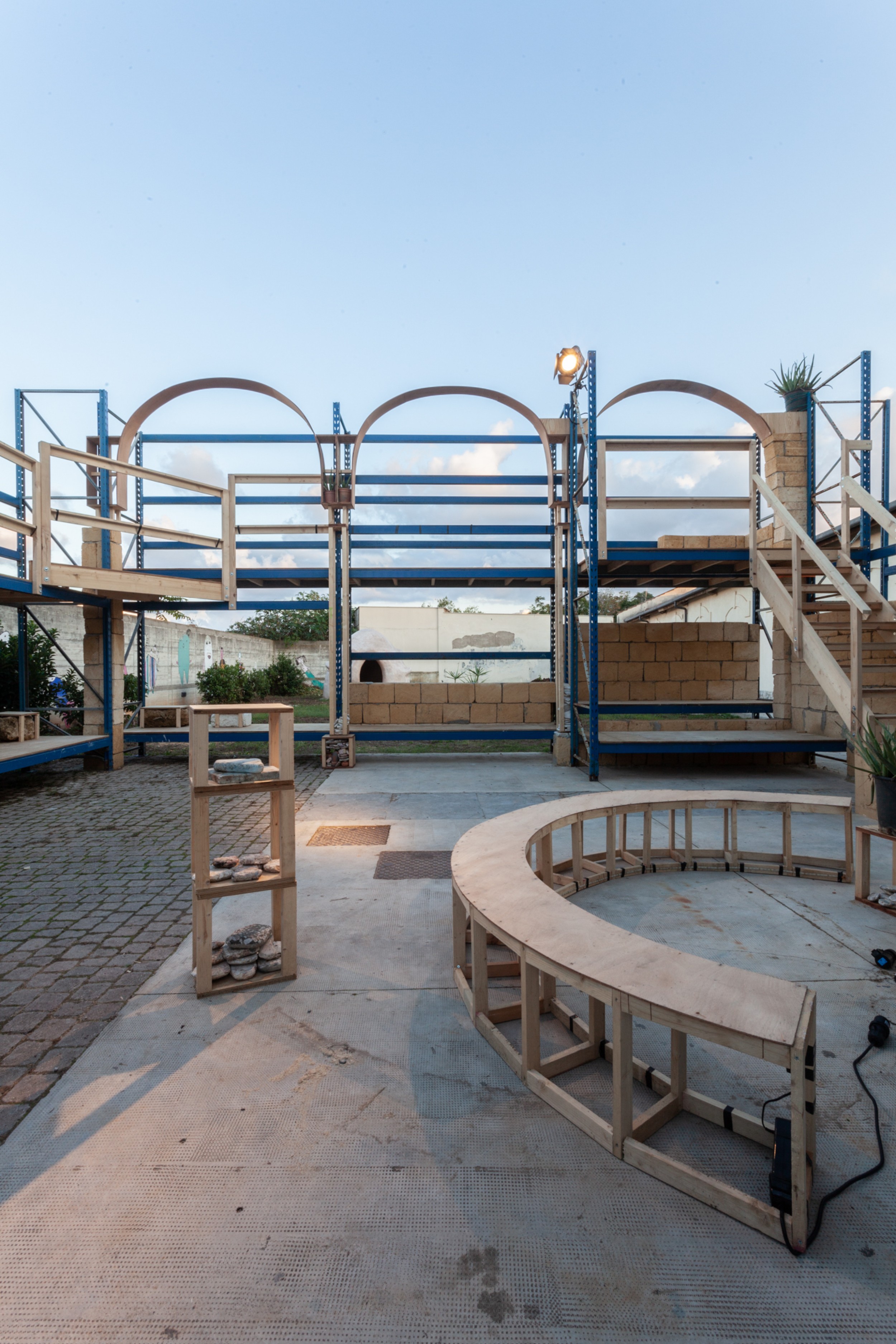
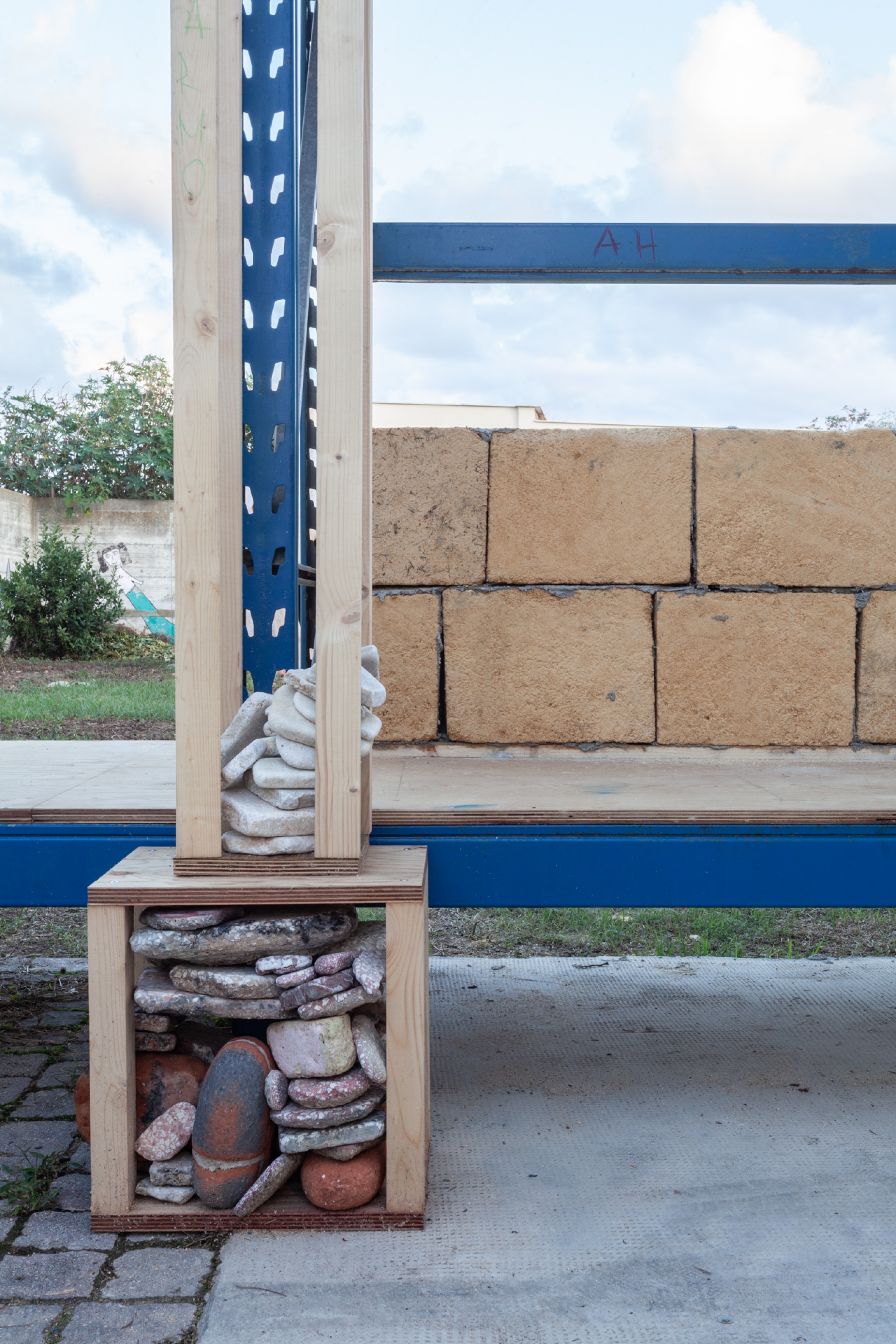
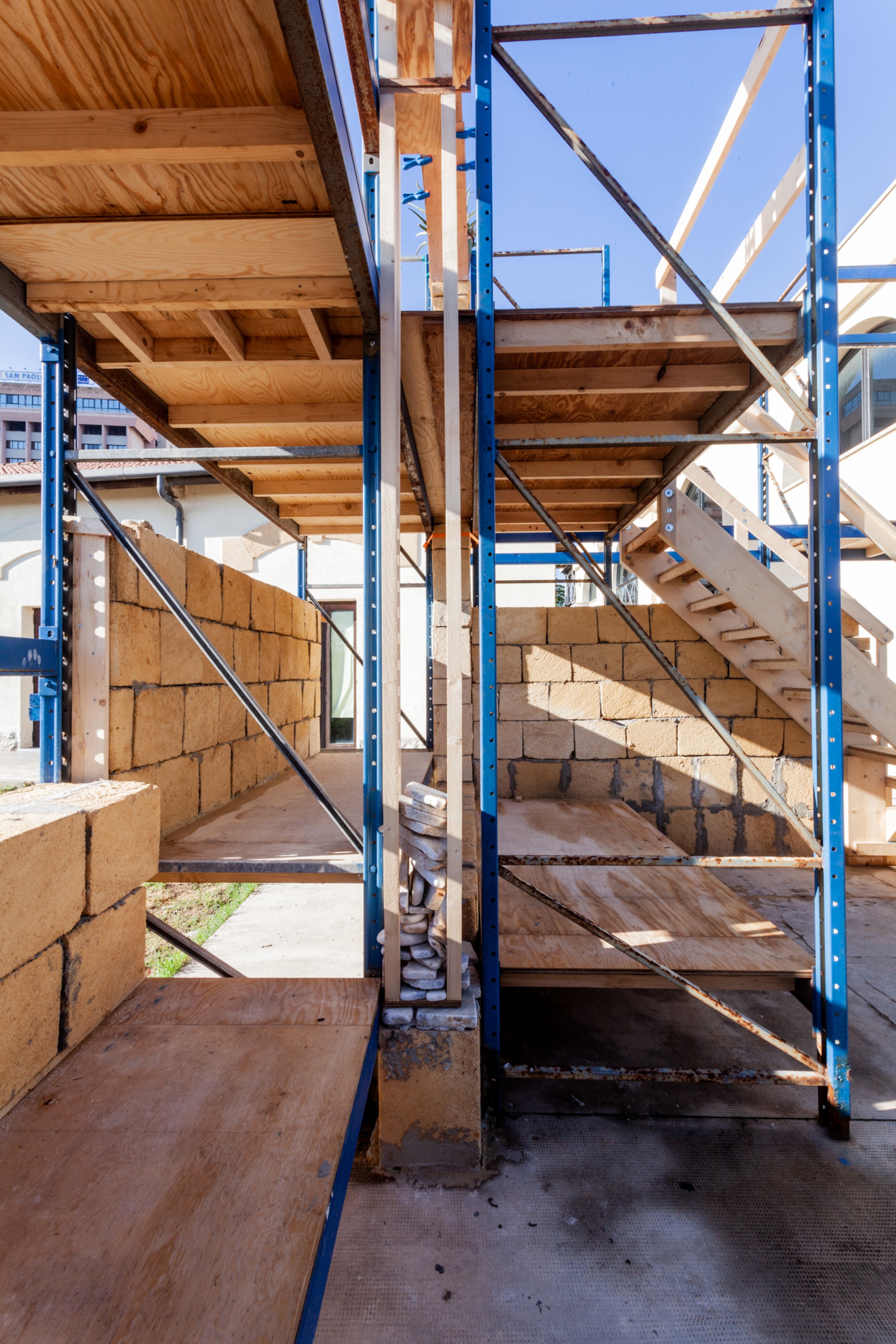
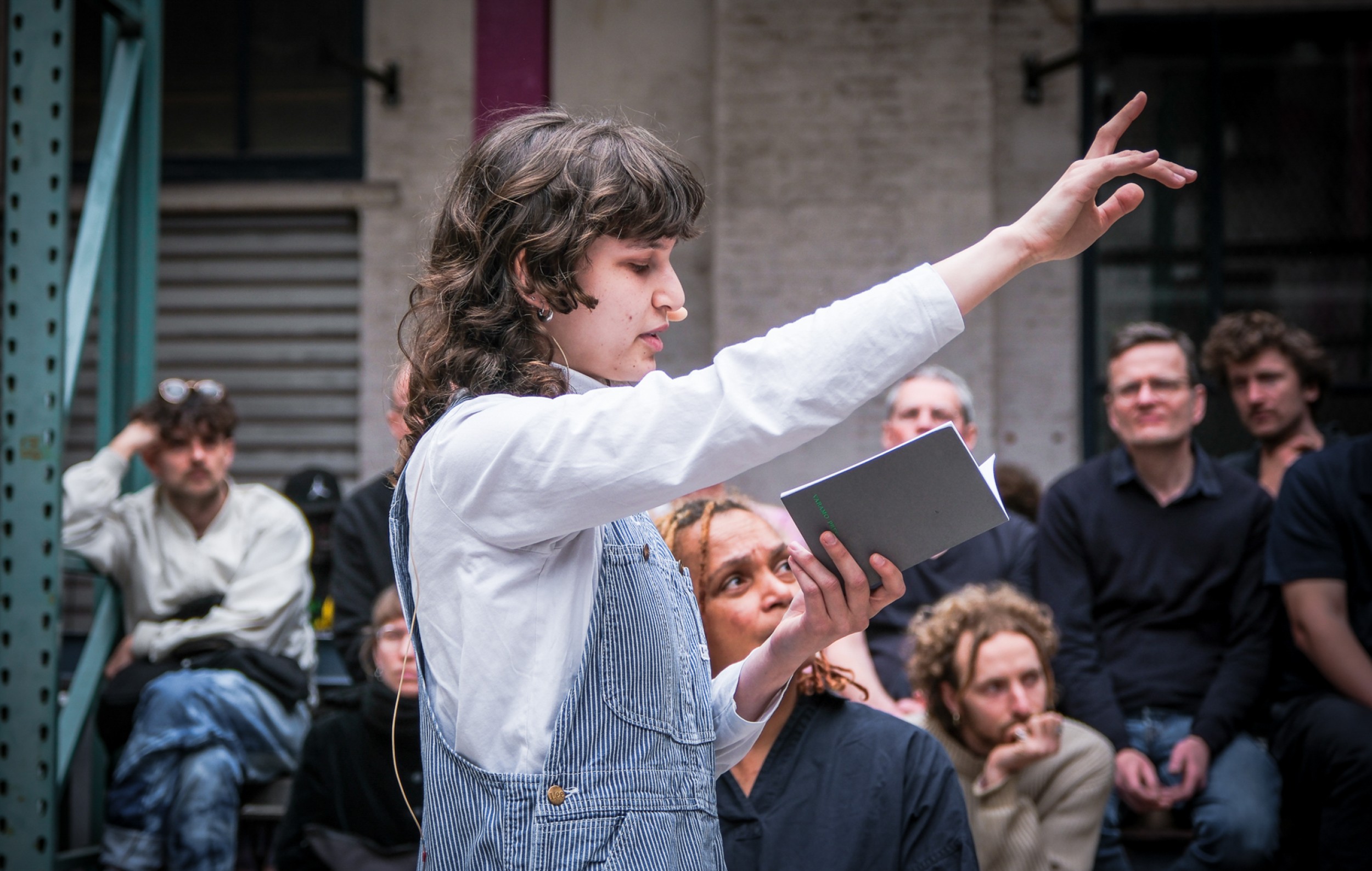
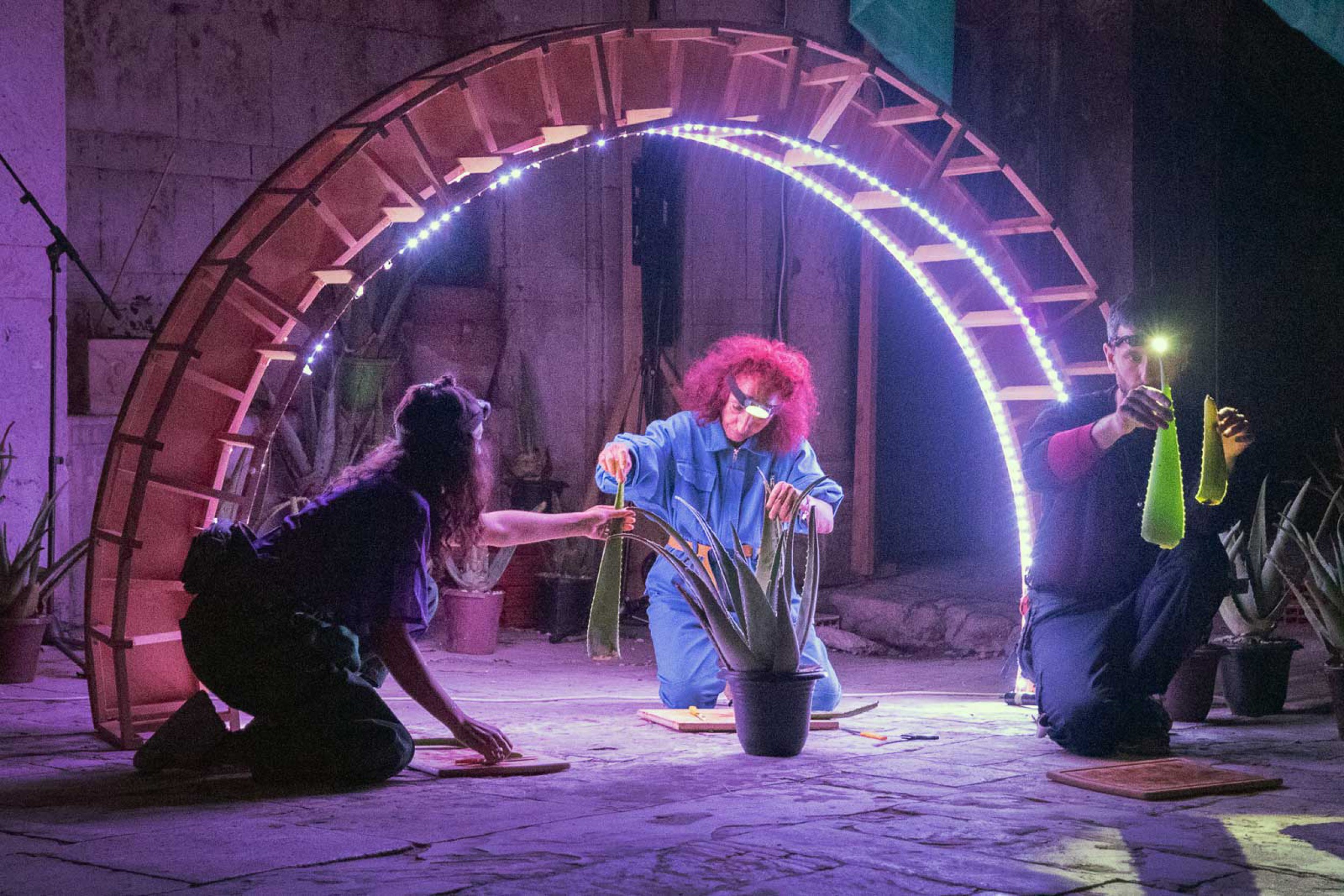
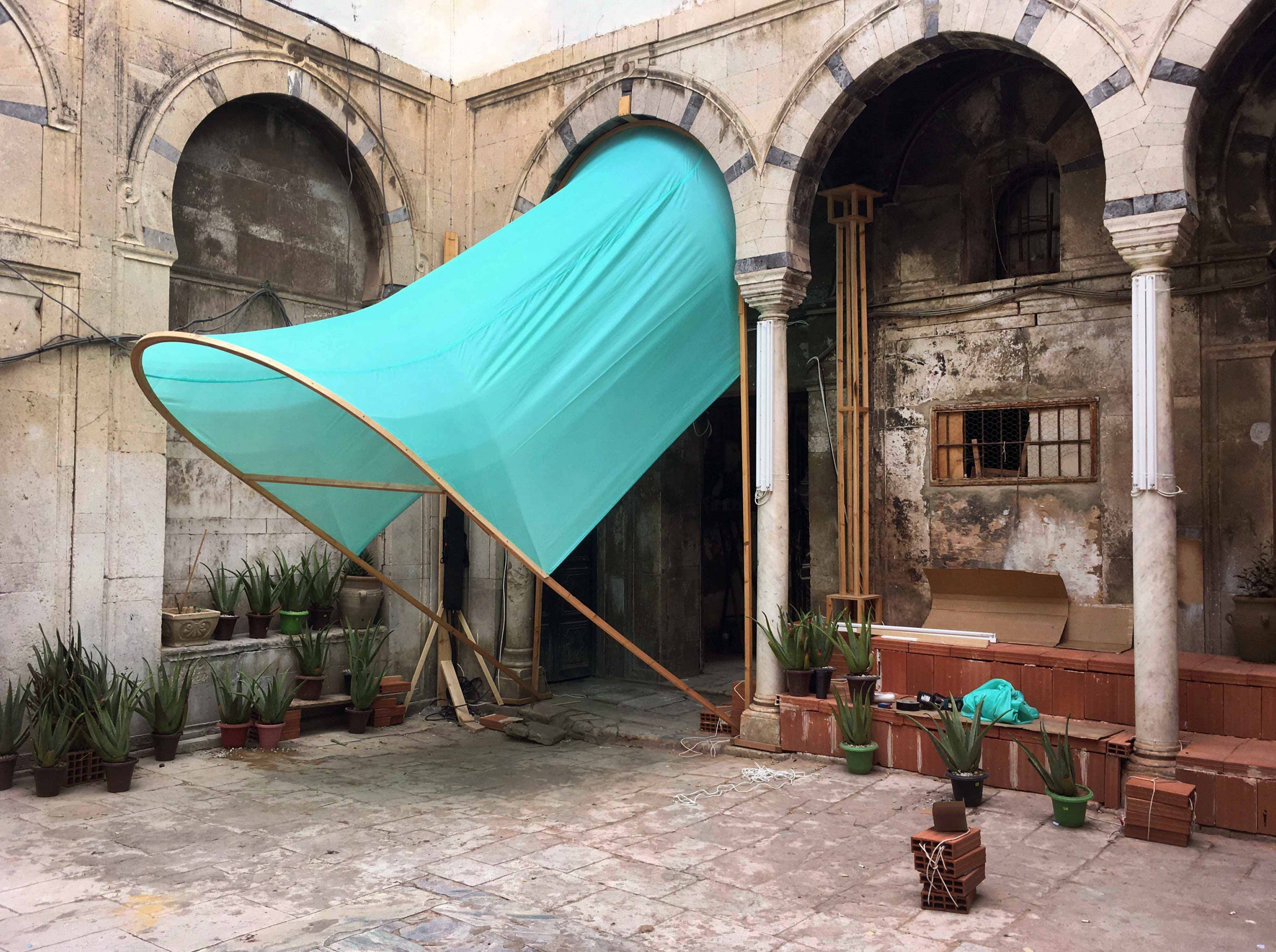
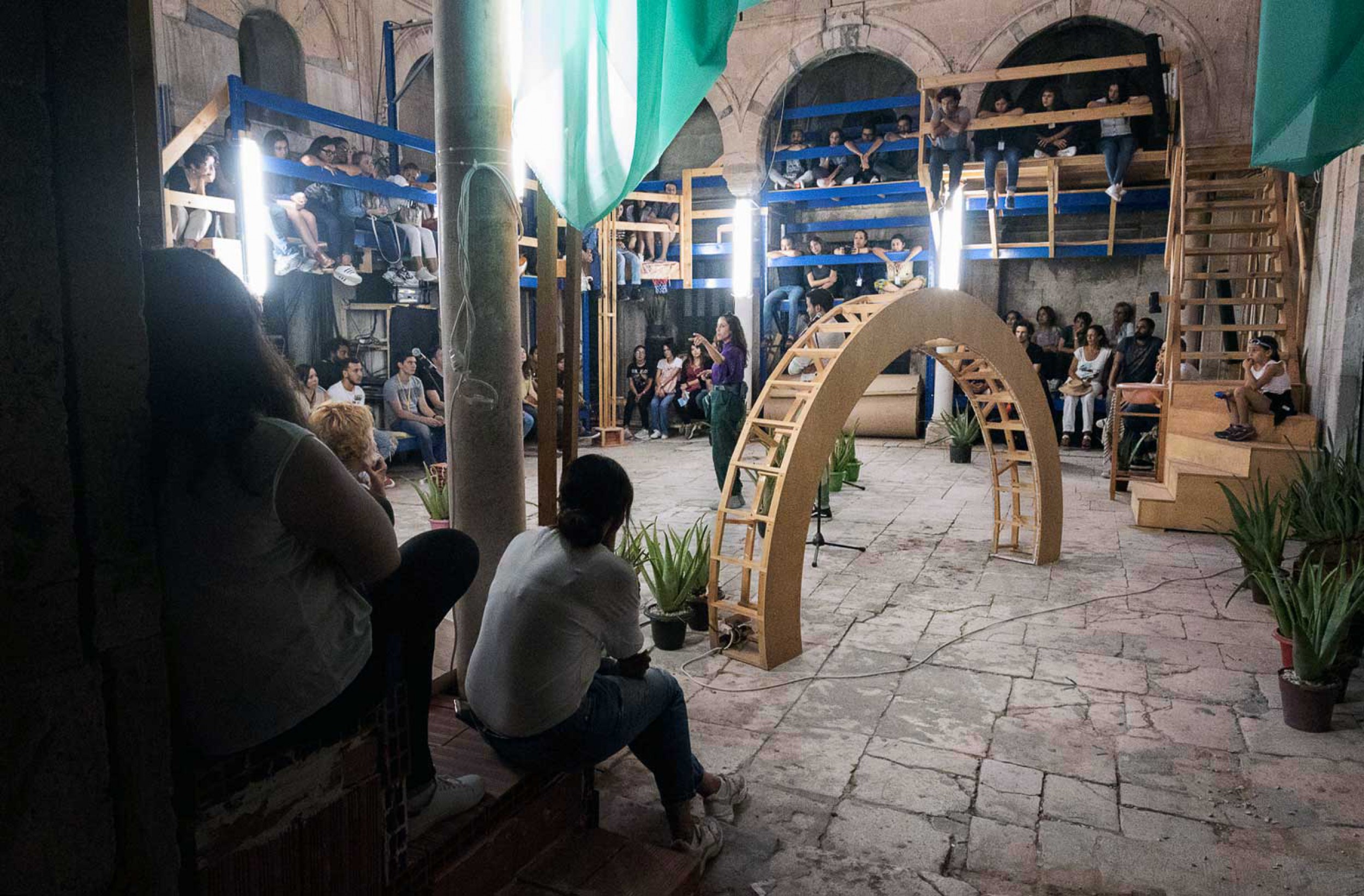
This performance is a continuation of The Soft Layer (Tunis), a site-specific work that took place from 2017 to 2019 in the historic building of Dar Bairam Turki in Tunis, as part of Dream City. Over several years scenographer Jozef Wouters collected stories and ideas from the inhabitants of the building. Inside its courtyard a group formed of young architects, neighbors, actors and one science fiction writer. Together, they undertook the renovation of the beautiful 17th century Ottoman palace. A different kind of renovation, one that doesn’t remove but adds a layer—a soft and temporary layer made of collective memories, stories and opinions about the building. Part of the work was a text that turns the building into a score, to be read at sunset as an act of care and a collective meditation on a building. If the past is the only imaginable future, then where are we now?
Two years later, after invitations in Palermo, Brussels, Ghent and Ostend, Jozef Wouters continues to restage the text of The Soft Layer in different courtyards in various cities in Europe. In each city, four local actors come together for one day to learn the original score by heart, helped by Decoratelier’s team of constructors, who will rebuild parts of Dar Bairam Turki as mnemonic devices for the performers to recall their text and imagine the building.
Performance text written by Jozef Wouters and edited by Jeroen Peeters
The Soft Layer Tunis was partly created during rehearsals with Fatma Ben Saïdane, Amira Chebli, Hichem Chebli and Vladimir Miller
Cast Belgium Youri Dirkx, Leila Benchorf, John Niyibizi, Cecilia Kankonda/Sara De Roo
Cast Palermo Gisella Vitrano, Erika La Ragione, Paolo Mannina, Giuseppe Muscarello
Cast Berlin Robin Arthur, Eszter Demecs, Eren M. Güvercin, Lara-Sophie Milagro
Originally produced by Dream City Tunis, L’Art Rue, Damaged Goods with coproduction from Arts Center VIERNULVIER
Restaging produced by Damaged Goods, KANAL-Centre Pompidou in collaboration with Dream City, From Tunis for Brussels
© Francesco Giardina
© Francesco Giardina
© Francesco Giardina

© Francesco Giardina
© Veerle Vercauteren

© Veerle Vercauteren

© Veerle Vercauteren

© Veerle Vercauteren
Olevodrome
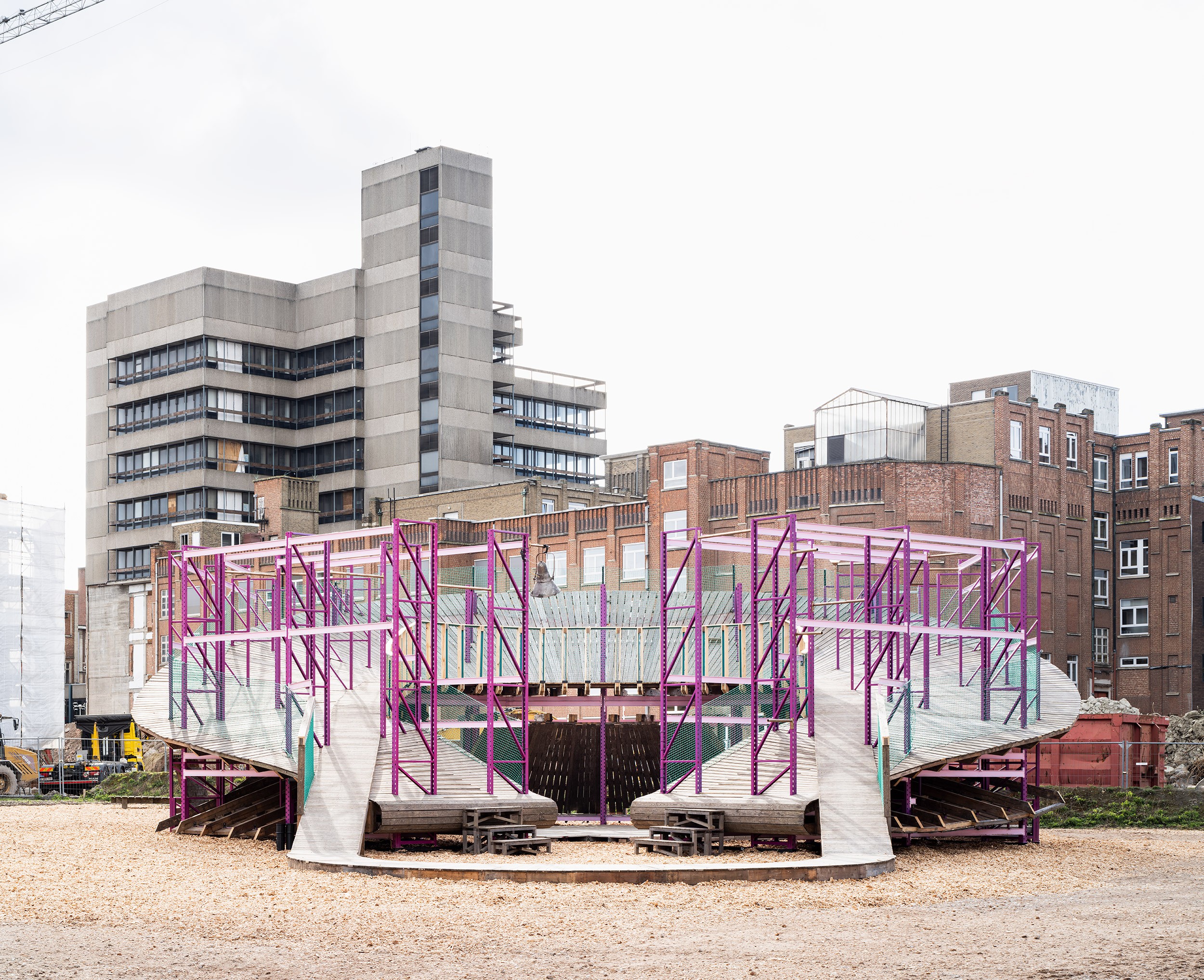
‘Standing on the empty construction site of a future performance hall, the 'Olevodroom' is a reconfiguration of a cycling track that occupied the site since 2021. We were commissioned by the City of Leuven and arts centre 30CC to build something that would bridge past and future. From the velodrome, we repurposed all the wood without cutting any boards, challenging ourselves to find a new shape within an existing one. Pallet racks, reclaimed from an old warehouse and painted in bright colours, were inserted as a support structure that allows the curves of the velodrome to bend and swirl freely, seeking a new shape that invites and shelters. During the construction of the Olevodroom, as in a life-size scale model, we decided intuitively which side should be open or closed, building a careful balance between being seen and being sheltered.
The fact that we built the Olevodroom in Leuven made it a personal journey as well, evoking memories from the city Menno and I grew up in. One kept coming back: the story of Olivio Versluys, the boy who, fourteen years ago, climbed the facade of the university library and fell to his death. The story of ‘Olijf’, as his friends still call him, lingers throughout the design. It inspired us to build a meeting place for youngsters to get together, to hang and to flirt. We tried to turn the memory of Olivio into an active memorial that also raises questions. How much support do youngsters need? How much institutionalisation is necessary? By dedicating the Olevodroom to Olivio, we want to help the city of Leuven to acknowledge that youth culture will always exist mainly in the margins and in the grey zone of what is considered legal and safe.
As a training space for parkour and hip hop, the Olevodroom offers grip to climb, to dance and to be seen, but - even more crucial - to be out of sight. We dedicate this construction to the energy of young people such as Olivio, who, generation after generation, search for space where they can do their thing, fearless, and sometimes reckless. They are the guides who show us that there is space between the rules.' - Jozef Wouters
Design Jozef Wouters, Menno Vandevelde en Pol Matthé
Construction Haidar Alizada, Aron Boakye, Zoher Boumelha, Safwan foota, Lukas Geerens, Abdi karim Abdullahi haji, Pieter Hollants, Matyos Okubit, Jan Rymenants, Willem Rys, Koen Schetske, Chloé Tempelhof, Manish Thapa, Vic Van den Bossche, Menno Vandevelde, Siemen Van Gaubergen, Jozef Wouters, Remco Wuyts and many other helping hands
Coordination volunteers Rosalie Aerts en Jonas Tabala - vzw Erat
Internship Lieselot Clement en Fine Frateur 30CC
Project coordinator 30CC Anne Loeckx
Technical coordinator 30CC Gert De Cooman
Color advice Lila John
Structural engineering Pieter Pollemans
Commissioned by Stad Leuven, 30CC
With the support of Varcities, research- and innovation programme Horizon 2020 by the European Union
© Michiel De Cleene

© Michiel De Cleene

© Michiel De Cleene

© Michiel De Cleene

© Michiel De Cleene

© Michiel De Cleene
FLOW
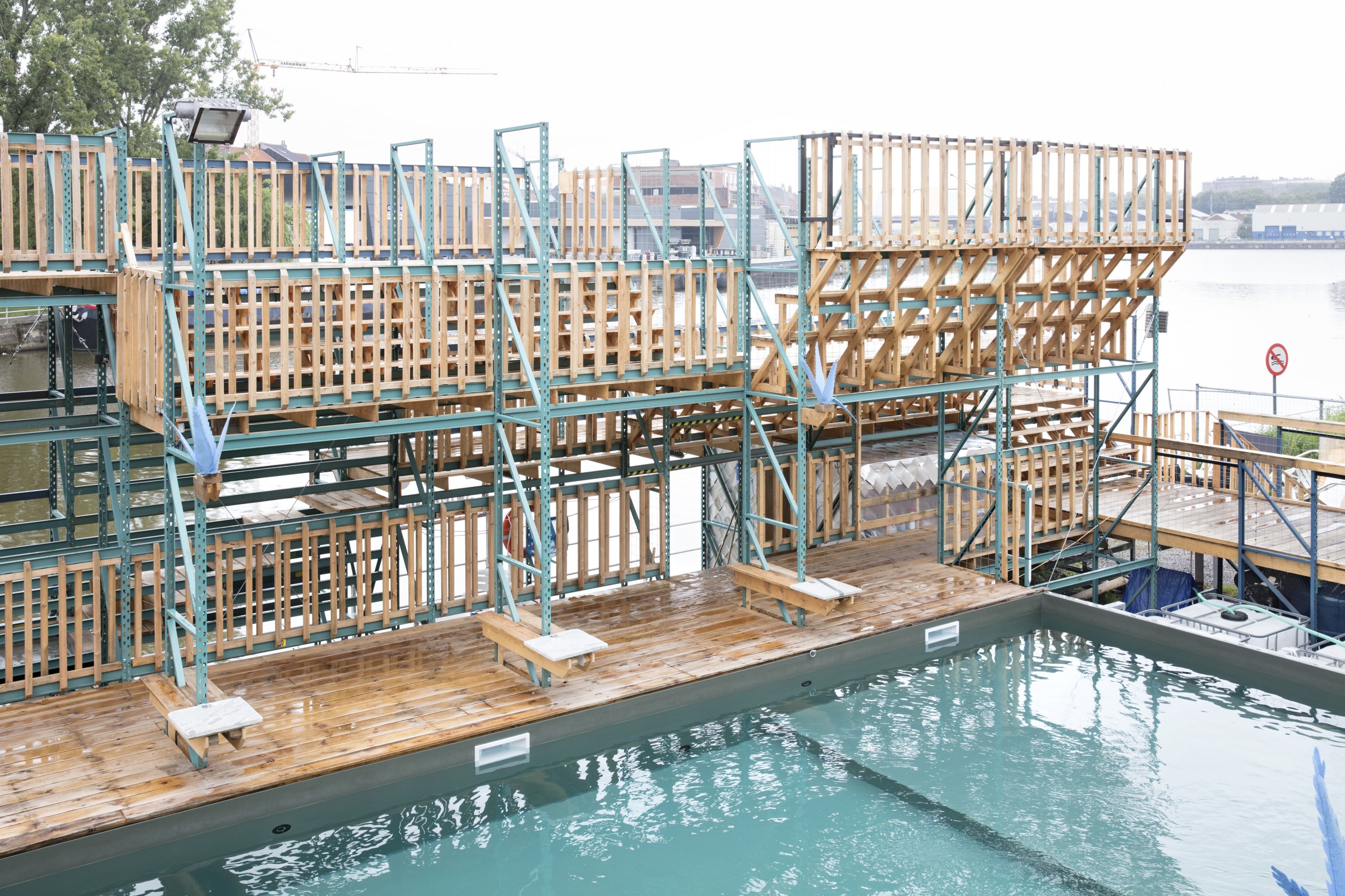
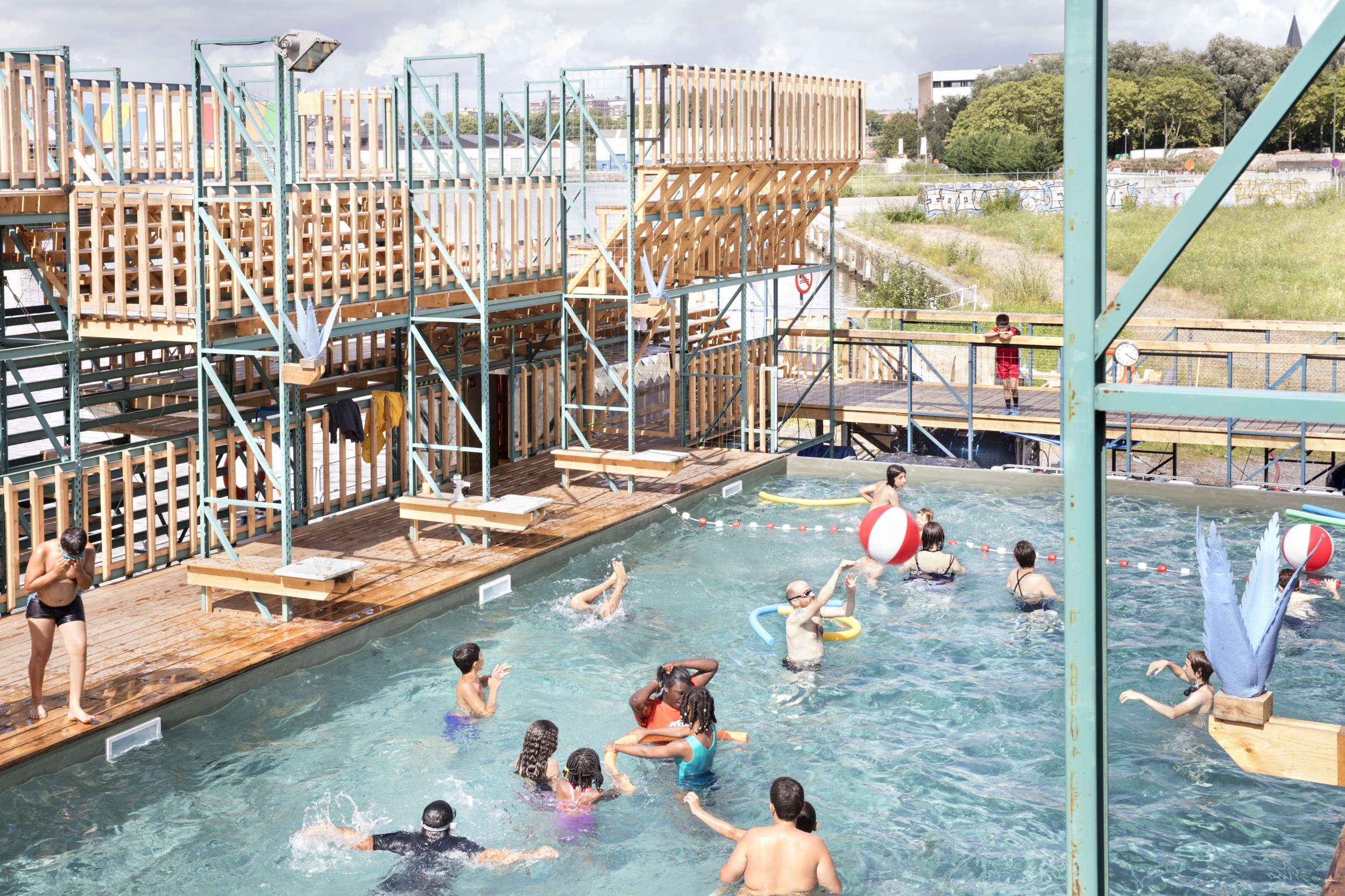
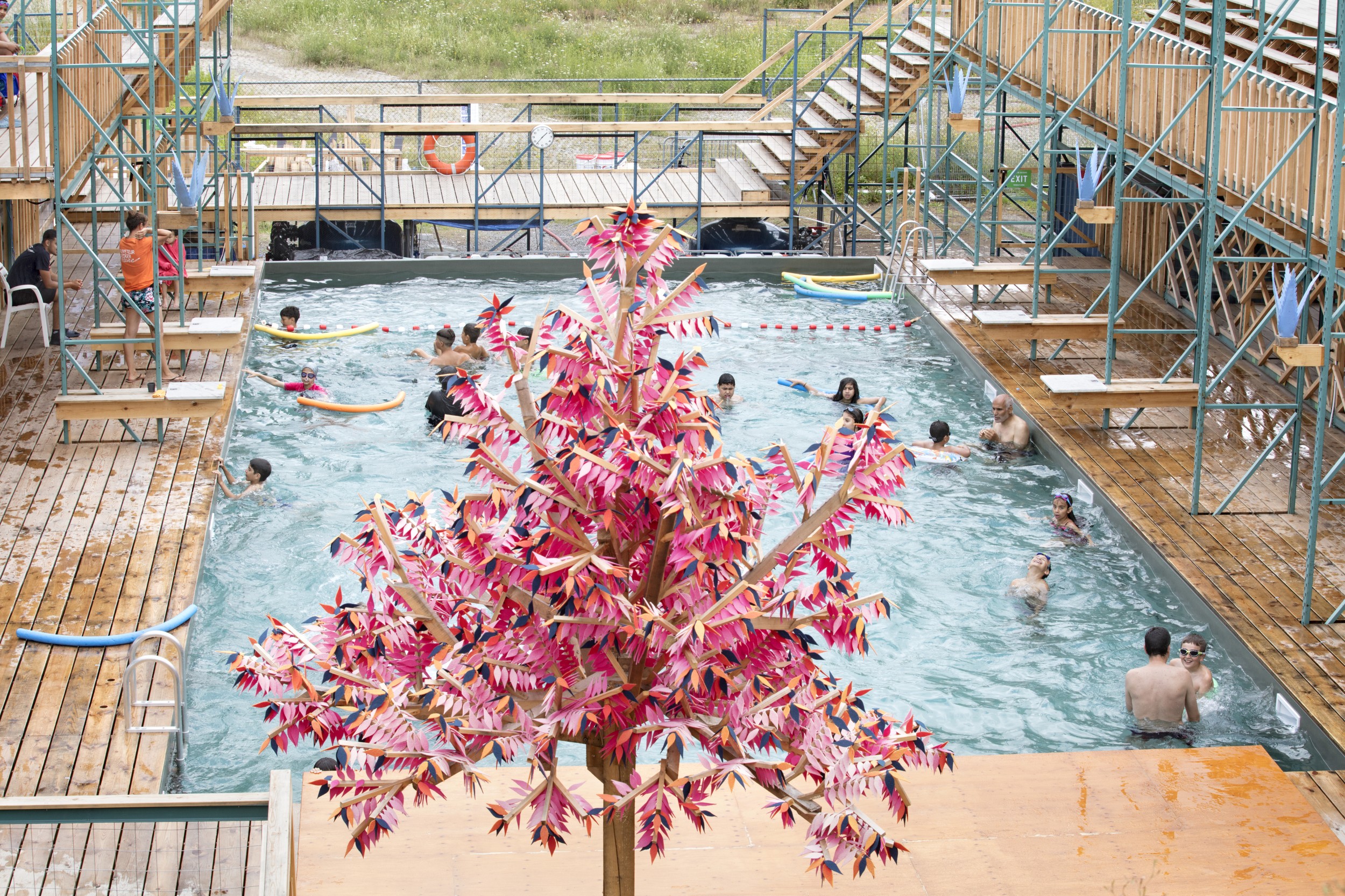
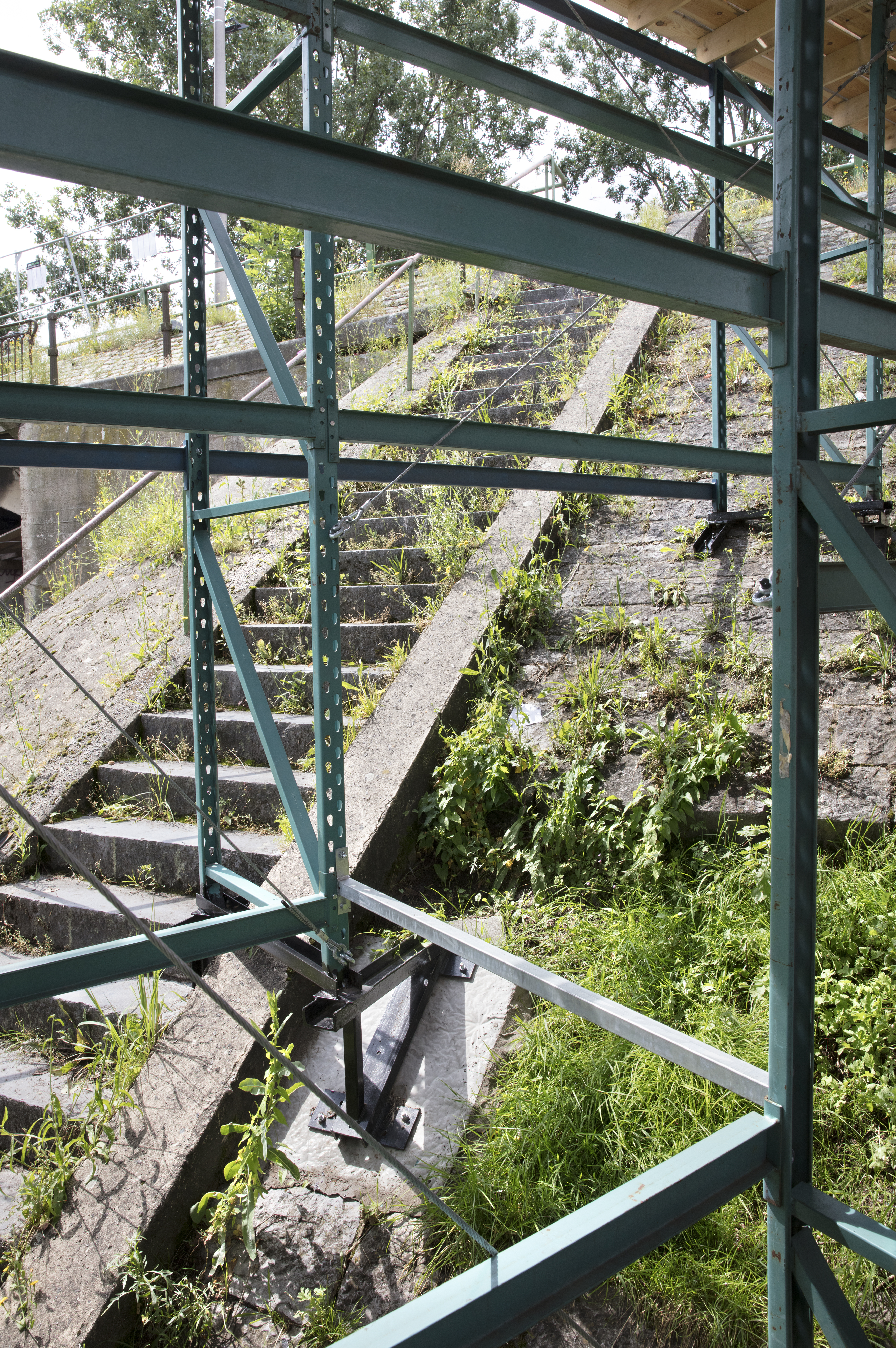
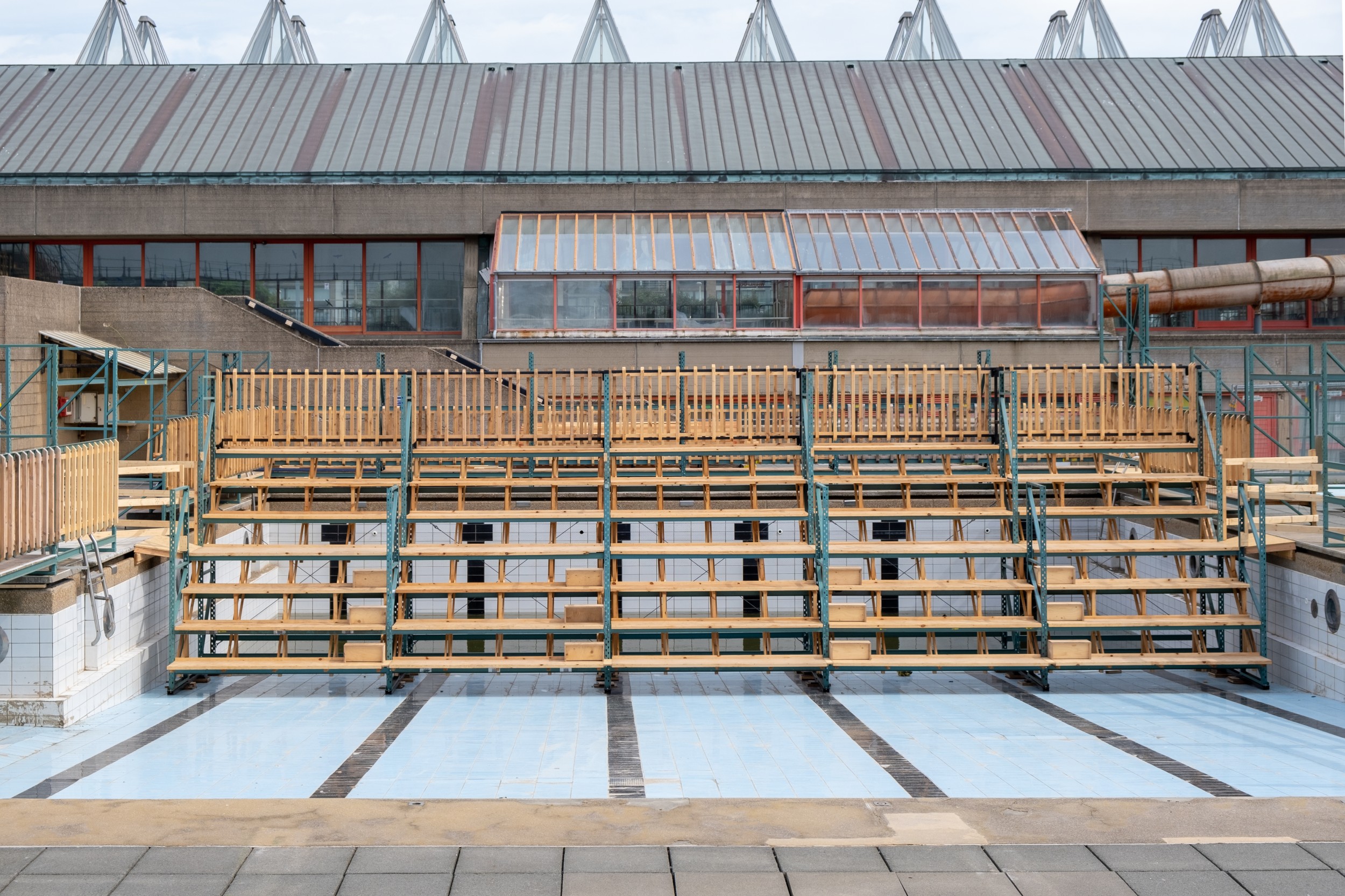
FLOW is a temporary public outdoor swimming pool in Anderlecht (Brussels). The project was initiated by POOL IS COOL and designed and built by Decoratelier Jozef Wouters in collaboration with various partners. Envisioned as a fiction, a temporary phantasm, a dream made of water, FLOW opened on July 1st, 2021 with the ambition of becoming a radically inclusive and sustainable leisure space. FLOW was built together with a large group of youth from the neighbourhood, who contributed not only their hands to the construction work but also their voices to discussions about access to public space and privatisation. Local youth continue to be involved in running the pool. Serving both as an example and a provocation, FLOW aims to convince authorities to invest in permanent projects while already offering a real, albeit small, safe and inclusive place to enjoy outdoor swimming. More information via www.pooliscool.org and www.flow.brussels.
A project by POOL IS COOL in collaboration with Decoratelier, Art2Work, FIX, Ecoworks en Speculoos + Variable, with cultural programs by Kunstenfestivaldesarts, Zinnema and Cinema Galeries.
Designed by Jozef Wouters in collaboration with Mathias Claes, Paul Steinbruck and Menno Vandevelde
Built by Decoratelier with Bilal Oulkadi, Memet Ramadanov, Adil Khajjou, Mélanie Musisi, Cissé Ibrahima, Elias Sahili, Houssame Oulad Hamdane, Zakaria Azaoum, Youssef Bouchouari, Nawfal Belarbi, Mehdi Yahyaoui, Ifrah Yussuf Magan, Abdelillah Zaid, Mohamed Yaroum, Mhamed Amaruch, Barry Mamadou Lamarana, Willem Rys, Yassine Azool, Maria Nzanga, Mohamed-Amine Badda, Nadir Hamidou, Ayoub Lefkir, Camille Thiry, Mohamed El Fassi, Ismail Chikri, Naufal Ahchouch, Youness Hoj Johini, Ayoub Saidi, Saber Zerrerki, Mbarek Bouallaga, Ben Mohamed Saïd, Rayan Dardiki, Issam Oulad Haj Amar, Ayoub El Yabouhi, Alhassan Bah, Michiel Soete, Rayan Dardour, Ismael Akhbouch, Younes Charkaoui, Théo Dellicour, Ezra Fieremans, Ali Badr Debra, Naomi Quashie, Bilel Tsabet, Astrid, Hamza Riahi, Imad Borji, Vic Van den Bossche, Ibrahim Ben Mokkadem, Safouane Lamquallakh, David Ademola Ogundana
© Annemie Augustijns
© Annemie Augustijns
OPENLUCHTZWEMBAD FLOW
© Annemie Augustijns
OPENLUCHTZWEMBAD FLOW
© Annemie Augustijns
OPENLUCHTZWEMBAD FLOW
© Annemie Augustijns
OPENLUCHTZWEMBAD FLOW
© Annemie Augustijns
OPENLUCHTZWEMBAD FLOW
Night Shift Ostend
Night Shift is an endless swirl of interventions and experiments, allowing each action to leave behind a unique trace and stimulating crossovers to trigger the unexpected. For this edition Gouvernement and close collaborator Decoratelier invite an unlikely assemblage of artists to head to the seaside and construct a space to research, share and show generously.
After the previous Night Shift is now landing in an unusual time and space: the summer in Oostende. During three days, on the 26, 27 and 28th of July, artists will present their work in and around the youth-center OHK.
Preceding the days of public showings, intense research periods on location will allow the artists to connect to each other & their surroundings. Each bringing their own practices, interests, questions and visions to the seaside. Out of the comfort zone of the regular season and the usual infrastructures, artists will look for different ways of working and sharing. As part of an always-shifting shared platform, artists will activate many spaces within structures of care and with the support of many.
www.nightshiftoostende.be
Practical Info
26, 27 and 28th of July 2022
From 18:00 to 00:00
In and around OHK
(Koninginnelaan 1, 8400 Oostende)
15€ & reduction price 7,5€
A project by
Gouvernement, Decoratelier, VIERNULVIER, De Studio, CAMPO, Toneelhuis, De Singel, OHK, KAAP, Theaterfestival, Perpodium & Theater Aan Zee
Supported by
The players of the National Lottery, the Flemish Government and the Tax Shelter of the Belgian Federal Government
Thanks to
Danspunt
Tickets
Order tickets here
Night Shift team
Nele Keukelier, Vincent Focquet, Marie Umuhoza, Deborah Van Haute, Michiel Soete, Lies Vanborm
Scenography
Decoratelier
Graphic design
Chloé D’hauwe
Illustration
Charlotte Peys
© Enzo Smits
INFINI
Decoratelier Jozef Wouters
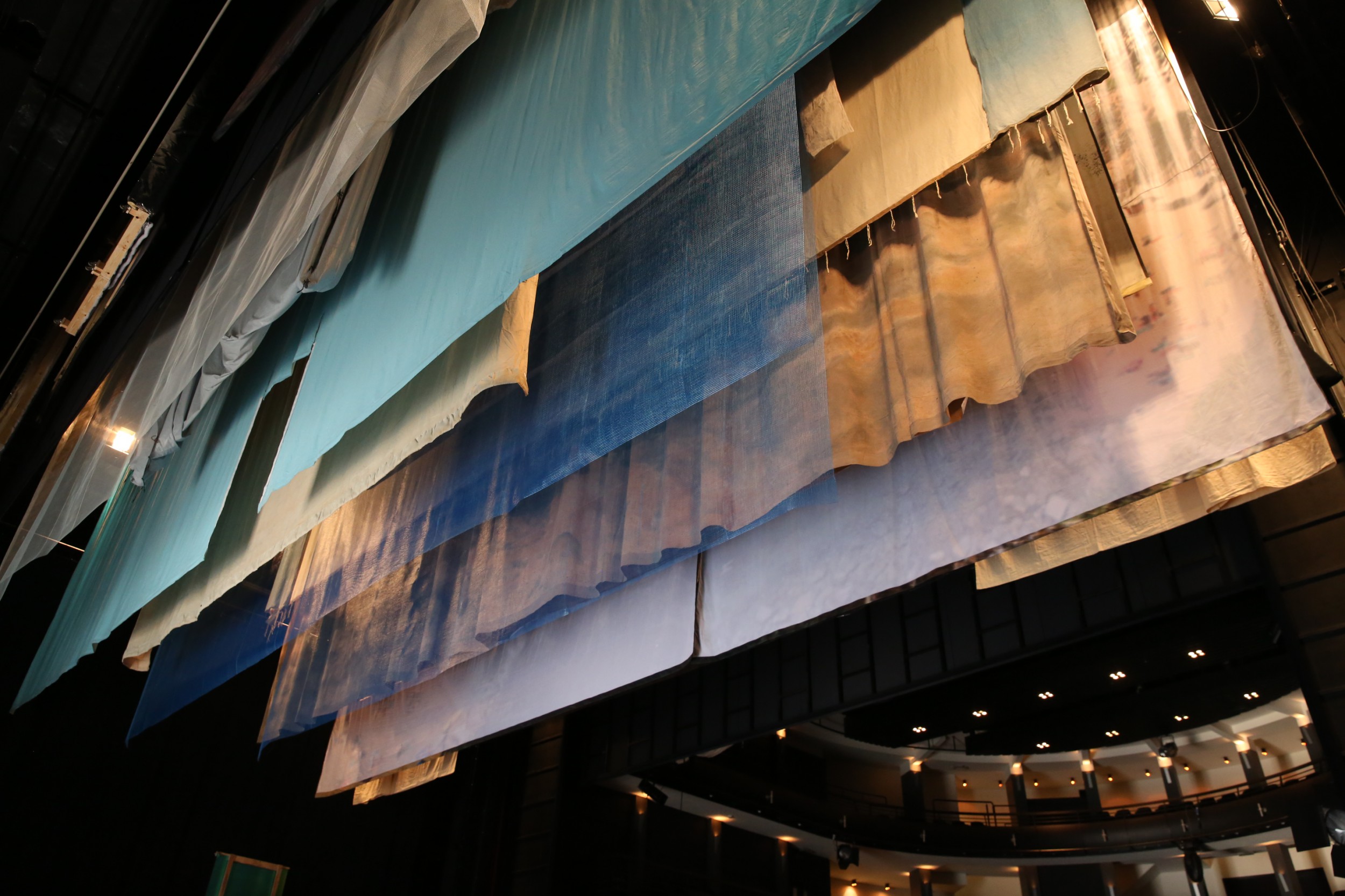
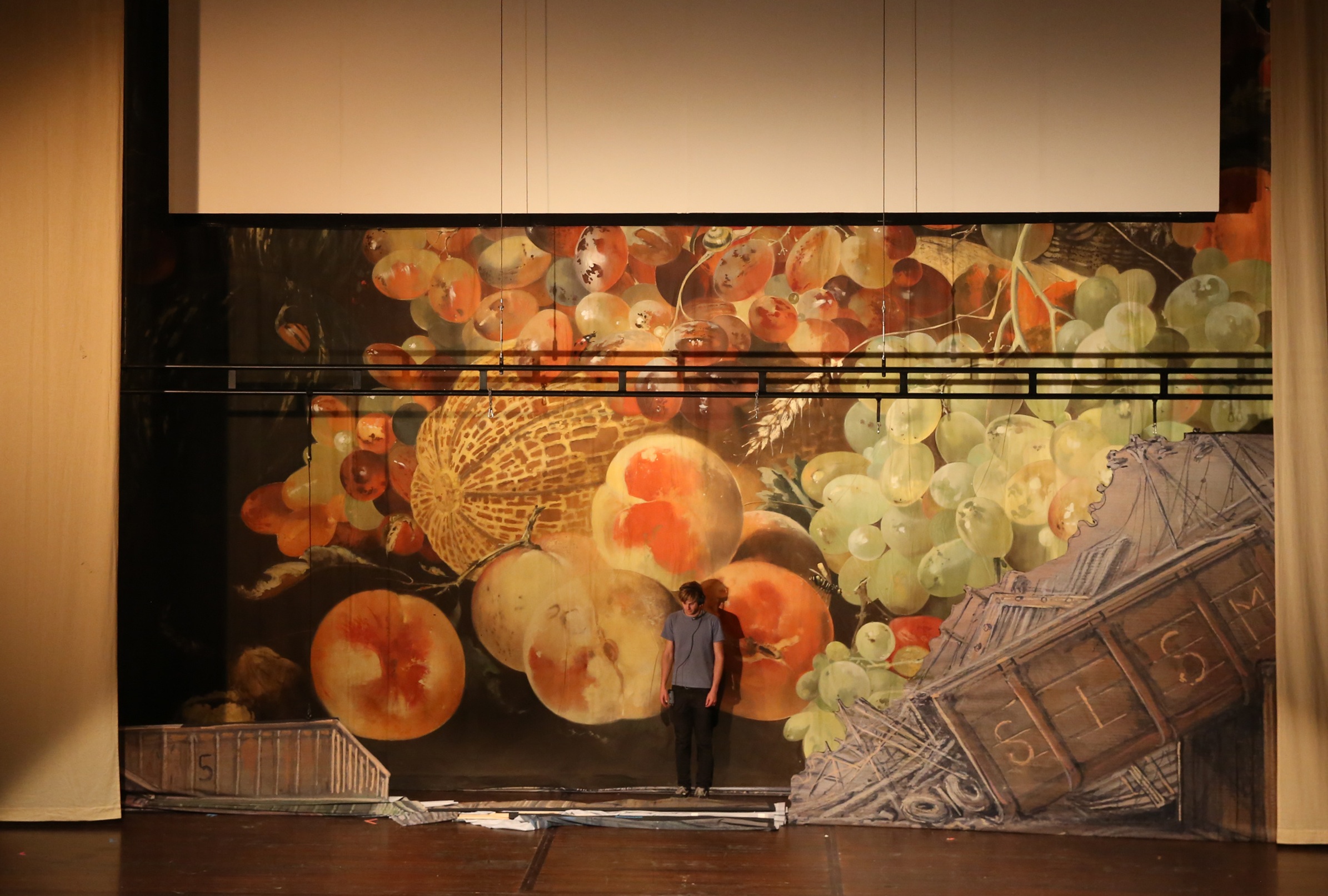
INFINI is an ongoing research project by Decoratelier Jozef Wouters. It is driven by the desire to question the classical theatre machine and its perspectival sets. The project originated in 2016, when Wouters produced the performance INFINI 1-15 for the Royal Flemish Theatre in Brussels (KVS). Working with the team then associated with his Decoratelier, the key question he addressed was: “what spaces should we show in the theatre today?” Fourteen artists entered into a dialogue with Jozef Wouters and Decoratelier, and each conversation yielded an infini: a unique interpretation of the painted backdrops that are lowered with pulleys in a classical theatre to serve as a horizon for the imagination.
Today, INFINI is not so much a performance as a growing collection of sets, each one of which – and sometimes independently of the others – tells its own story.
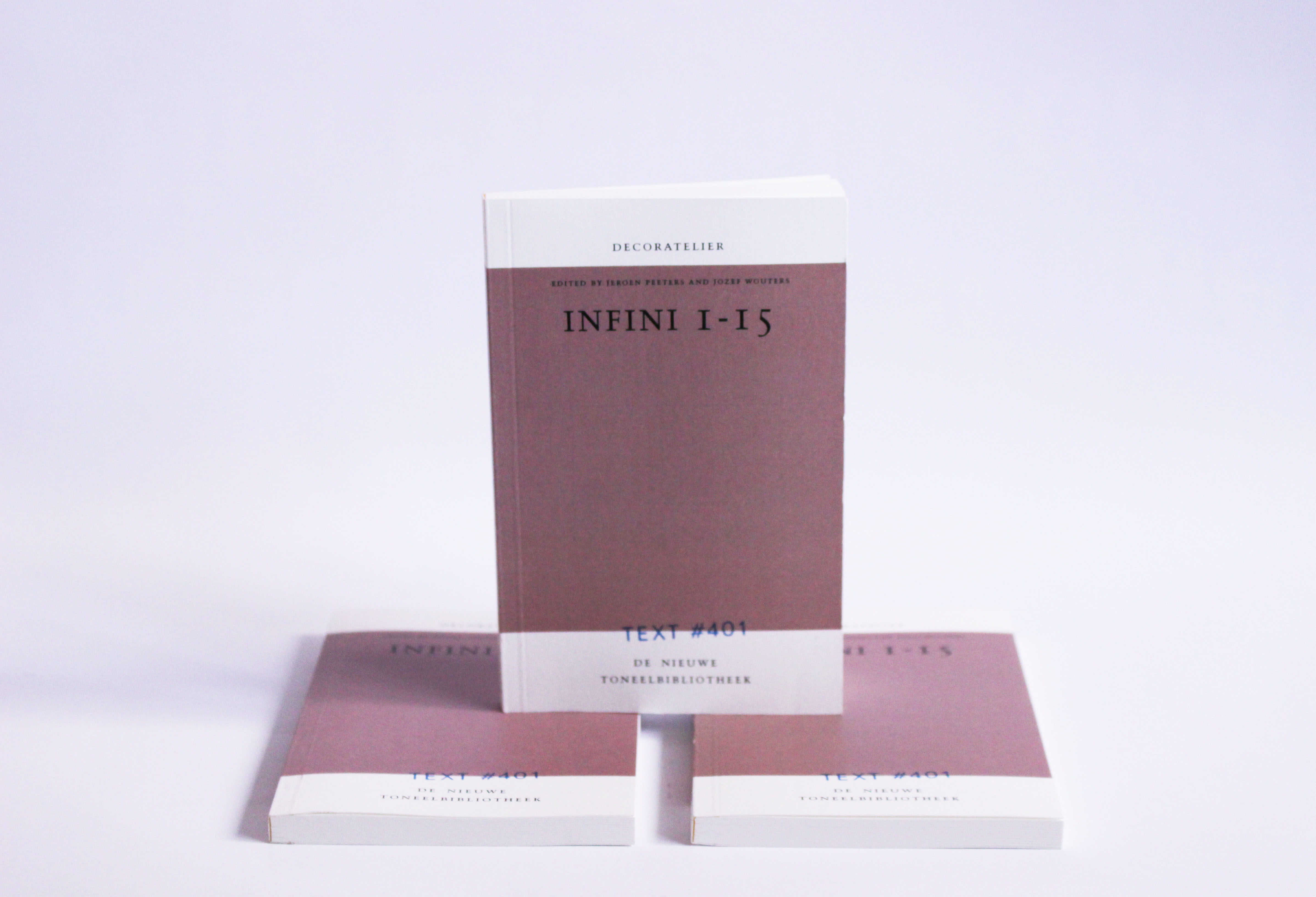
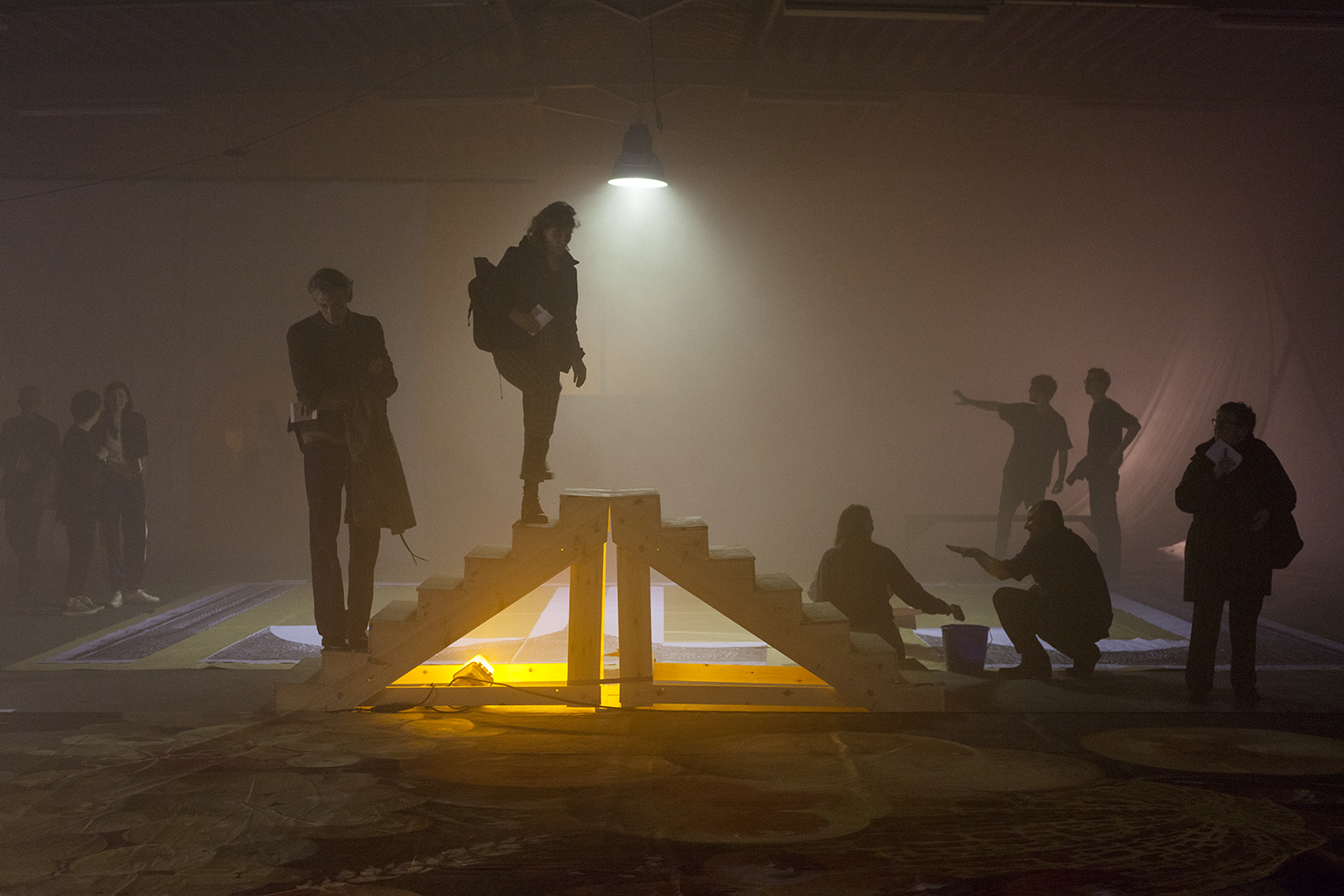
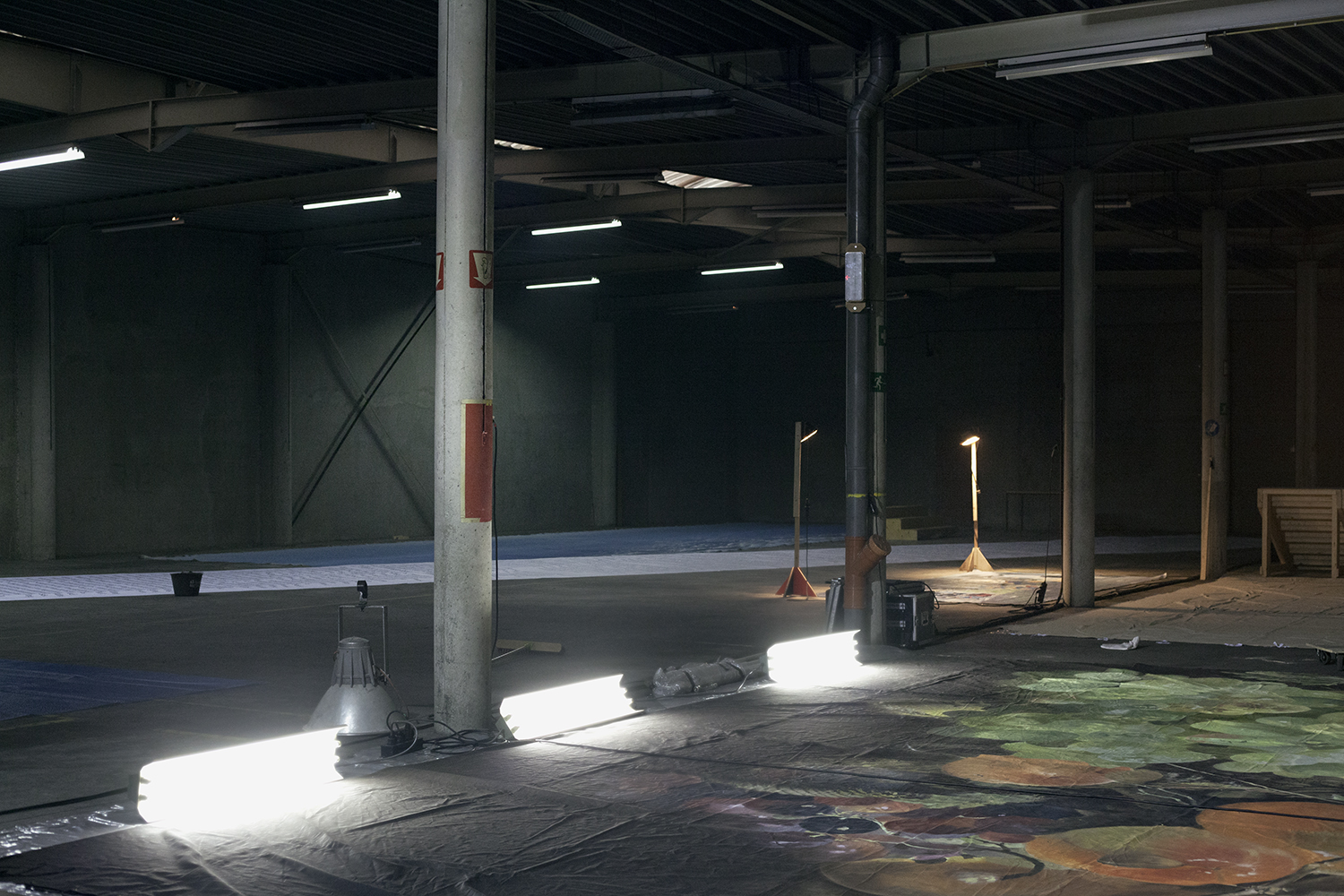
The INFINI 1-15 publication is also an offshoot of the Infini project; a translation of scenographic space and image into word and layout. The book was presented in September 2017 at Wouters’ Decoratelier, when all fifteen infinis were reassembled for the occasion.
© Phile Deprez
Infini 1-15
© Phile Deprez
Infini 1-15
© Jozef Wouters
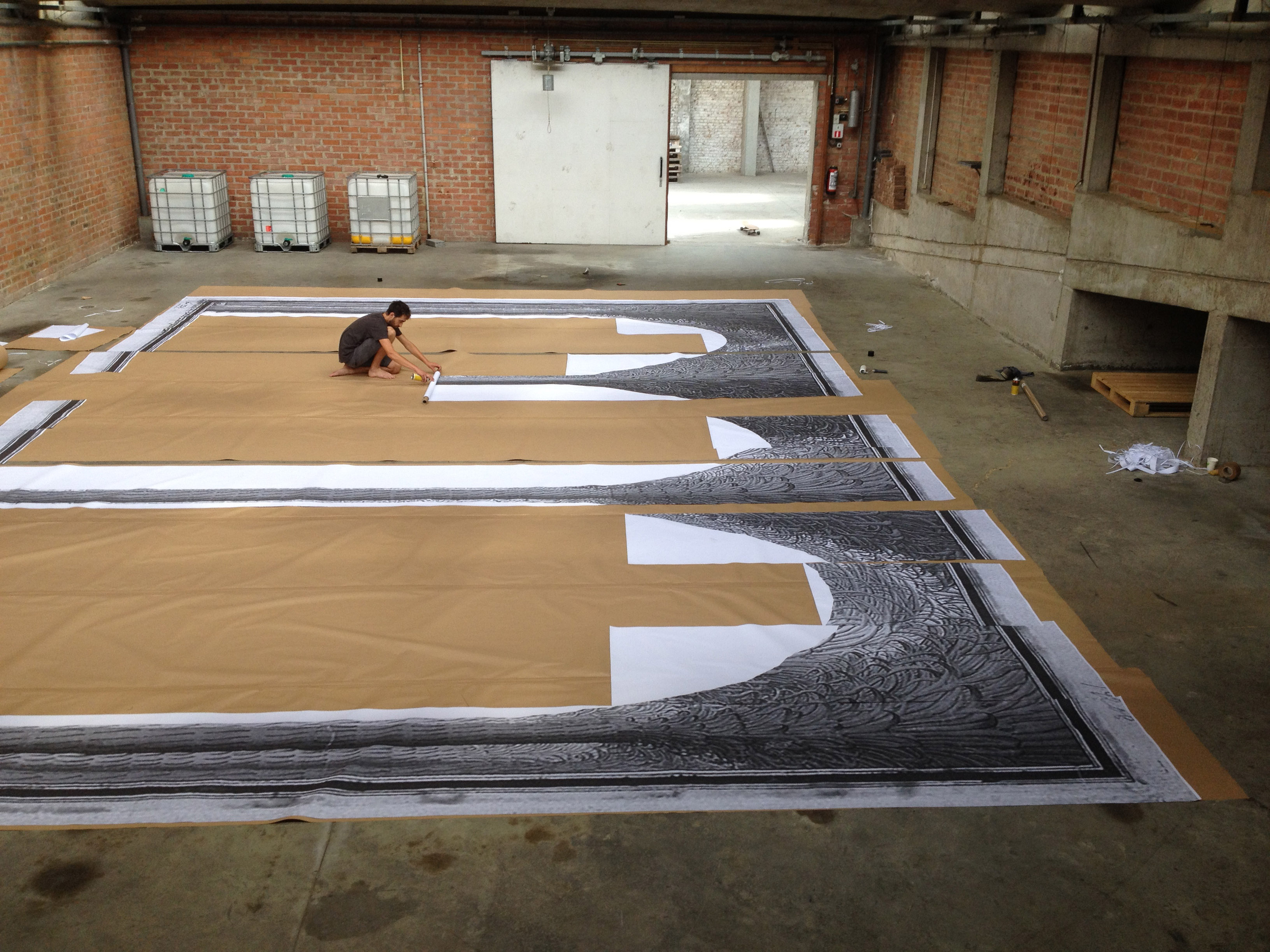
Creation 'Infini #5' in Decoratelier
Publication 'Infini 1-15&lsquo
© Laura Van Severen
Book presentation 'Infini 1-15&lsquo
© Laura Van Severen
Book presentation 'Infini 1-15&lsquo
Infini #5
Rimah Jabr & Decoratelier Jozef Wouters
Dear Rimah,
Because we might not have the time to talk (about art) tonight, I have decided to write you a letter. I’d like to ask you the questions that came to mind when thinking about tunnels and endlessness – the two topics that I remember from our brief conversation at the Decoratelier in Brussels. I’m curious as to why the space of a tunnel is important to you. What is it about tunnels that turns them into an environment for a story, like the one you told me, about people being stuck?
Jozef Wouters, Nablus, August 14
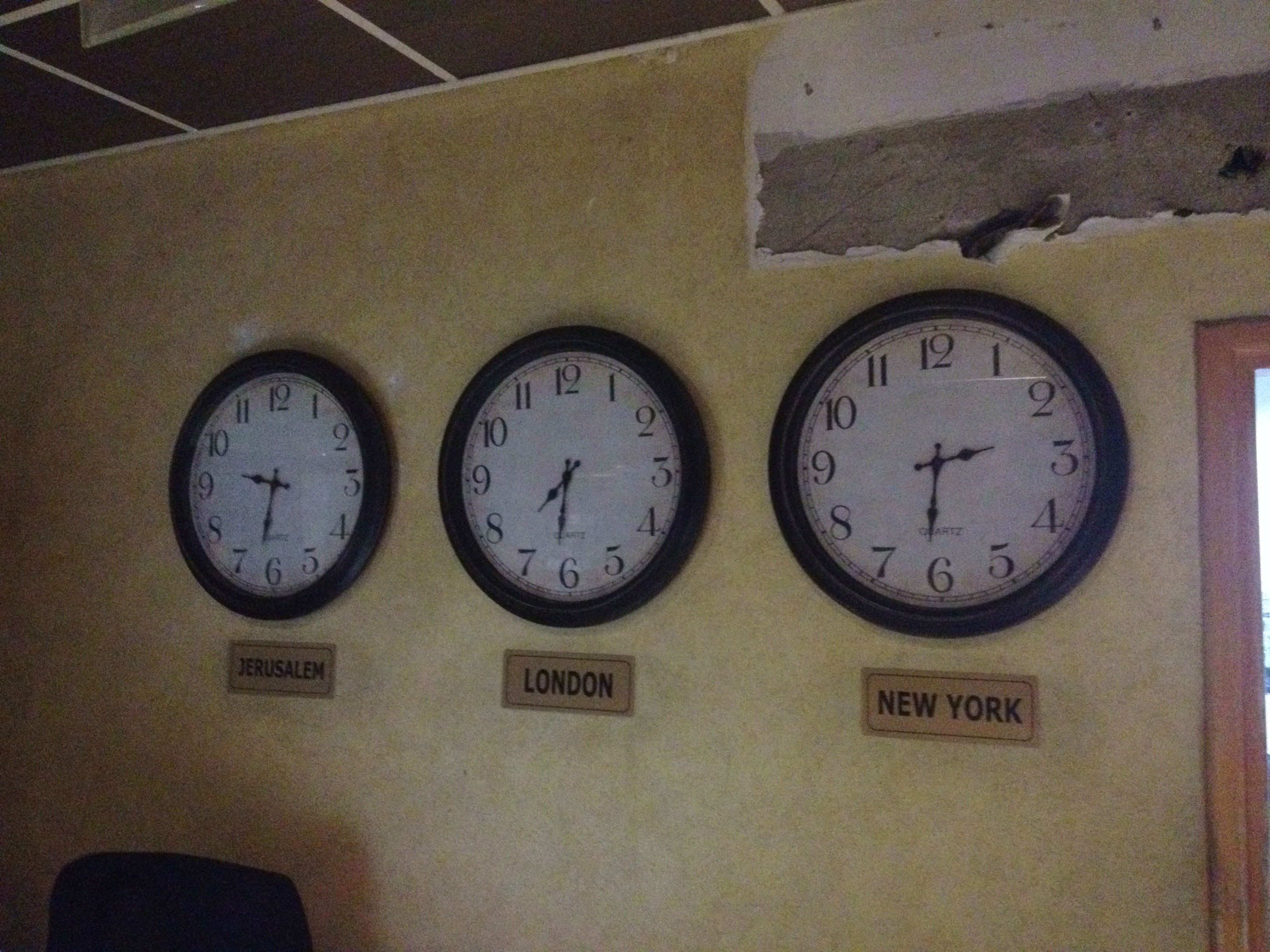
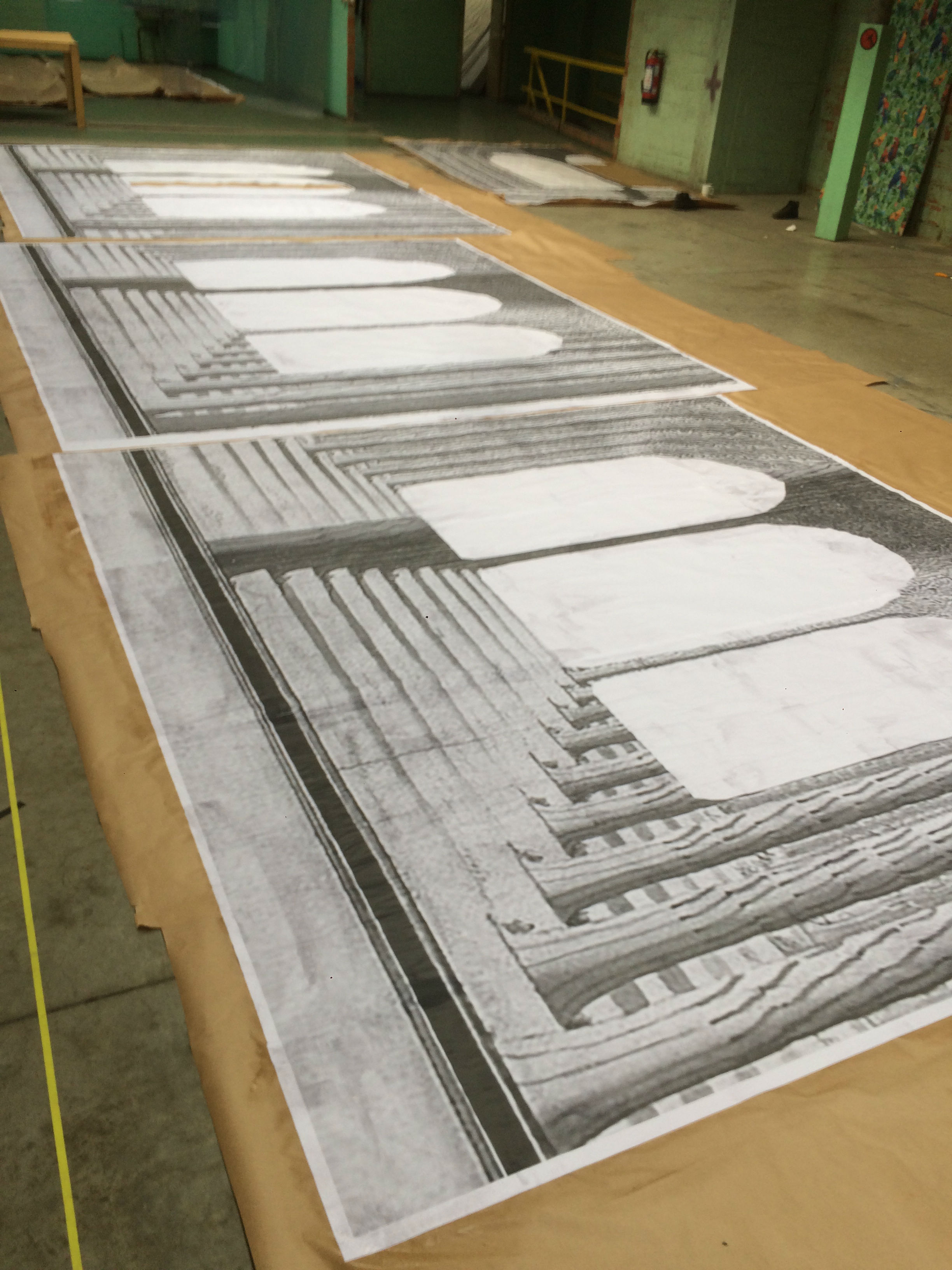
Scenographer Jozef Wouters wrote a letter to the Palestinian playwright and director Rimah Jabr. What kind of space or landscape would she like to be represented on stage? Which space should Decoratelier construct for her? Their correspondence began with pictures of the tunnels under the Gaza wall. Later, these images were transformed into wood, canvas and paint. The final set, in combination with a letter from Rimah Jabr, results in a sharp and imaginative observation of a situation that can only be expressed in its absurdity.
Infini #5 was created as part of Infini 1-15, the Decoratelier performance in which fifteen artists considered which space or landscape they would like to see represented in a theatre today.
text Rimah Jabr / scenography Jozef Wouters / dramaturgy Jeroen Peeters / light Ken Hioco / technical direction Menno Vandevelde / production manager Celine van der Poel / decoratelier Ryma Merghoub, Stijn Maes, Tim Vanhentenryck / production Decoratelier Jozef Wouters, Damaged Goods (Brussels) / thanks to Dries Douibi, Bruno Forment, Ine Craenhals, Chris Keulemans and KVS (Brussels)
© Jozef Wouters
© Jozef Wouters
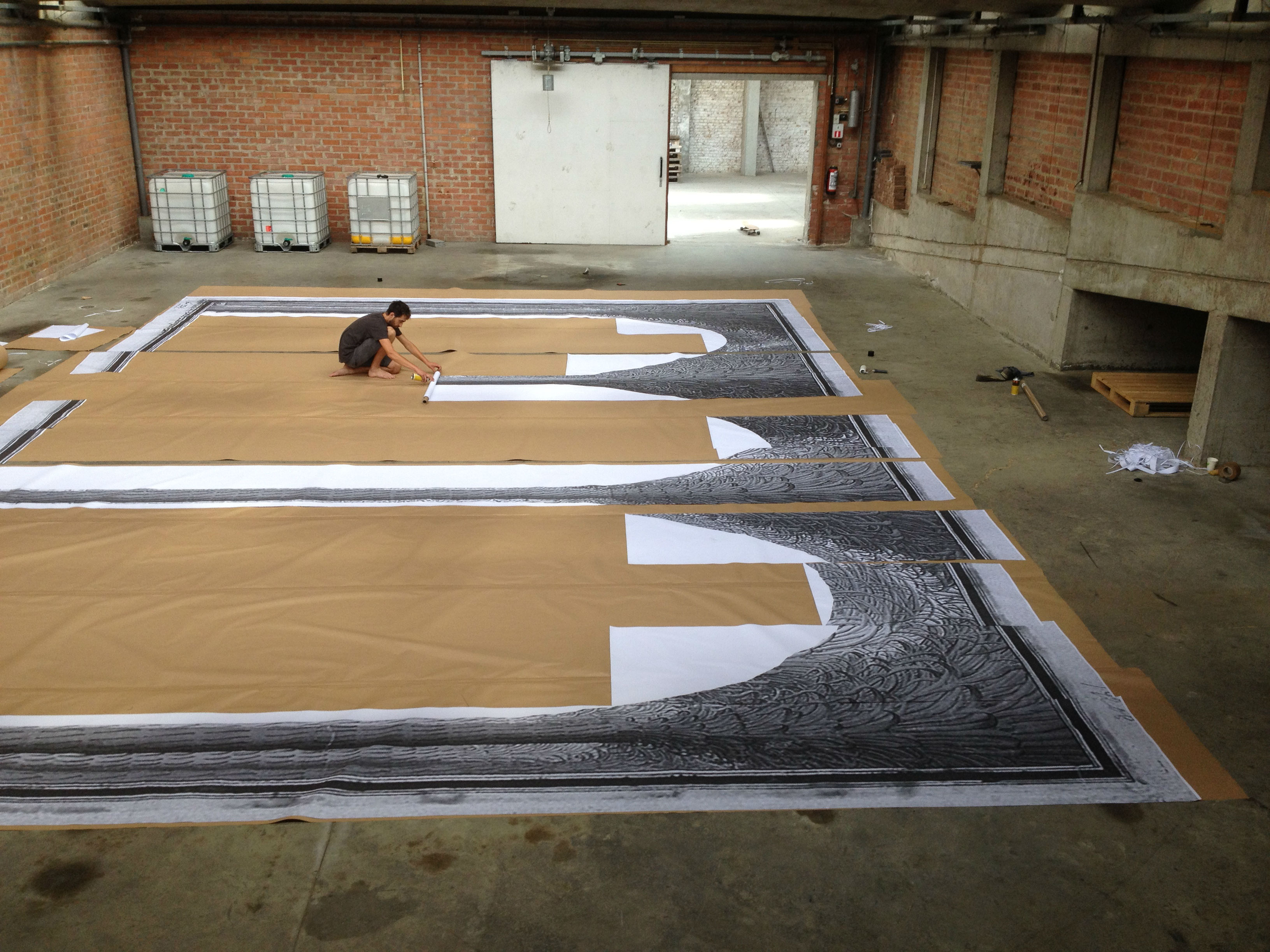
© Jozef Wouters
Underneath Which Rivers Flow
Globe Aroma & Decoratelier Jozef Wouters




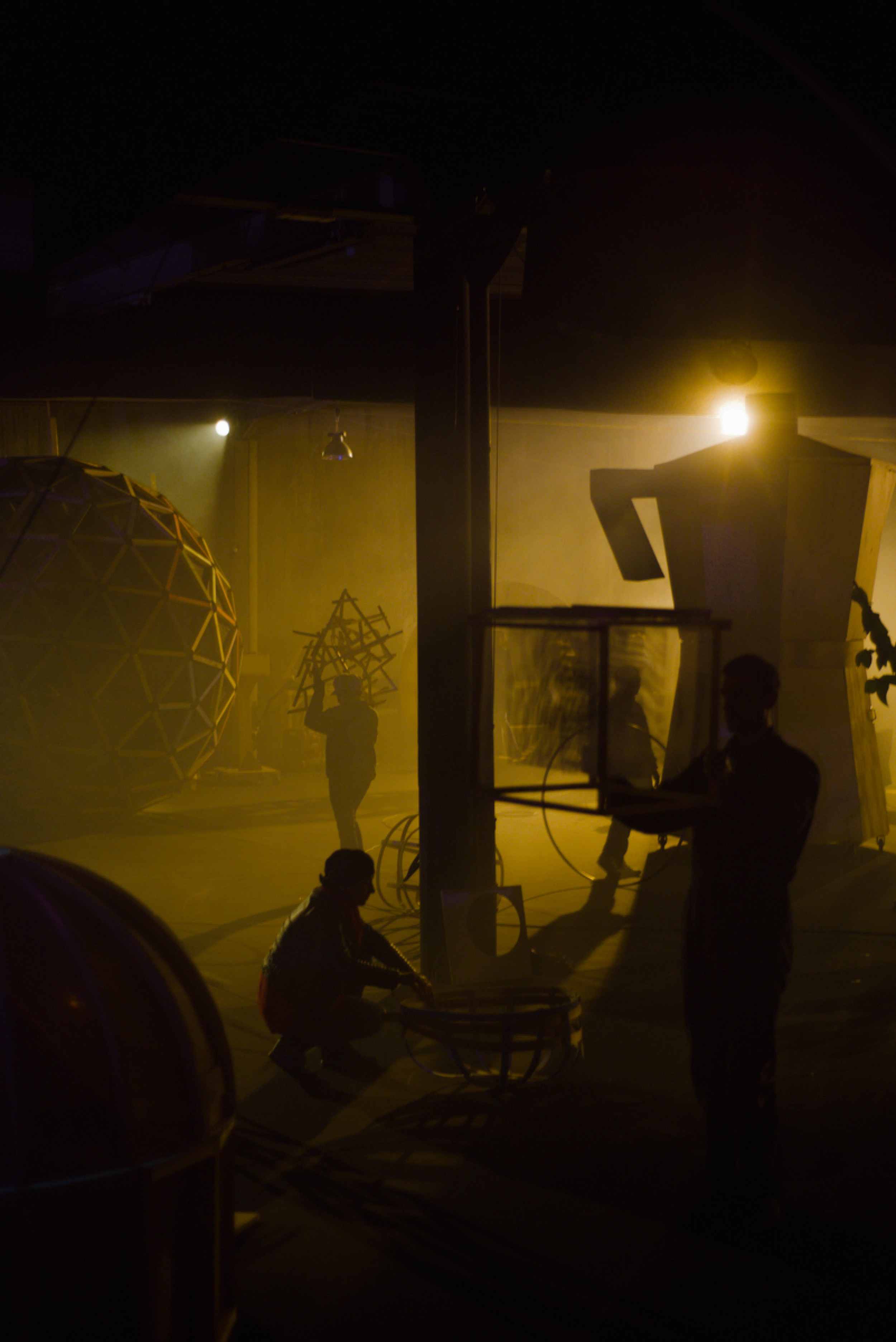
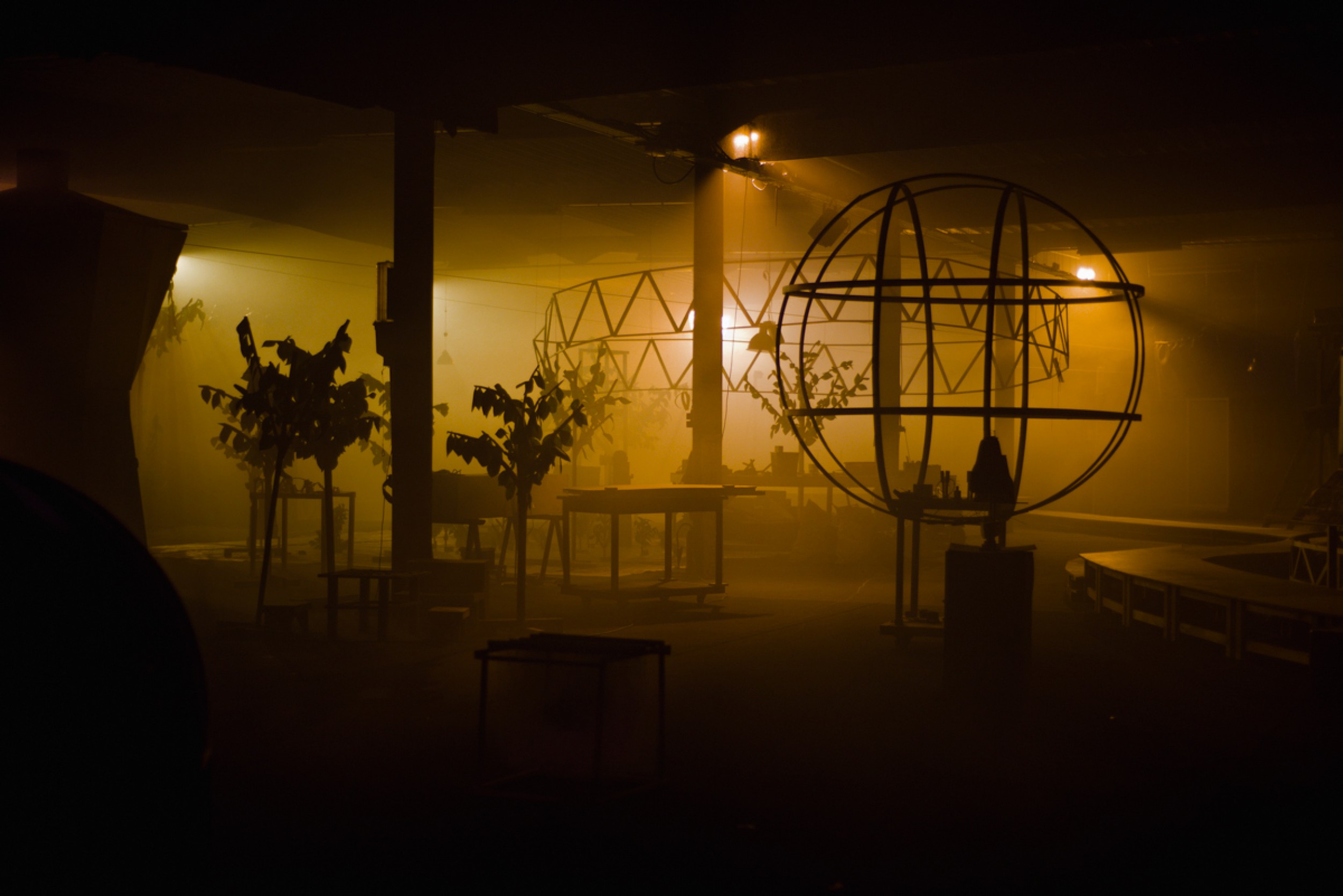
“One day, a large banner suddenly appeared on the facade of the Decoratelier, showing a virtual vision of what the neighbourhood might look like in the future. The atelier and its surroundings had been replaced by a large park. That same day, I met a group of people from Globe Aroma and we decided to dig a hole towards this future park that, right now, is still an old factory. In the enormous void we taught each other to build out loud: a form of construction in which there is no difference between speaking, dreaming and building. Gradually an alternative park took shape, a park where memories and imagination intermingle, a secret garden filled with shadows and a jumble of grey zones. As yet I understand little of it, but it seems to be a place where people can decide for themselves whether or not to be visible or invisible, and this in the heart of the city.” (Jozef Wouters)
For a year, Decoratelier Jozef Wouters worked with Open Arts House Globe Aroma on Underneath Which Rivers Flow. A group of women and men – builders, poets and dreamers – met weekly in the Decoratelier in Molenbeek. Together, they built stories, a secret garden full of wormholes to unsuspected worlds.
Read a text by Guy Gypens about the broader context of the project here.
Watch an interview with Bushra Lamsyeh and Jozef Wouters here below.
CREDITS
Underneath Which Rivers Flow
A project by Globe Aroma & Decoratelier Jozef Wouters
Building Poets Barry Ahmad Talib, Ali Alkrizi, Mimouna Amri, Mbarek Bouallaga, Zohir Boumelha, Sekou Coumbassa, Chantal Gyselinx, Idris Hassan Hardi, George Khuroshvili, Bushra Lamsyeh, Soumaya Mahroug, Shilemeza Prins, Randy Renders, Marie-Ange Sibi, Ifrah Yusuf Magan, Tahar Zadam
Artistic direction Jozef Wouters
Artistic collaborator Jeroen Peeters
Dramaturgy Vladimir Miller
Decoratelier Menno Vandevelde (technical director), Lukas Geerens, Jan Rymenants, Willem Rys, Koen Schetske, Vic Van den Bossche, Siemen Van Gaubergen, Casper van Overschee
Film Robbrecht Desmet
Light Michiel Soete
Sound in collaboration with Vincent Malstaf
Production management Penelope Desloovere, Brecht Theunis, Camille Thiry, Ewoud Vermote
Production Damaged Goods, Globe Aroma
Co-production Kaaitheater, Netwerk Aalst
Special thanks to Saïd Amrawu, Alex Cepile
Thanks to Thomas Collier, Wannes Cré, Philip Delbecque, Pieter Dumoulin, Marlies Jacques, Sirine Jen, Lila John, Sanae Khamlichi, Ferre Marnef, Hana Miletic, Kristof Vande Walle (M – Museum Leuven), Sarah Vanhee, Nathanael Van Hoecke, De Lork vzw, Gemeente Molenbeek, L’Escaut Architectures, WijkAntenne de Quartier
Part of the two-year collaboration between Netwerk Aalst and Jozef Wouters, within the framework of The Unreliable Protagonist-programme (2017-2019). For Netwerk Aalst, this project was managed by Els Silvrants-Barclay.
© Illias Teirlinck
© Illias Teirlinck
© Illias Teirlinck
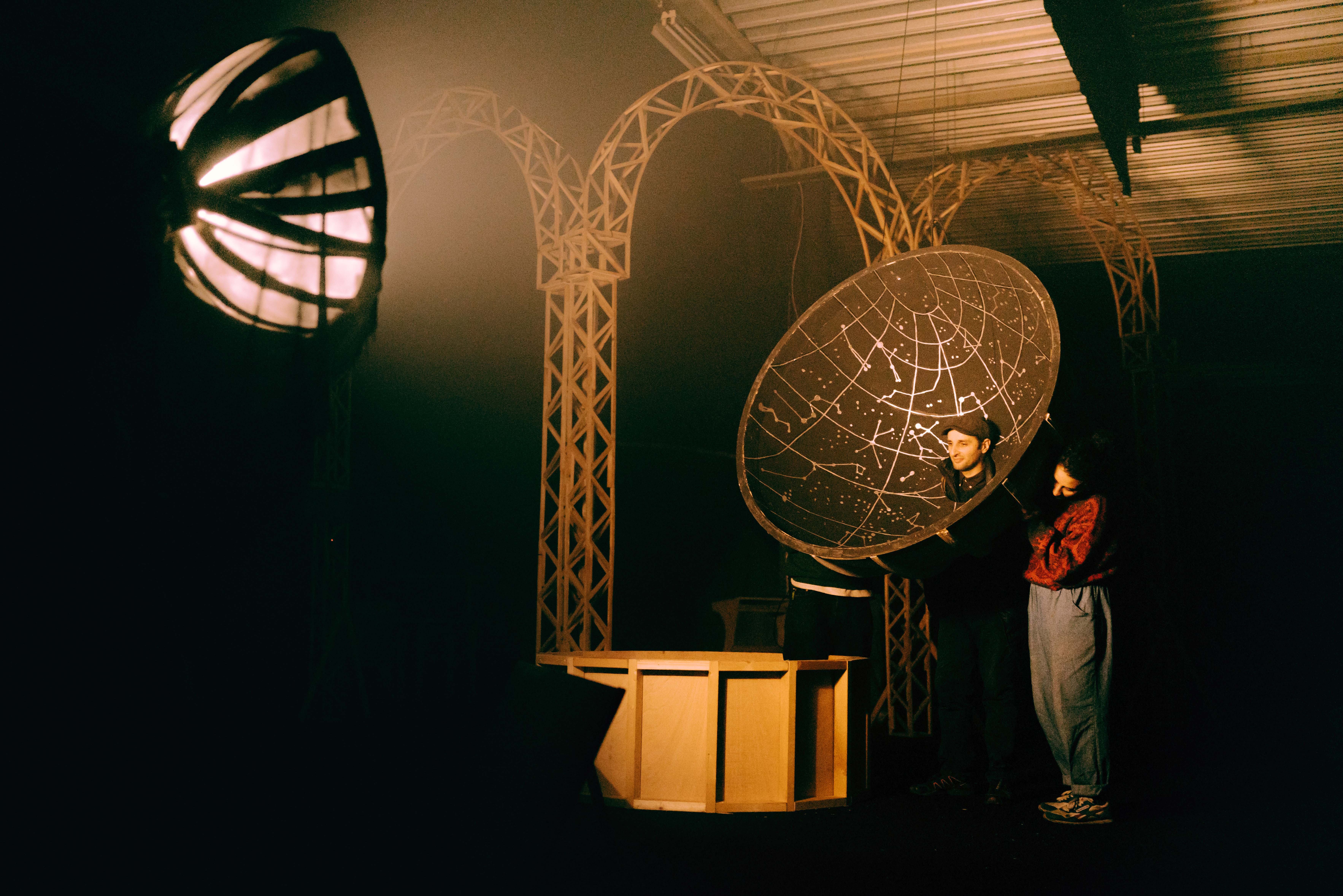
© Illias Teirlinck
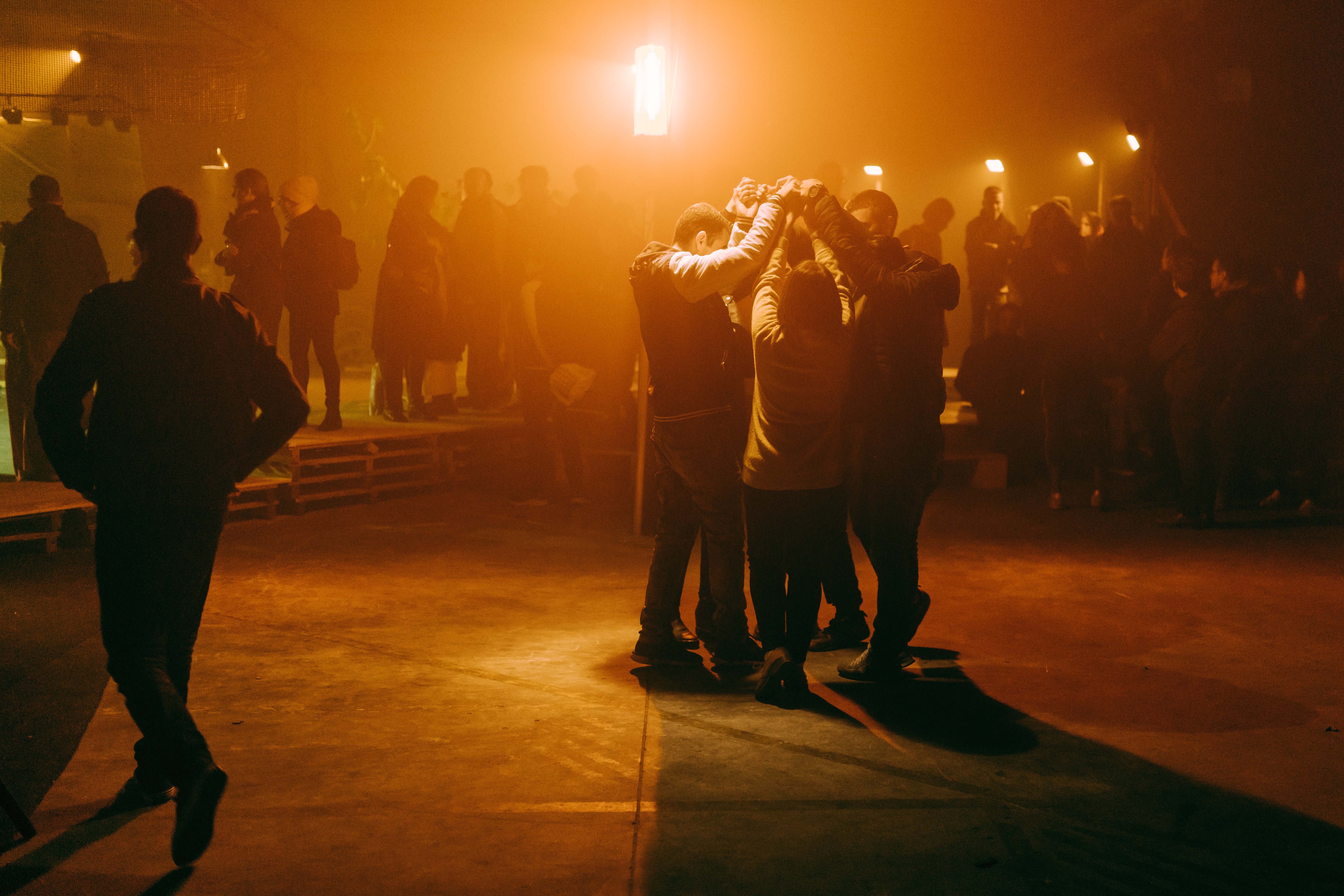
© Illias Teirlinck

© Illias Teirlinck

© Illias Teirlinck
© Illias Teirlinck
© Pieter Dumoulin
© Pieter Dumoulin
The Soft Layer - Tunis
Decoratelier Jozef Wouters & Vladimir Miller
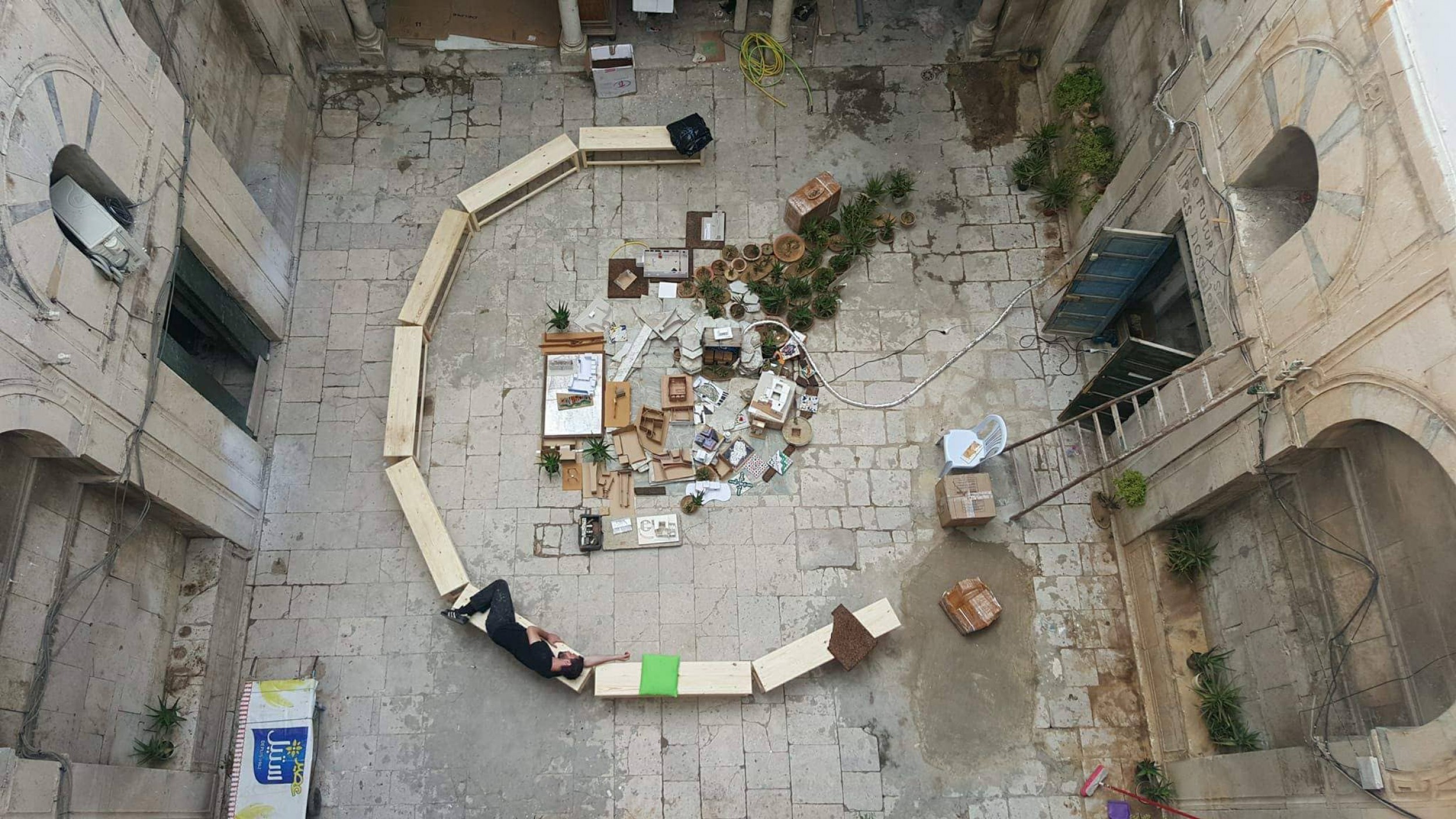
In response to an invitation from Dream City – the Tunis Biennial for Contemporary Art – Jozef Wouters took residence in the historic building of Dar Bairam Turki and asked the residents of the Medina which visions they had for it. One thing almost everyone seemed to agree on: the future of the Medina and of Dar Bairam Turki is a restored version of itself. But which version of the past should we select to be the new future and how do we make that choice? If the only imaginable future is the past, then where are we now?
Jozef Wouters and artistic collaborator Vladimir Miller gather these conflicting ideas around restoration in a process that adds layers to this building instead of peeling them off. Together with the Tunisian artists Amira Chebli, Hichem Chebli and Fatma Ben Saïdane this ephemeral Soft Layer will be performed in order to temporarily restore the collective histories, imaginations and visions that make up the nostalgic territory of architecture. If we keep adding layers, stories, copies and visions to it, will the courtyard one night expand and be able to hold the many versions of itself without bursting?
After its premiere in Tunis, the group will bring this ritual to other places, beginning with Vooruit in Ghent.
made with & performed by (nightshift) Fatma Ben Saïdane, Amira Chebli, Hichem Chebli, Vladimir Miller, Jozef Wouters (dayshift) Ahmed Ayari, Kais Ben Rejeb, Valérie Bikok, Manoubi Cherif, Emna Hamdi, Laila Missaoui I costumes Lila John I sound in collaboration with Milan Warmoeskerken I technical director Menno Vandevelde I technical assistants Aziz Romdhani & Syrine Chekili I production team Aisha Zaied, Selma Ben Gaied & Insaf Mejri I thanks to Jeroen Peeters I production Dream City Tunis, L’Art Rue, Damaged Goods I coproduction Arts Centre Vooruit
© Syrine Chekili
© Pol Guillard
© Pol Guillard
© Dream City Tunis
© Pol Guillard
© Vladimir Miller
The Unbuilt School of Architecture
Decoratelier Jozef Wouters
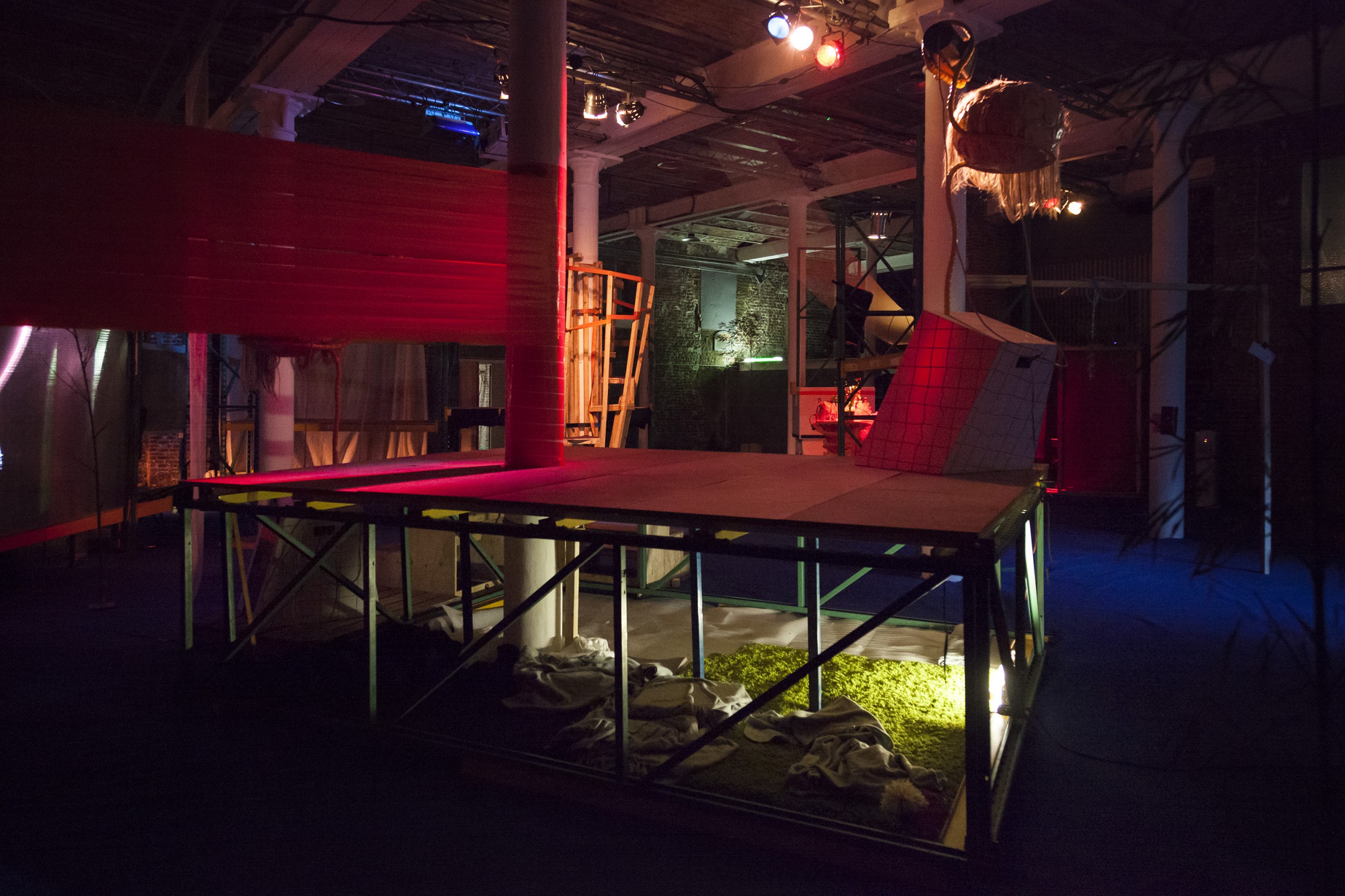
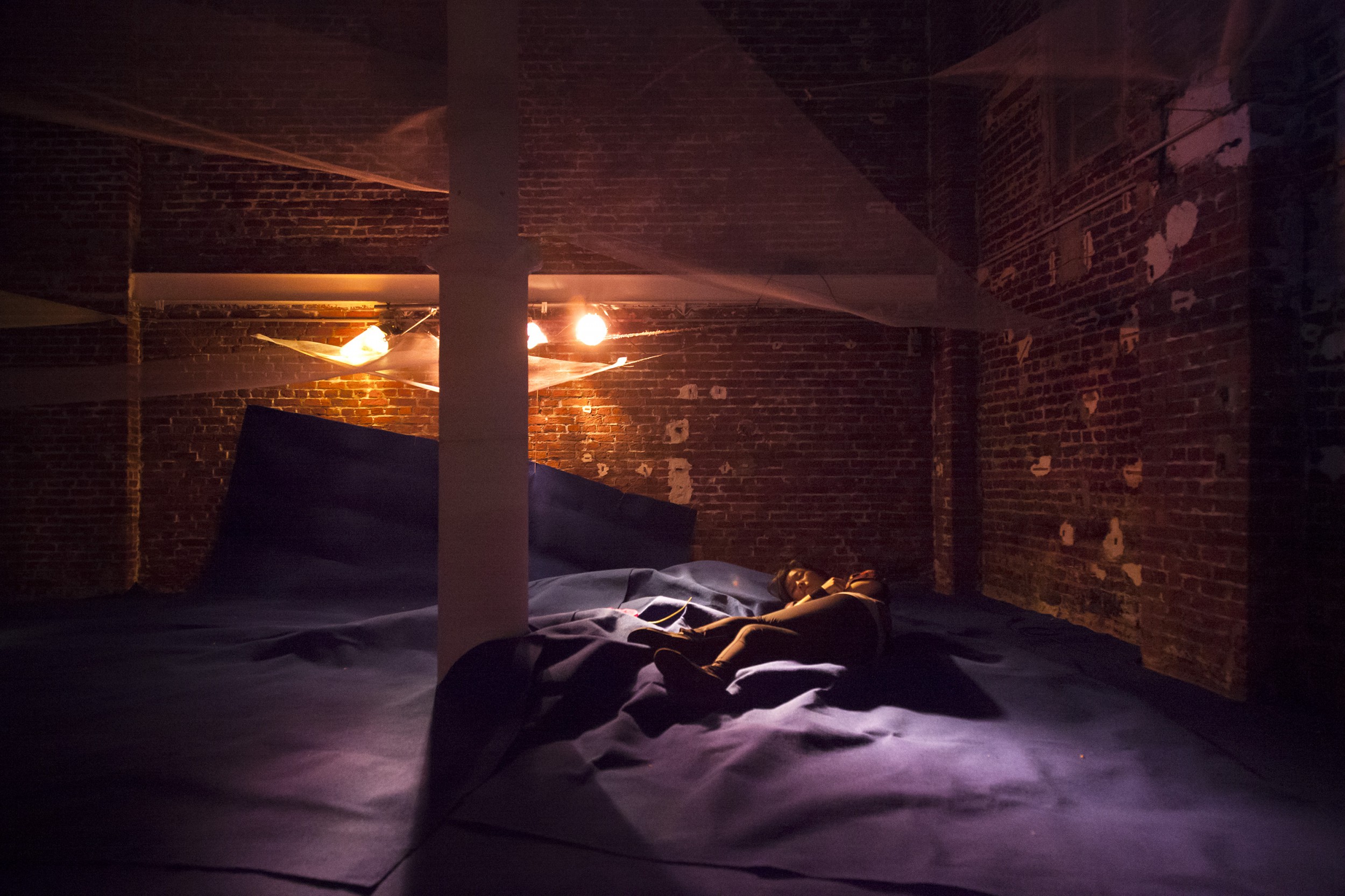
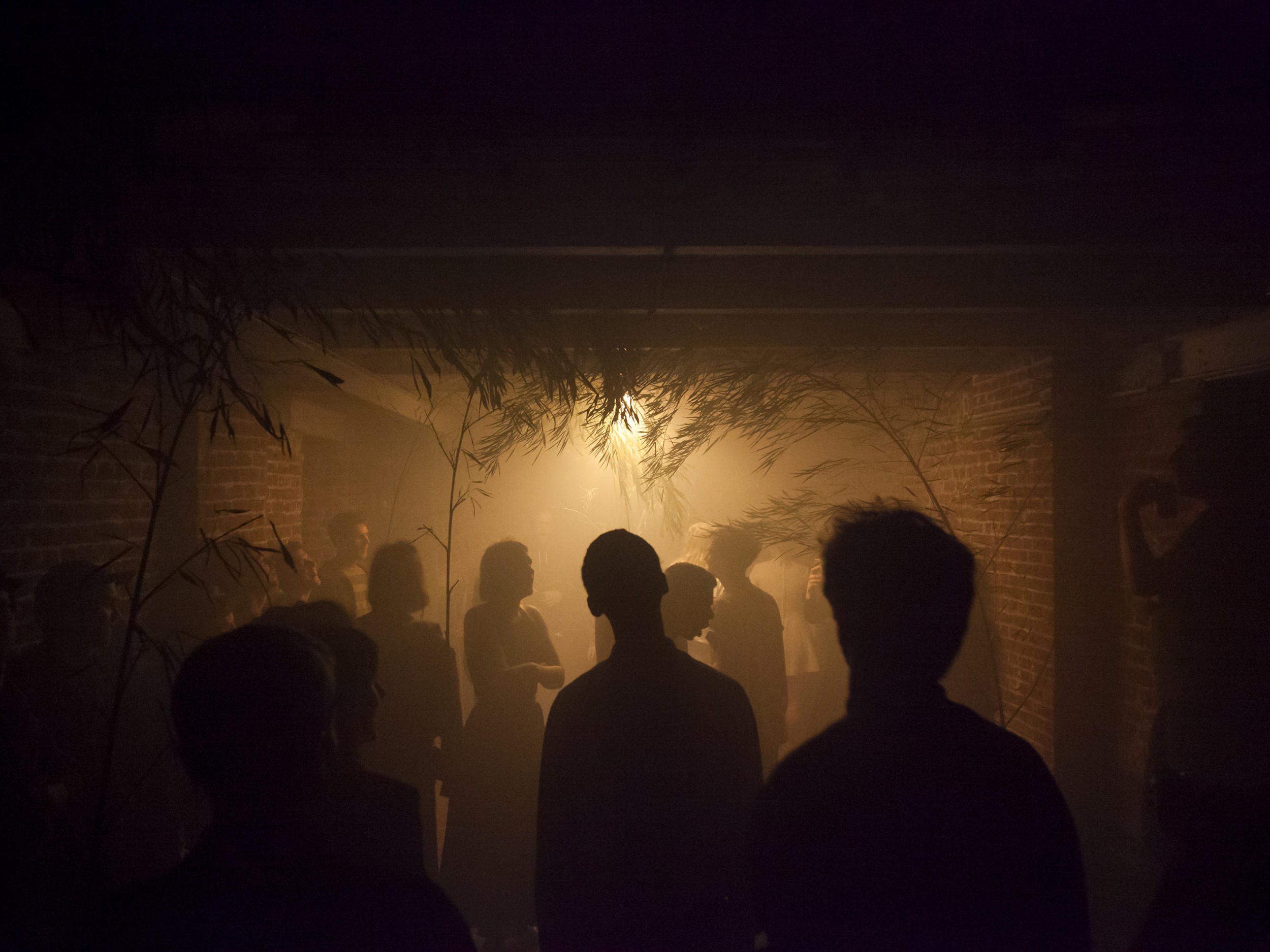
The Unbuilt School of Architecture is a school without a building. It only exists temporarily and needs to be built time and time again by a group that comes together to work on a specific topic. The school was established for the first time within the context of the Free School-program of Kunstenfestivaldesarts. Jozef Wouters, the team of Decoratelier, and Brussels based art/party collective Leaving Living Dakota invited a small group of participants to discuss, design, construct and host a nightclub. What night-space do our collective desires invent? Or should we choose to focus on our conflicting ones? How visible or invisible do we want to be? What other forms of public space can we come up with? Can architecture keep a secret?
CREDITS
In collaboration with: Leaving Living Dakota (Célia Wu-tangu and Golce Dabanna) and Steven Jouwersma
Participants: Irène Bouzin, Melissa Jin, Maru Kay, Gülce Padem, Clemence Marin, Vesara Molla, Maria Muehombo, Benjamin Munix, Maria Mushtriev, Charlotte Nagel, Isabelle N’diaye, Joris Perdieus, Mariagiulia Serantoni, Marion Stucky, Erik van de Wijdeven, Elina Valdmane, Lizzy Vandierendonck, Ode Windels
Coproduction: Kunstenfestivaldesarts, Decoratelier Jozef Wouters, Damaged Goods
Supported by: SAU/MSI urban development corporation
© Laura Van Severen
© Laura Van Severen
© Laura Van Severen
Building Out Loud
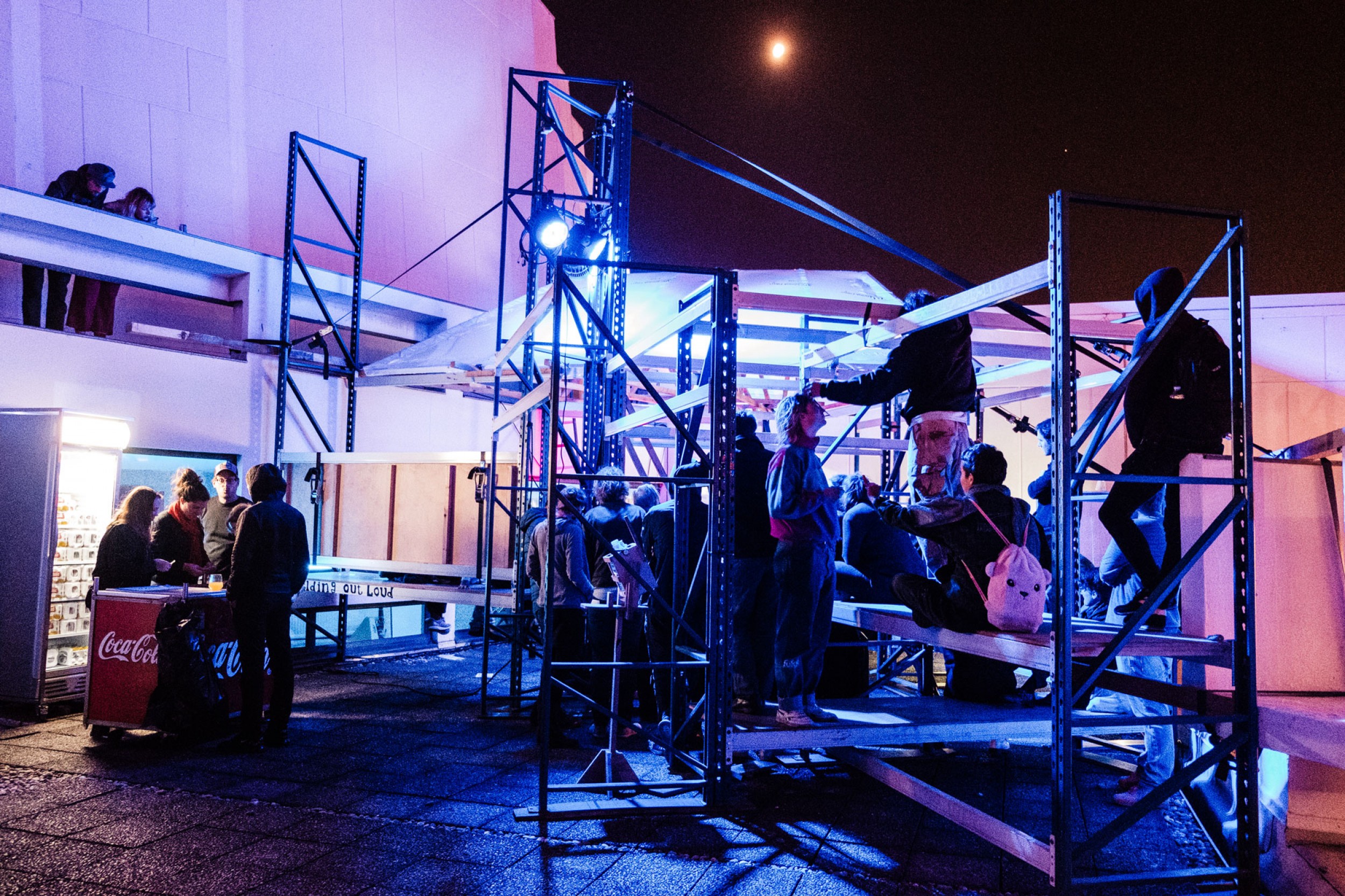
Building Out Loud is a form of improvised construction in which sketching, making, expressing and speaking take place simultaneously. More than a name for a specific project, it is a common theme that includes various projects and spaces.
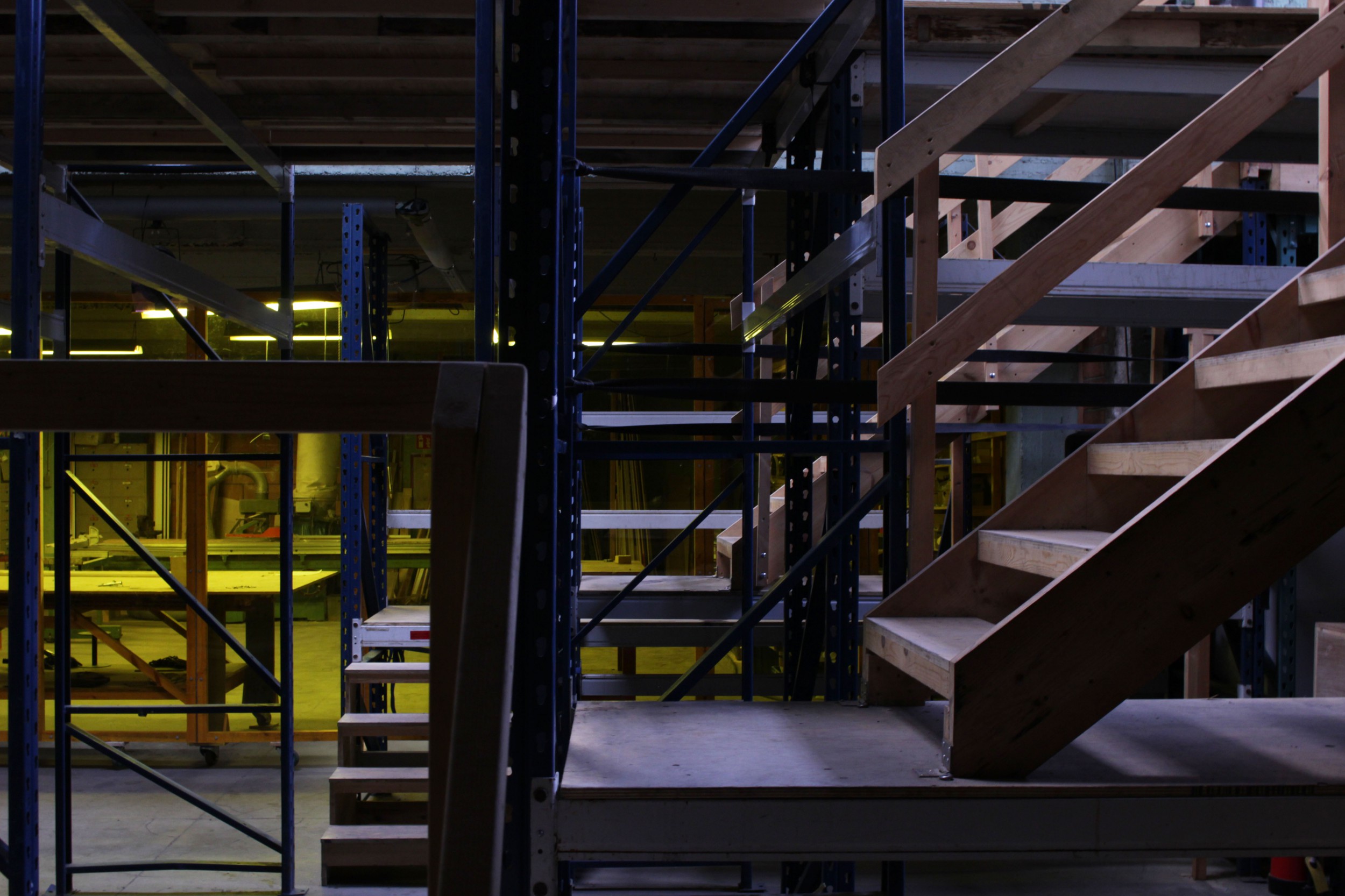
© Ewoud Vermote
Space for 'LILA & JOHN: A Fashion Performance.' October 2018 in Decoratelier.
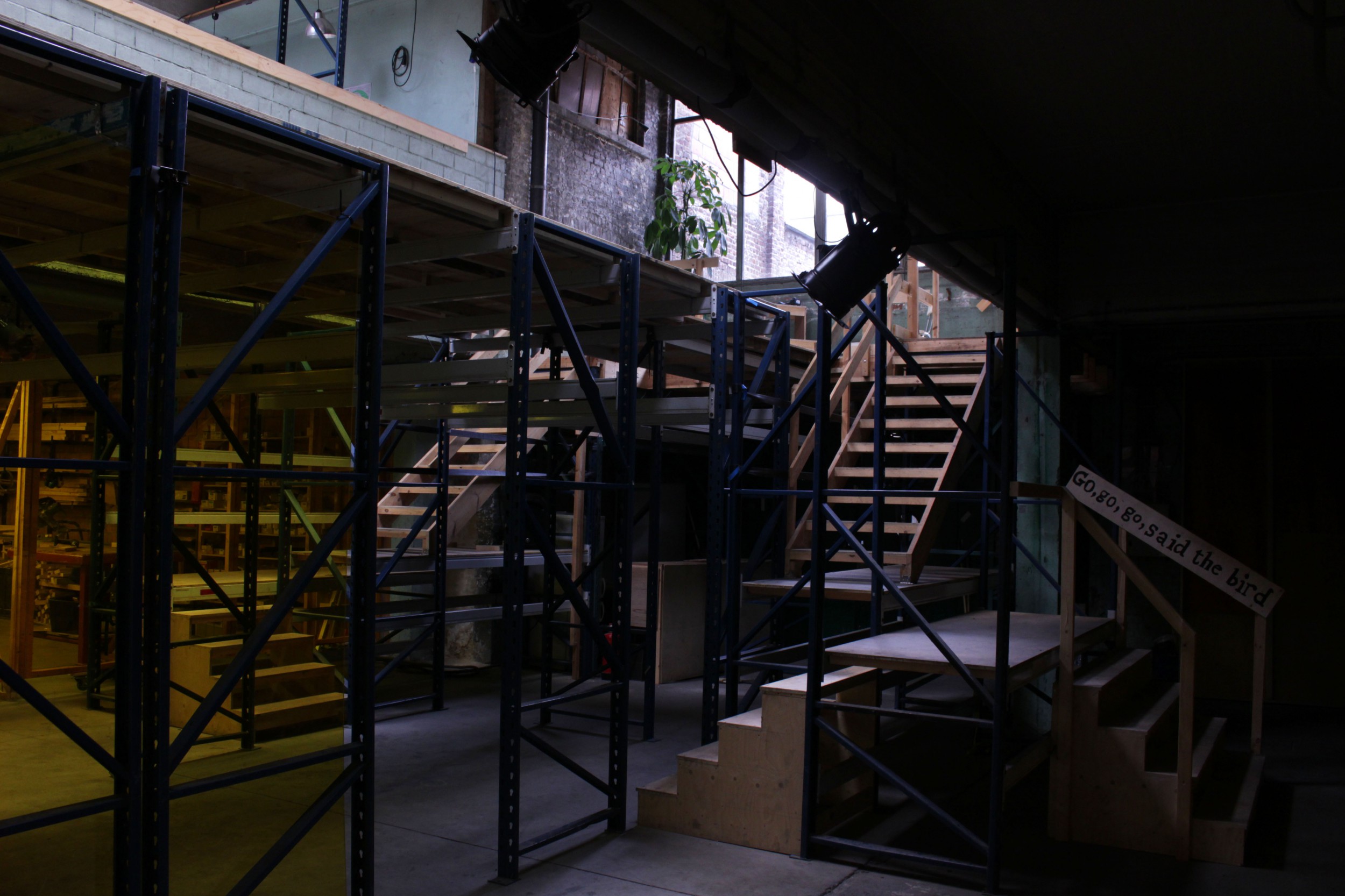
© Ewoud Vermote
Space for ‘LILA & JOHN: A Fashion Performance.‘ October 2018 in Decoratelier.
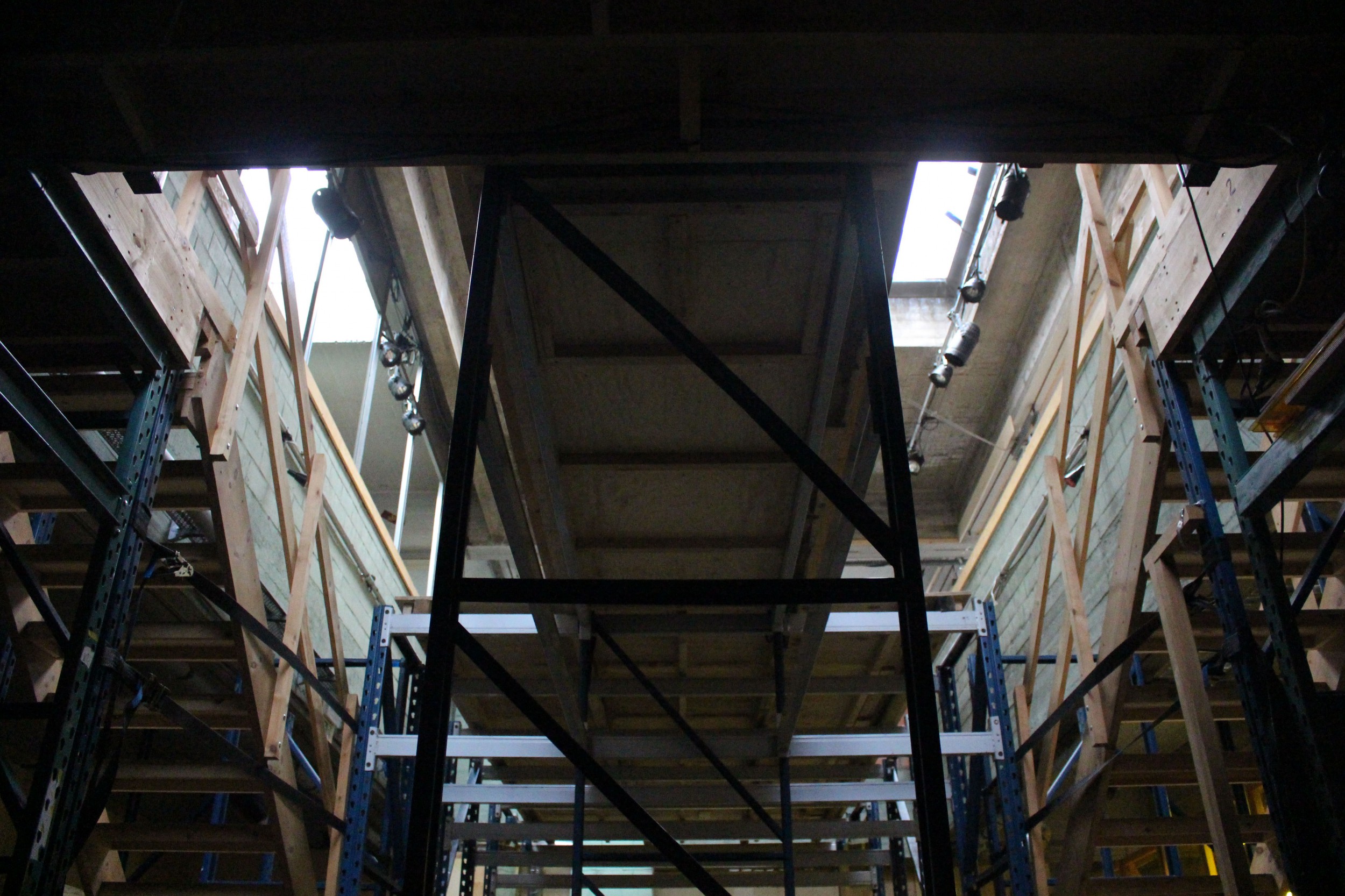
© Ewoud Vermote
Space for ‘LILA & JOHN: A Fashion Performance.‘ October 2018 in Decoratelier.
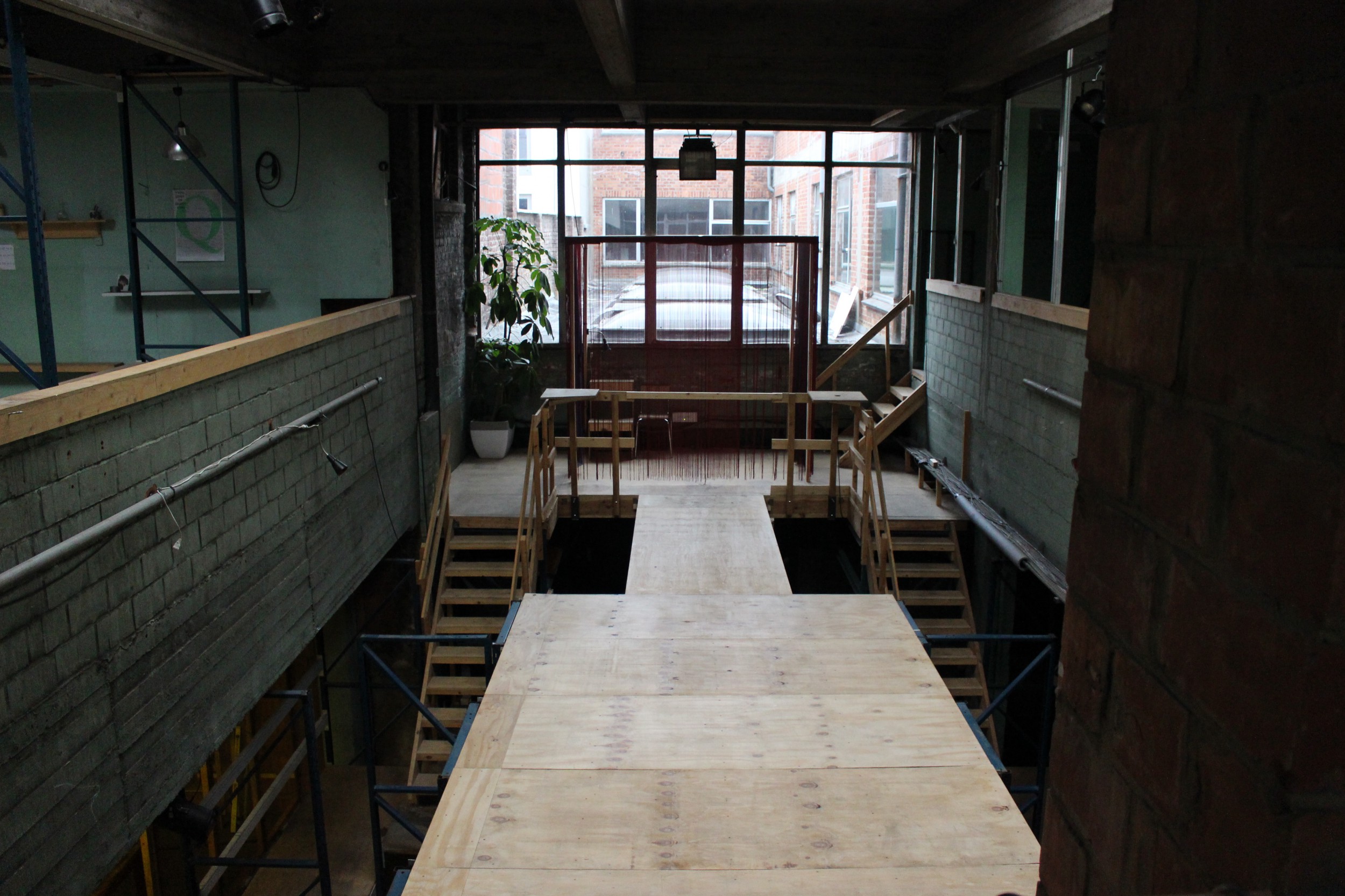
© Ewoud Vermote
Space for ‘LILA & JOHN: A Fashion Performance.‘ October 2018 in Decoratelier.

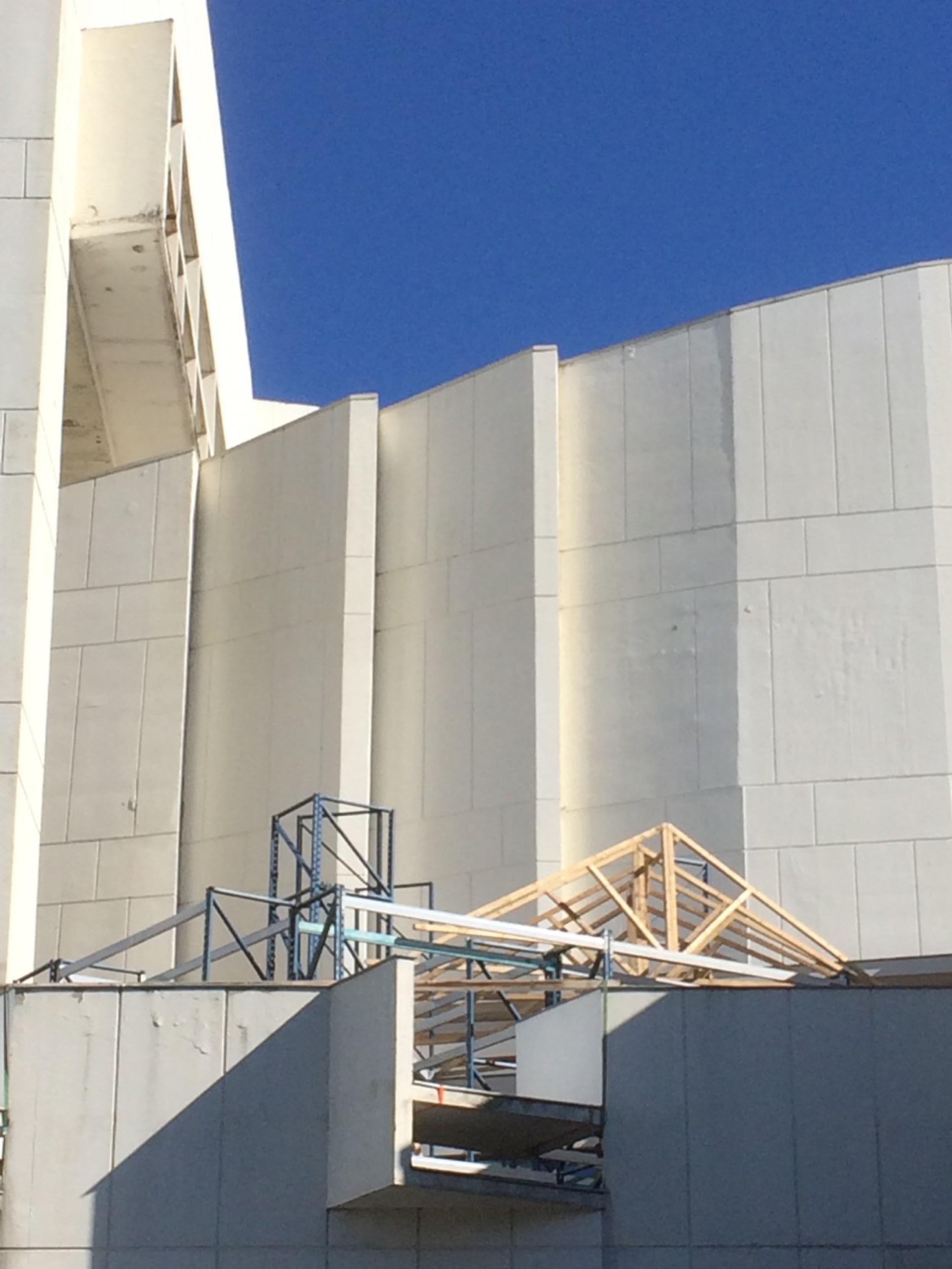
© Jozef Wouters
Space for ‘Momentum #3‘ of d e t h e a t e r m a k e r. October 2018 on the roof of deSingel, Antwerp (BE).
© Elsemieke Scholte
Space for ‘Momentum #3‘ of d e t h e a t e r m a k e r. October 2018 on the roof of deSingel, Antwerp (BE).
© Leontien Allemeersch
Space for ‘Momentum #3‘ of d e t h e a t e r m a k e r. October 2018 on the roof of deSingel, Antwerp (BE).
Forest management
Forest management as a method for the design of public space
In 2023-2024, architect Wim Cuyvers, scenographer Jozef Wouters and builder Menno Vandevelde research how forest management can be employed as a method for the design of public space. Their research is supported through a master-apprentice program for the transmission of craftmanship and Jozef Wouters' fellowship with PACT Zollverein (Essen, DE).
Since 2009, Wim Cuyvers has explored expansive meanings of public space on ‘Les Montavoies’, a piece of forest in the French Jura. Under his tutelage, Jozef and Menno will research how forest management can be a model for other contexts - such as Decoratelier in Brussels. By approaching urban environments through their experiences in the forest ecosystem, they want to develop new ways to think about public space.
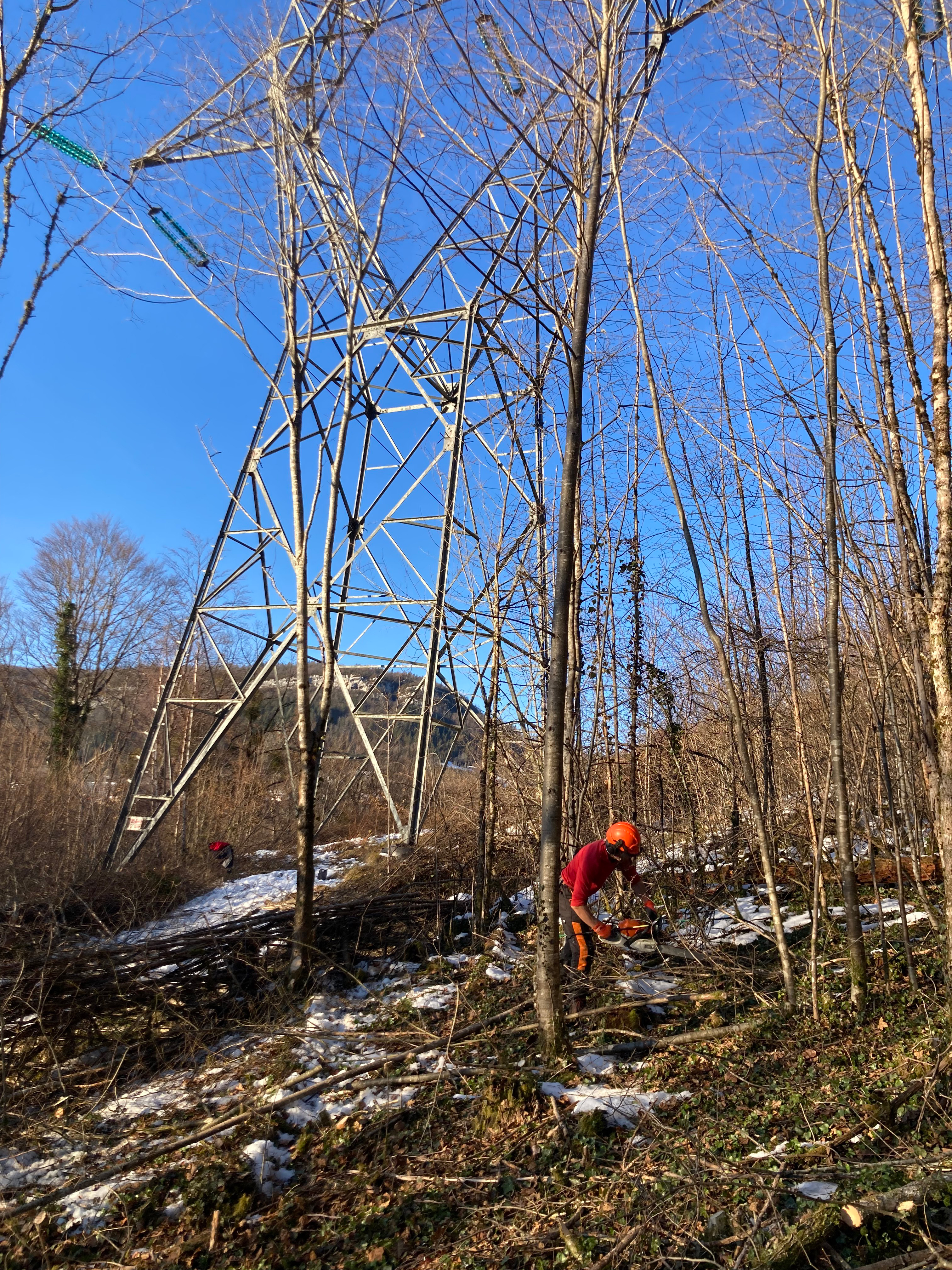
© Jozef Wouters
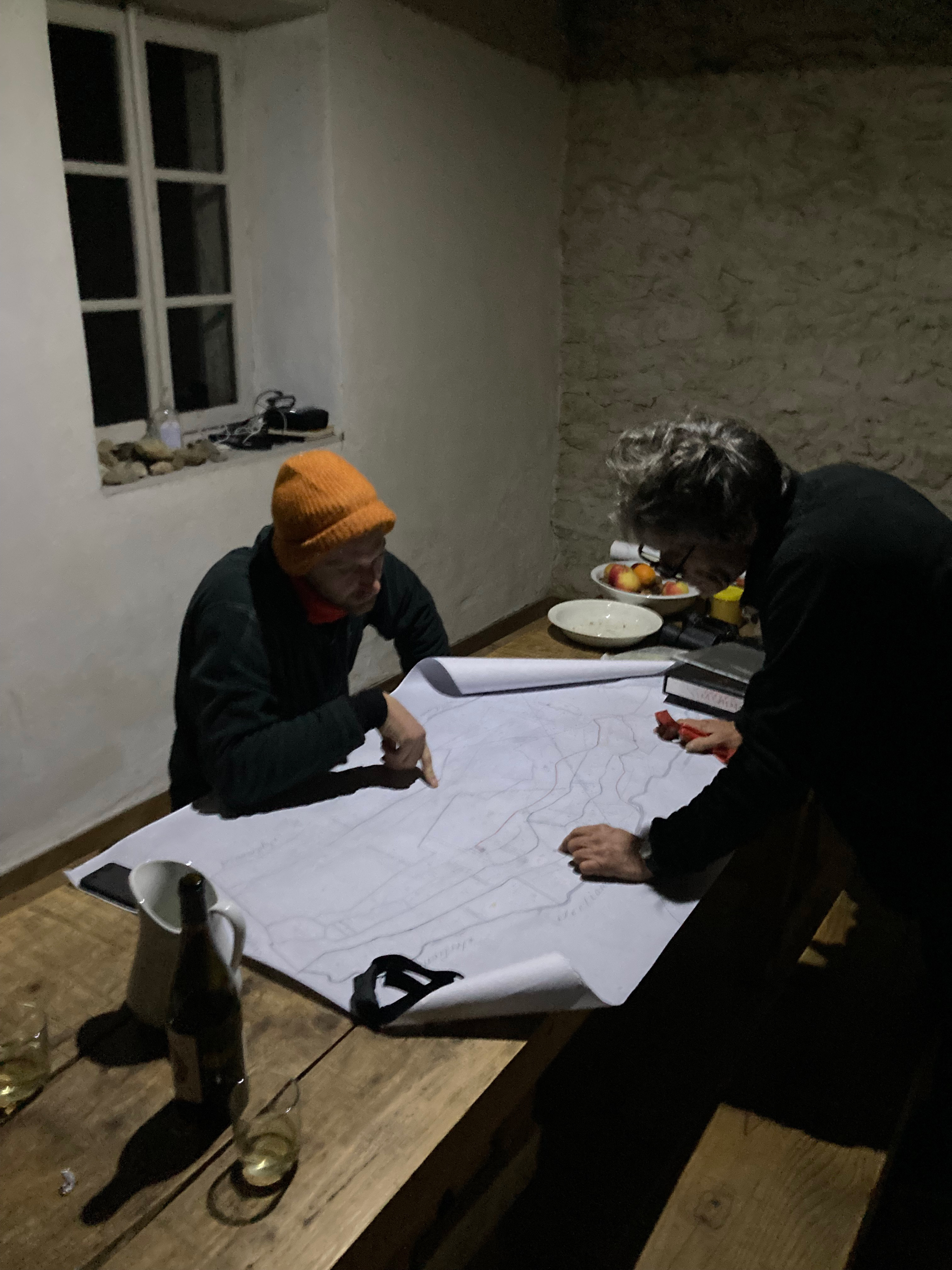
© Jozef Wouters